Final Conference of Erasmus+ SOPROS-Project in European Parliament
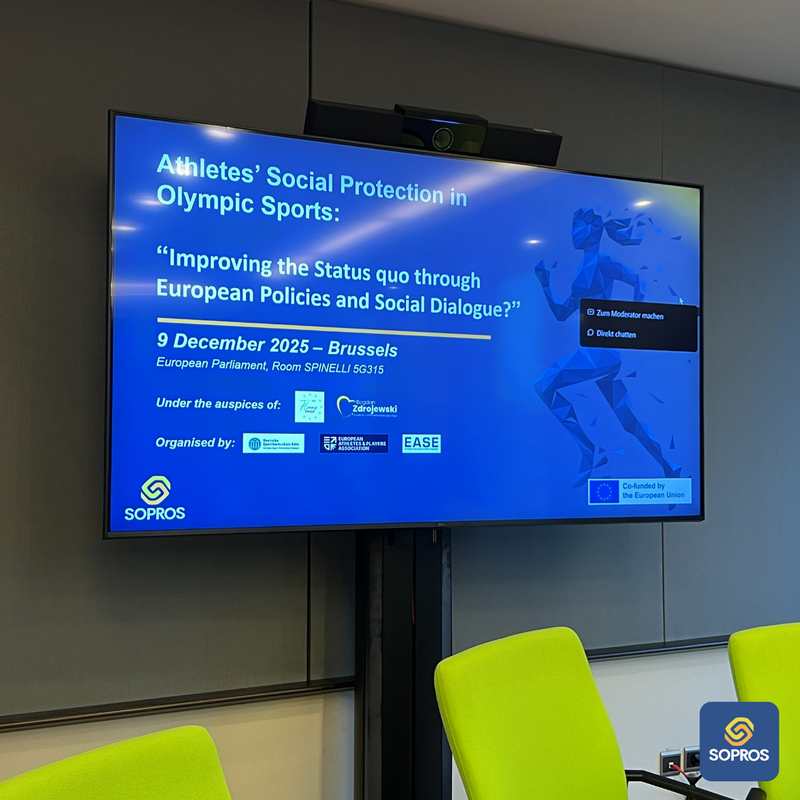
On Tuesday, 9 December, we concluded the Final Conference of the SOPROS project at the European Parliament in Brussels: a milestone moment bringing together MEPs, European institutions, sport organisations, athlete representatives, researchers, and social partners to discuss the future of athletes’ social protection in Europe.
1. Social protection must become a structural part of sport
In the opening remarks, MEP Bogdan Zdrojewski emphasised that athletes’ rights will play a significant role in the next Erasmus+ cycle, with growing political commitment at EU level.
The SOPROS team presented the project’s three phases (Assessing, Evaluating, Implementing) and highlighted the major gaps identified across Europe, including: conditionality, the ambiguous role of the state, fragmentation, limited athlete participation, and insufficient transparency and education.
2. The SOPROS Declaration was signed and is now open for endorsements
A key moment was the signing of the SOPROS Declaration by the European Athletes and Players Association, EASE - European Association of Sport Employers, European Olympic Academies (EOA), and the academic partners. It outlines seven calls and the partners' commitments to strengthen legislation, improve coordination, foster social dialogue, and enhance education around athletes’ rights: an important step toward common European standards. The Declaration is open to endorsements.
3. EU-level momentum is growing - but implementation must happen nationally
In his keynote, MEP Hannes Heide highlighted the urgency of the topic: “Sport is built on people, not money.” He stressed key priorities such as fair contracts, transparency, adequate remuneration, minimum EU-wide standards, and ensuring that athletes have a seat at the table in all relevant discussions.
He also noted that findings from SOPROS will inform future work in both the European Parliament and the European Commission.
4. Panel discussion
Speakers from the European Commission Sport Unit, EuroHockey, European Athletes and Players Association, the European Parliament, and the Council of Europe highlighted worker status as the basis for protection, the value of EU projects like SOPROS in “connecting the dots”, the need for social dialogue and collective bargaining, clearer responsibilities and modern governance, and a rights-based approach for future reforms.
The consensus: no single actor can improve athletes’ protection alone.
5. What comes next?
Juergen Mittag noted that awareness has grown, but progress now depends on prioritisation, coordination, and whether countries choose soft governance or regulatory reform. Europe could become a blueprint for athletes’ social protection, but implementation will be decisive.
The SOPROS project may be ending, but the work is only beginning. Thank you to all speakers, partners, and participants for contributing to this important discussion.