Chorionic gonadotropin (CG)
Chorionic gonadotropin - Not for men!
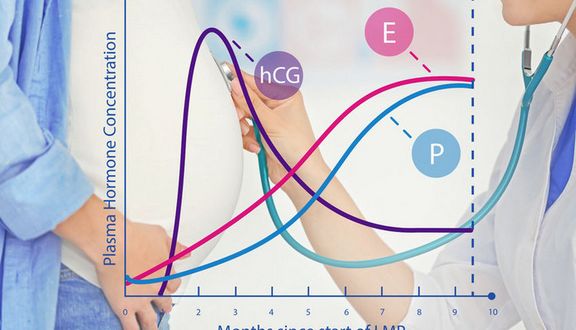
Chorionic gonadotropin (CG, also hCG = human chorionic gonadotropin), the so-called pregnancy hormone in women, is produced in high quantities during pregnancy—especially in the early stages—and released into the bloodstream. It acts on the uterus, promoting the formation of estradiol and progesterone there. During pregnancy, these two substances regulate the maturation of the uterus and thus the development of the fetus.
In men, however, due to its high similarity to LH (luteinizing hormone), HCG stimulates testosterone synthesis—unlike in women. HCG is therefore prohibited only for men.
However, the stimulation of testosterone production does not lead to a significant increase in the T/E ratio above six, meaning that T/E measurement cannot detect HCG manipulation. Since HCG is excreted in the urine and men produce virtually no HCG themselves, HCG use can be very easily detected in men through HCG testing in urine.