Human Technology in Sports and Medicine
Master of Science (M.Sc.)
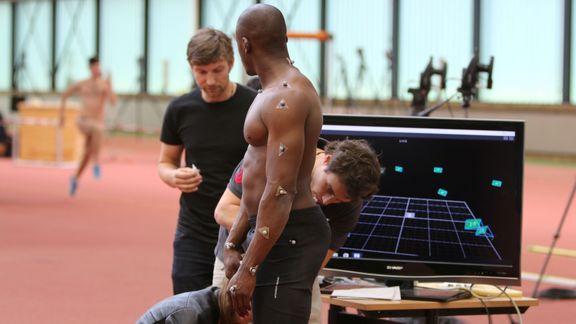
The central aim of the M.Sc. Human Technology in Sports and Medicine (TSM) is to provide students with the essential skills required to assess, develop and improve sport equipment as well as medical technologies. The understanding of the interaction of the human neuro-musculo-skelettal system with sports and medical technology and with other external physical variables is the fundamental aspect in the programme. Students will gain skills in problem-solving and innovative thinking along with extensive knowledge in developing sports and medicine products as well as special skills in developing methods and tools for the improvement of training and performance assessment.
The programme Human Technology in Sports and Medicine combines in-depth knowledge in disciplines like: sports and medical technologies, life sciences, sport sciences and engineering. We believe in a modern and research driven teaching approach, in which we provide the students with the skills and the know-how to build their individual professional profile.
Key facts
Duration of study
4 semesters
Commencement of studies
Winter semester
Workload
120 Credit Points
Application deadline
- 31st of May (Non-EU)
- 15th of July (GER & EU)
Qualification
Master of Science (M.Sc.)
Language of instruction
English
Fees
approx. 335€ (Semester fee)
University places
30 places per cohort
Admission Requirements
Admission requirements for this Master's Degree course is a successfully completed Bachelor's Degree, in which at least 180 credits according to European Credit Transfer System (ECTS) have been acquired or an equivalent successfully passed University degree. The following requirements will also be imposed according to Para. 1 of the Admissions Regulations of the GSU:
- Bachelor’s Degree program with either a scientific, engineering, mathematics, sports science, health science; medical, medical technology or life science content as a main orientation.
- Content of Bachelor’s Degree programs must primarily be oriented (that is, at least 90 credits) on science.
- Your personal and professional suitability is assessed based on your CV and a letter of motivation.
- As the programme is taught entirely in English, you must provide proof of English language proficiency through one of the following:
- TOEFL iBT (minimum 95 points)
- IELTS Academic (minimum 7.0)
- Cambridge Certificate (CAE) at C1 level
This requirement is waived for native English speakers and for applicants who have completed a Bachelor’s degree in English within the EU or in an English-speaking country.
German language skills are not mandatory for admission, but basic knowledge of German is recommended.
Guidelines & Regulations
-
save_altEU-Application Guideline WiSe 26/27Download "EU-Application Guideline WiSe 26/27"Pdf, 742 KB
-
save_altNon-EU-Application Guideline WiSe 26/27Download "Non-EU-Application Guideline WiSe 26/27"Pdf, 734 KB
-
save_altAdmissions RegulationsDownload "Admissions Regulations"Pdf, 210 KB


Degree Structure and Content
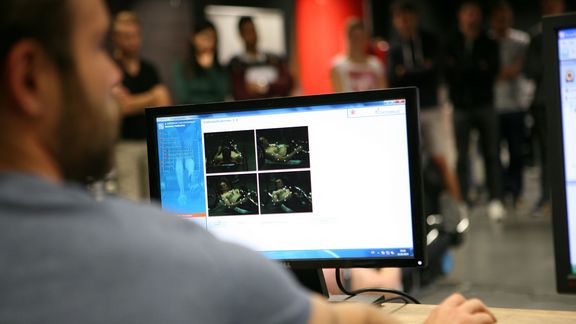
TSM is a practice-oriented, research-driven programme that prepares you to develop and evaluate technologies for sports and medical applications. You will learn how to analyse the interaction between the human body and technology and use this knowledge to improve performance, reduce physical strain and optimise diagnostics.
The programme is structured over four semesters and organised into modules with clearly defined learning objectives. Throughout your studies, you will combine theoretical knowledge with hands-on experience. In the early stages, seminars and practice-oriented assignments help you build a strong foundation. As the programme progresses, you will increasingly work independently in workshops, projects and an industry internship, gaining valuable insights into real-world applications.
You will acquire interdisciplinary expertise in areas such as sports technology, life sciences, engineering and sport science. A strong emphasis is placed on developing your ability to plan, design, construct and evaluate technological solutions. Close cooperation with partner universities and research institutions in the Cologne area enhances the scientific and practical quality of the programme.
The programme is taught entirely in English and requires the successful completion of 120 ECTS credits, including a Master’s thesis. You also have the opportunity to spend part of your studies abroad and further develop your international profile.
Programme-specific documents
-
save_altModule handbook TSMDownload "Module handbook TSM"Pdf, 975 KB
-
save_altCurriculum schedule TSMDownload "Curriculum schedule TSM"Pdf, 222 KB
-
save_altModule prerequisites TSMDownload "Module prerequisites TSM"Pdf, 148 KB
Career Opportunities and Professional Perspectives
Here are your options at GSU and your career prospects after graduation.
Further options at GSU


Graduates of TSM benefit from a wide range of career opportunities in a growing and innovation-driven field. As the sports market continues to expand and technologies become more sophisticated, the demand for highly qualified specialists at the interface of sport, health and engineering is increasing.
You will be qualified for roles in both academia and industry. Typical career paths include research and development in the sports equipment industry, where you contribute to the design of products such as footwear, clothing, materials or diagnostic devices. Opportunities also exist in elite and high-performance sport, for example in performance diagnostics with a focus on biomechanics or exercise physiology.
Further employment fields include commercial sports providers, public research institutions and universities, where you may work in research and teaching. Your expertise will enable you to develop evidence-based solutions for improving athletic performance, reducing injury risk and advancing health-related technologies.
In addition, the programme provides a strong foundation for pursuing a doctoral degree and an academic career.
Any questions?
International Office
-
location_on
Main Builing, first floor
- link International Office
International Office: Consultation hours
- Mon - Fri: 9 am - 11 am
- Mon, Wed, Thu: 2 pm - 3 pm
Student Advisory Service
-
location_on
Am Sportpark Müngersdorf 6
50933 KölnMain building, 1st floor
- phone +49 221 4982-2520
- mail studienberatung(at)dshs-koeln.de
- link Student Advisory Service
Office Hours
By telephone:
- Mon–Fri: 9 am–11 am
- Mon–Thu: 2 pm–3 pm
In person:
- Mon & Wed: 9 am–11 am
- Mon & Wed: 2 pm–3 pm
Questions regarding the content
Johannes Funken
-
location_on
Programme Coordination
- mail master-tsm(at)dshs-koeln.de