Higenamine (a doping substance found in dietary supplements)

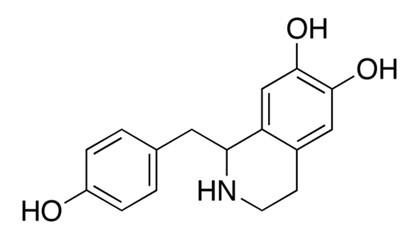
Since 2016, warnings have been issued regarding dietary supplements containing higenamine (Fig. 1). In 2016, the World Anti-Doping Agency (WADA) classified higenamine as a doping-relevant substance and placed it in Group S3) ß2-agonists.
Warning Regarding Dietary Supplements (Information for Competitive Athletes) Higenamine
is added to various dietary supplements advertised for performance-enhancing and fat-reducing effects. Higenamine is typically listed on the product label. However, dietary supplements have also been identified that contained higenamine but did not list the substance [1]. For competitive athletes subject to doping controls, taking such a dietary supplement can lead to an unintended positive doping test result.
In general, athletes who wish to use dietary supplements should obtain detailed information about the safety of the products. In Germany, for example, the Cologne List is available for this purpose.
References
[1] Cohen PA, Travis JC, Keizers PHJ, Boyer FE, Venhuis BJ. The stimulant higenamine in weight loss and sports supplements. Clin Toxicol (Phila). 2018 Sep 6:1-6.
Abstract and download of the article
Occurrence and pharmacological effects
An excellent review on higenamine was published in 2017 by Zhang et al. [2].
Higenamine is found in plants (medicinal herbs) that are used particularly in traditional Chinese medicine. The pharmacological effects of higenamine are described as very diverse (see abstract of the publication). However, the findings also indicate that the scientific data available is not yet sufficient to provide a meaningful and reliable assessment. In particular, it is noted that corresponding clinical studies on higenamine would be desirable.
References
[2] Zhang N, Lian Z, Peng X, Li Z, Zhu H. Applications of Higenamine in pharmacology and medicine. J Ethnopharmacol. 2017 Jan 20;196:242-252. To the abstract
Abstract
"RESULTS:
In addition to Aconitum, higenamine is also found in many other plants, including Tinospora crispa, Nandina domestica THUNBERG, Gnetum parvifolium C.Y. Cheng, Sarum heterotropoides, and Nelumbo nucifera. Pharmacokinetic studies conducted in animals and humans showed that higenamine conformed to a two-compartment pharmacokinetic model. Studies over the past four decades on higenamine have revealed its various pharmacological properties, such as positive inotropic and chronotropic effects, activation of slow channels, vascular and tracheal relaxation, anti-thrombotic, anti-apoptotic, and antioxidant effects, as well as anti-inflammatory and immunomodulatory effects. This phytochemical constituent has demonstrated potential therapeutic effects for conditions such as heart failure, disseminated intravascular coagulation (DIC), shock, arthritis, asthma, ischemia/reperfusion (I/R) injuries, and erectile dysfunction.
CONCLUSIONS:
Extensive basic and clinical studies on higenamine have demonstrated valuable therapeutic effects on various disorders. However, the underlying mechanisms of higenamine have not yet been established. Therefore, the safety, tolerability, and efficacy of higenamine are not yet fully understood. Additionally, some of the studies had small sample sizes and were unreliable. In summary, there is a need for deeper investigation into the mechanisms of higenamine’s action, as well as well-designed preclinical and clinical trials to test the safety and clinical value of the drug."
Doping Relevance
To date, higenamine is not commercially available as a medication, and no clinical studies on the efficacy and medical use of higenamine are known.
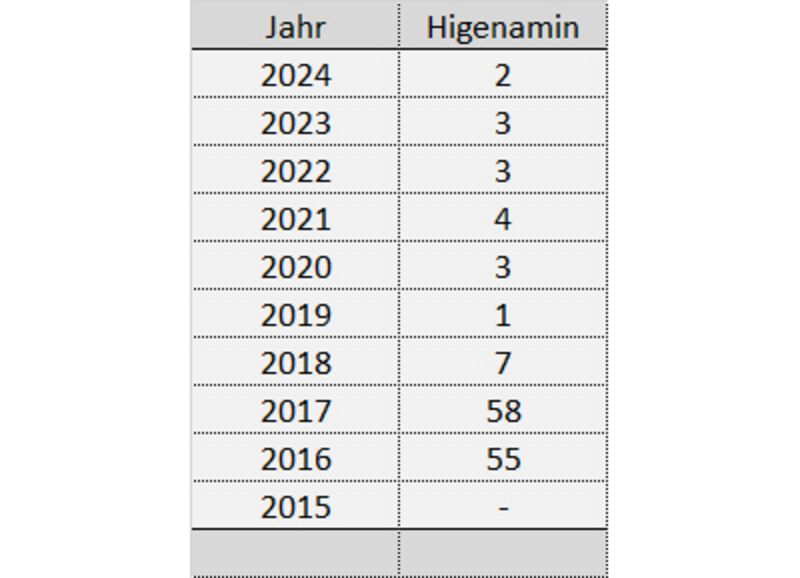
WADA’s 2016 ban on higenamine as a β2-agonist for use in sports resulted in a total of 113 adverse analytical findings during worldwide testing in 2016 and 2017.
November 2, 2018