Metenolone

Definition
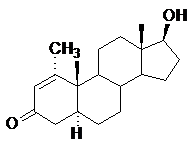
Metenolone (Fig. 1) is an anabolic steroid hormone that was first synthesized in 1960. It is a 5-alpha steroid and, unlike testosterone, has a methyl group at position C1 of the steroid backbone as well as a double bond between C1 and C2.
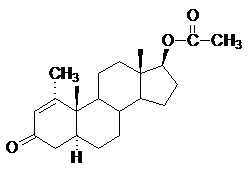
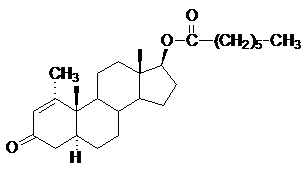
In Germany, metenolone was marketed by Schering as Primobolan® S (metenolone acetate, Fig. 2, 25 mg per tablet) and as Primobolan® Depot (metenolone enanthate, Fig. 3, 100 mg in 1 mL of solution for injection). It is no longer commercially available today.
Significance as a Doping Agent
In sports, metenolone is one of the most commonly abused steroid hormones, alongside testosterone, nandrolone, stanozolol, and metandienone. Like all anabolic-androgenic steroid hormones, it is a classic doping agent that, when misused during the training phase, is used to enhance muscle growth.
In 2000, a total of 48 positive test results for metenolone were recorded worldwide out of 117,314 doping tests (IOC statistics from IOC-accredited laboratories). In 2012, 38 positive test results for metenolone were identified out of a total of approximately 267,645 tests worldwide.
Effects & Therapeutic Use
Aplastic anemia (pancytopenia): a severe reduction in blood cells across all systems, primarily caused by a reduction in the blood-forming bone marrow. Aplastic anemia can be congenital or acquired. The latter can be triggered by the use of certain medications, contact with insecticides, infections, pregnancy, or immunological disorders.
Contraindications: Prostate cancer, prostate adenoma, male breast cancer, pregnancy, breastfeeding, previous and existing liver tumors, liver dysfunction
Side effects
In women: signs of virilization, hair loss, acne, increased hair growth, hoarseness, irreversible deepening of the voice, and menstrual disorders.
In men: Inhibition of spermatogenesis, prostatic hypertrophy.
In boys: signs of premature puberty
In adolescents, bone maturation may be accelerated.
See also the section on Side Effects/Anabolic Steroids
Metabolism
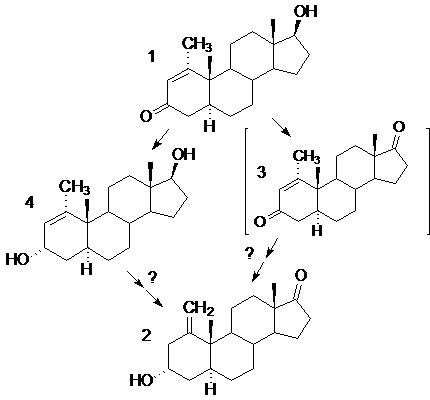
Metenolone esters (metenolone acetate or enanthate) are hydrolyzed relatively quickly in the blood (by esterases), resulting in "free" metenolone, which can trigger the actual anabolic effect. Metenolone itself is metabolized in the human body as shown in Fig. 4, whereby the oxidation of the 17β-hydroxy group to the 17-ketosteroid and the reduction of the 3-keto group to the 3α-hydroxy group are comparable to testosterone metabolism.
Fig. 4 Metabolism of Metenolone
Dosage
Metenolone acetate: 2–3 mg per kg of body weight per day; for a body weight of 70 kg, this corresponds to 6–8 tablets daily.
Metenolone enanthate: 1 ampoule (100 mg) intramuscular injection (i.m.) every 2 weeks; for continued treatment following good initial results, every 3–4 weeks.
Further Information
- Specialist information on Metenolone, Federal Association of the Pharmaceutical Industry e.V. Specialist Information Service, 88322 Aulendorf, 2001
Side effects of anabolic steroids