Methylhexanamine
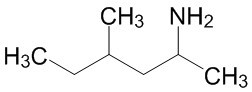
Methylhexanamine (Fig. 1) (4-methylhexan-2-amine, WADA List) is a stimulant that has been illegally added to many dietary supplements in recent years. These products are heavily marketed as “fat burners” and as products designed to “improve oxygen capacity during intense exercise,” among other claims.
Ingredient lists often use analog names for methylhexanamine that are not listed by name on the Prohibited List. Examples of these analog names are listed in the table below.
In addition to these analog names, dietary supplements containing methylhexanamine also list geranium extracts as ingredients, such as geranium root extract, geranium oil extract, etc.
Alternative names for methylhexanamine:
4-Methylhexanamine; Forthan(e);
4-Methyl-2-hexylamine(s); 2-Hexanamine, 4-methyl;
2-Methyl-4-methylhexane; Floradrene;
1,3-Dimethylamylamine(s); DMAA;
1,3-dimethylpentylamine(s); Geranamine(s):
2-amino-4-methylhexane(s); 1,3-dimethylpentylamine
Fig. 1 Structural formula of methylhexanamine
Methylhexanamine was originally marketed for medical purposes by Eli Lilly starting in 1944 as Forthane sulfate to relieve nasal congestion. The substance is no longer used medically today.
Significance as a Doping Agent
Methylhexanamine has been specifically banned as a stimulant by the World Anti-Doping Agency (WADA) since 2010. It is classified as a specified substance, which means that a reduced sanction may be imposed in the event of a doping violation.
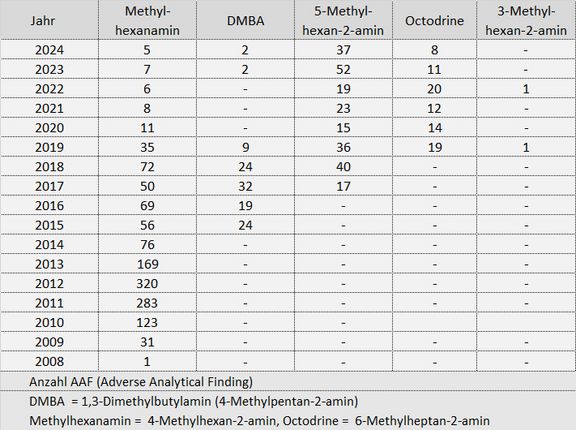
Prior to 2010, the compound was classified as doping-relevant under the term "and related compounds" within the group of stimulants. Methylhexanamine first appeared in the statistics of WADA-accredited laboratories in 2008, with only one doping violation involving methylhexanamine reported worldwide. By 2009, there were already 31 doping violations, and in 2012, a total of 320 cases involving this substance were detected worldwide.
Table: WADA Statistics for Methylhexanamine (Positive Test Results)
For further information
, see also the article > Stimulants with an alkylamine structure