Octodrine
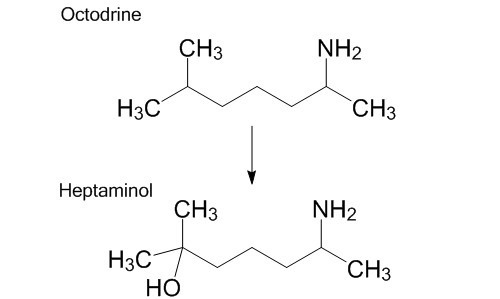
Octodrine (1,5-dimethylhexylamine, 6-methylheptan-2-amine, or 2-amino-6-methylheptane; see Fig. 1 for the structural formula) is a stimulant that was developed in the 1950s to treat nasal infections. It is no longer available as a prescription drug. However, it has been observed that the substance is being illegally added to dietary supplements.
Publication
: Catalani V, Prilutskaya M, Al-Imam A, Marrinan S, Elgharably Y, Zloh M, Martinotti G, Chilcott R, Corazza O. Octodrine: New Questions and Challenges in Sport Supplements. Brain Sci. 2018 Feb 20;8(2).
Download the publication
Cohen et al. first published on the detection of octodrine in dietary supplements in Nov. 2017:
Cohen PA, Travis JC, Keizers PHJ, Deuster P, Venhuis BJ. Four experimental stimulants found in sports and weight loss supplements: 2-amino-6-methylheptane (octodrine), 1,4-dimethylamylamine (1,4-DMAA), 1,3-dimethylamylamine (1,3-DMAA), and 1,3-dimethylbutylamine (1,3-DMBA). Clin Toxicol (Phila). 2018 Jun;56(6):421-426. Epub 2017 Nov 8.
See abstract
Wang M, Haider S, Chittiboyina AG, Parcher JF, Khan IA. 1,5-Dimethylhexylamine (octodrine) in sports and weight loss supplements: Natural constituent or synthetic chemical? J Pharm Biomed Anal. 2018 Apr 15;152:298-305. Epub 2018 Feb 8.
See abstract
The following information was available on Oct 9, 2018, at
www.webmd.com/vitamins/ai/ingredientmono-1538/octodrine
:
"Overview Information
Octodrine was originally used as a medication for nasal congestion. Today, octodrine is included as an ingredient in products used as dietary supplements to boost workout performance, "burn fat," or increase weight loss. Some products claim that octodrine comes naturally from aconite plants, but there is no clear evidence that octodrine can be found in these plants. It is likely that octodrine found in dietary supplements is manufactured in a laboratory rather than produced from natural sources. Octodrine appears to be similar to another stimulant called dimethylamylamine (DMAA). DMAA has been removed from the market in certain countries due to safety concerns.
How does it work?
Octodrine is thought to have stimulant effects similar to decongestants such as pseudoephedrine, ephedrine, and others. Some promoters claim that it is a safer alternative to ephedrine and dimethylamylamine. However, there is no scientific evidence to support this claim."
Doping Relevance
Octodrine is currently not listed by the World Anti-Doping Agency (WADA) as an example on the Prohibited List under Group S6) Stimulants. However, the substance is classified as a related compound and is therefore prohibited in competition.
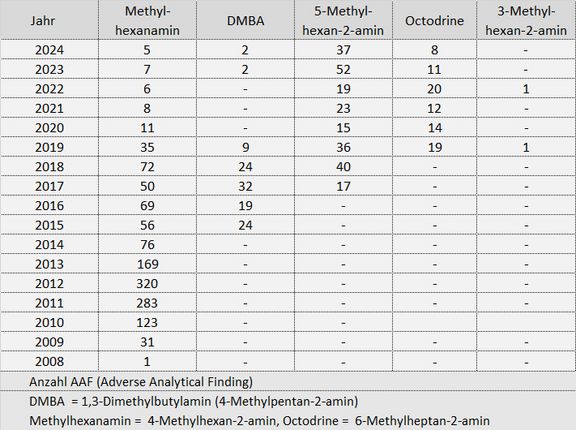
The first positive test result for octodrine was recorded in 2016 in WADA’s statistics on global doping controls.
The U.S. Anti-Doping Agency warns athletes against dietary supplements containing octodrine (October 25, 2018)
See also article > Stimulants with an alkylamine structure
Metabolism of Octodrine
It is noteworthy that octodrine can be metabolized in the human body into the compound heptaminol (Fig. 1). Heptaminol is specifically listed on the Prohibited List. In cases of positive test results for heptaminol, it cannot necessarily be assumed that the athlete used heptaminol, as octodrine can also lead to the same result.