RSR 13 (Efaproxiral)

Definition
Chemical name of RSR13: efaproxiral; 2-[4-[[(3,5-dimethylanilino)carbonyl]-methyl]phenoxy]-2-methyl-propionic acid (RSR13)
History
As part of the public prosecutor’s investigation during the 2001 Giro d’Italia, the substance RSR13 is said to have been detected during a large-scale raid on June 6–7, 2001.
Effect
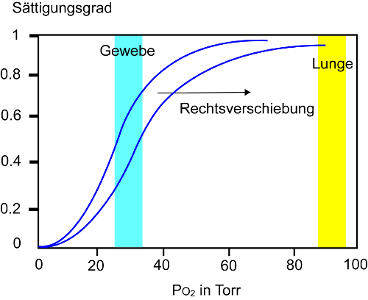
RSR 13 is a modulator of hemoglobin’s oxygen affinity. Hemoglobin is a protein molecule that binds and transports oxygen in red blood cells. The hemoglobin molecule consists of four subunits, with each subunit binding one oxygen molecule (for a total of four oxygen molecules per hemoglobin molecule) to divalent iron. Hemoglobin binds nearly 100% of oxygen in the lungs (saturation level equal to 1; Fig. 1).
In tissues, e.g., in the muscles, the hemoglobin molecule releases the bound oxygen according to the necessary demand. Hemoglobin can thus exist in a highly oxygenated form (oxyhemoglobin) or in a weakly or non-oxygenated form (deoxyhemoglobin). RSR13 binds to hemoglobin and thereby shifts the equilibrium between the oxygenated and deoxygenated forms toward the deoxygenated state.
This means that a higher oxygen delivery to the tissues is enabled. This phenomenon is described as a so-called rightward shift of the oxygen-binding curve (Fig. 1). This effect can also be caused by the following physiological conditions: a decrease in pH (Bohr effect), an increase in bisphosphoglycerate (BPG) concentration in erythrocytes, e.g., during high-altitude exposure.
Fig. 1 Oxygen-binding curve of hemoglobin at rest
During physical exertion, increased oxygen delivery to muscle tissue ensures improved metabolism of nutrients and thus enhanced energy supply.
A medical application of RSR13 is indicated for patients with reduced blood oxygen saturation (hypoxia), e.g., in certain forms of anemia, in cardiopulmonary diseases, in various types of cancer, and as part of chemotherapy for cancer treatment, and leads to an improvement in oxygen delivery to the tissues. For RSR13, which was developed by Allos Therapeutics Inc., Phase III clinical trials are reportedly complete, and approval as a drug may be expected (as of 2001).
Doping Relevance and Detection
RSR13 was first banned by the International Olympic Committee (IOC) as of January 1, 2003; specifically under Prohibited Methods – Group 1: Enhancement of oxygen transport.
As of 2013, the group was renamed: Manipulation of blood and blood components.
Analytical detection methods were published by the following research groups:
A. Breidbach, D. H. Catlin. RSR13, a potential athletic performance enhancement agent: Detection in urine by gas chromatography/mass spectrometry. Rapid Commun. Mass Spectrom. 2001, 15, 2379.
Detection of RSR 13
Thevis M, Krug O, Schänzer W. Mass spectrometric characterization of efaproxiral (RSR13) and its implementation into doping controls using liquid chromatography-atmospheric pressure ionization-tandem mass spectrometry. J Mass Spectrom. 2006 Mar;41(3):332-8.
Abstract