S107 - Doping
Prohibited as of January 1, 2011

S107—a new performance-enhancing substance?
“The active ingredient S107 could benefit heart failure patients and endurance athletes alike. Last year, U.S. scientists at Columbia University in New York reported in *Proceedings of the National Academy of Sciences* (2008, Vol. 105: pages 2198–2202) that muscle weakness is the result of impaired calcium release, which can be prevented by S107. The substance acts as a stabilizer for an important calcium channel, a ryanodine receptor (RyR1). It does this by maintaining the binding of the receptor subunit calstabin1 to RyR1. If this were not the case, the bond between the receptor and its subunit would gradually break down during muscle activity, causing the calcium channel to “leak” and the muscle to fatigue.
Recently, the ARD program *Sportschau* brought S107 into the spotlight as a potential performance-enhancing drug, particularly for endurance athletes. The new substance is said to reduce muscle fatigue by 20 to 30 percent. “Tests on mice have shown that performance can be significantly enhanced and the recovery phase shortened,” explained Professor Dr. Mario Thevis, director of the Center for Preventive Doping Research at the German Sport University Cologne.”
Source: Pharmazeutische Zeitung, online, January 14, 2009
Doping
In 2009, the World Anti-Doping Agency considered S107 to be non-doping-related.
This assessment changed in January 2011 when a new substance group—S0 Non-Approved Substances (medicinally unapproved active ingredients)—was added to the Prohibited List.
Since S107 is a previously unapproved active ingredient, the substance meets the criteria of the S0 group and is therefore prohibited for athletes.
Detection of Doping
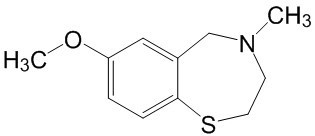
Structural formula of S107
Shortly after the substance became known in 2018, a mass spectrometric detection method was developed and published in 2009 [1-3].
Abstract of publication [1]
"New insights into the biochemistry of cardiac arrhythmia and skeletal muscle fatigue have yielded new drug candidates to counteract these phenomena. Major biological targets have become ryanodine receptor (RyR)-based Ca2R-release channels, which tend to ‘leak’ under various circumstances including strenuous exercise and, thus, cause aberrant calcium sparks that entail impaired muscle function. Therapeutics, referred to as rycals, are currently being developed to treat cardiac arrhythmia by enhancing calstabin-ryanodine affinities, which stabilizes the RyR. These therapeutics have the potential for misuse in sports, and early implementation of target analytes such as the benzothiazepine derivatives S-107 and JTV-519 or putative metabolites into doping control screening procedures is recommended..."
[1] Mario Thevis, Simon Beuck, Andreas Thomas, Gregor Fußhöller, Gerg Sigmund, Nils Schlörer, Grigory Rodchenkov, Mathias Schäfer, and Wilhelm Schänzer. Electron ionization mass spectrometry of the ryanodine receptor-based Ca2+-channel stabilizer S-107 and its implementation into routine doping control Rapid Commun. Mass Spectrom. 2009; 23: 2363–2370
Abstract
[2] Thevis M, Beuck S, Thomas A, Kortner B, Kohler M, Rodchenkov G, Schänzer W. Doping control analysis of emerging drugs in human plasma—identification of GW501516, S-107, JTV-519, and S-40503 Rapid Commun. Mass Spectrom., 23(8) (2009)1139 46
Abstract
[3] Thevis M, Beuck S, Thomas A, Kohler M, Schlörer N, Vajiala I, Schänzer W. Screening for the calstabin-ryanodine receptor complex stabilizers JTV-519 and S-107 in doping control analysis Drug Test.Analysis 2009; 1: 32-42
Abstract
[4] Beuck S, Schänzer W, Thevis M. Investigation of the in vitro metabolism of the emerging drug candidate S107 for doping-preventive purposes J Mass Spectrom. 2011 Feb;46(2):112-30
Abstract