Stanozolol
an anabolic androgenic steroid (AAS)

Definition
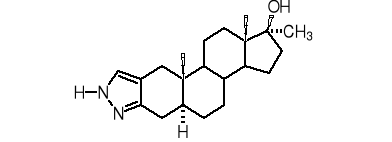
Stanozolol is an anabolic-androgenic steroid hormone (AAS) that was first synthesized in 1959. It is a 17-methyl steroid and can be taken orally. It also has the distinctive feature of containing a pyrazole ring (see Fig. 1).
History
The misuse of stanozolol in sports became widely known primarily due to the positive doping test of Canadian Ben Johnson at the 1988 Olympic Games in Seoul after he won the gold medal in the 100-meter dash.
See also Tagesspielgel from September 24, 2018, “How Sprinter Ben Johnson Fooled the World”
Detection
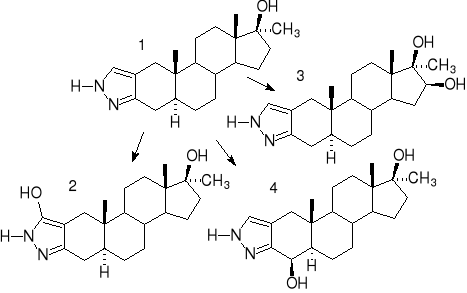
Stanozolol can be detected using gas chromatography/mass spectrometry (for the principle, see also Analysis/Anabolic Steroids) after derivatization of the analytes. The detection method identifies the main metabolites of stanozolol, such as 3'-hydroxystanozolol and 4ß-hydroxystanozolol (see Fig. 2) [1].
A sensitive detection method using liquid chromatography in combination with high-resolution tandem mass spectrometry (LC-MS-MS) has since been developed. This method enables the detection of glucuronidated hydroxylated stanozolol, particularly glucuronidated 3'-hydroxy-stanozolol, down to the lower picogram range [2].
Significance as a Doping Agent
For years, stanozolol has been one of the most commonly abused anabolic steroids, alongside testosterone, methandienone, and nandrolone.
See also Doping/anabolic agents
Side effects
See Side effects of anabolic steroids
References
[1] Schänzer W, Opfermann G, and Donike M. Metabolism of stanozolol: Identification and synthesis of urinary metabolites. J. Steroid Biochem. 1990, 36, 153–174
[2] Schänzer W, Guddat S, Thomas A, Opfermann G, Geyer H, Thevis M. Expanding analytical possibilities concerning the detection of stanozolol misuse by means of high-resolution/high-accuracy mass spectrometric detection of stanozolol glucuronides in human sports drug testing. Drug Test Anal. 2013, 5, 810-818