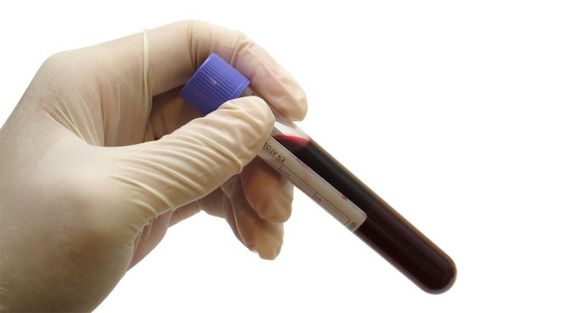
Manipulation of blood and blood components
WADA Prohibited List as of January 1, 2026
The following is prohibited:
- The administration or reintroduction into the circulation of any quantity of autologous, allogeneic (homologous), or heterologous blood or red blood cell products of any origin. The collection of blood or blood components (including by apheresis), unless this is done 1) for analytical purposes, including medical tests or doping controls, or 2) for donation purposes at a collection center accredited by the competent regulatory authority of the country in which it operates.
- Artificial enhancement of the uptake, transport, or delivery of oxygen. Including, but not limited to: perfluorochemicals; efaproxiral (RSR13); voxelotor and modified hemoglobin products, e.g., hemoglobin-based blood substitutes and microencapsulated hemoglobin products, except for supplemental oxygen via inhalation.
- Any form of intravascular manipulation of blood or blood components by physical or chemical means.
- The use of rebreathing systems or devices for the administration of carbon monoxide, unless this is performed as a diagnostic procedure under the supervision of a medical or scientific professional. (Translated with DeepL.com (free version))
_________________________________________________________
Additional general information
A blood transfusion refers to the intravenous administration of red blood cells or blood products containing red blood cells. These products may be derived from blood taken from the same person—an autologous blood transfusion—or from another person—a homologous blood transfusion.
According to the WADA Prohibited List, heterologous blood transfusion is also prohibited, which generally refers to a blood transfusion between different species. In the case of an athlete, this would mean the transfusion of blood from another mammal (e.g., a monkey) into a human.
The usual indications for red blood cell transfusion are severe blood loss and anemia.
In an autologous blood transfusion, up to approximately 0.5 L of blood is drawn from the athlete. The blood is then preserved and stored frozen. In the meantime, due to the blood loss, erythrocyte production is stimulated by EPO.
After about 3–4 weeks, once blood volume has returned to normal levels, the stored blood can be infused, thereby increasing the athlete’s total red blood cell count. Blood volume in an adult accounts for approximately 6–8% of body weight.
Blood plasma is obtained by centrifuging blood that has been collected using anticoagulants such as EDTA. It still contains all coagulation factors. In contrast, when clotted blood is centrifuged, blood serum is obtained. It differs from plasma in that it lacks coagulation factors, primarily fibrinogen.
Blood plasma consists of 90% water and 10% dissolved substances. Of the dissolved substances, proteins account for 70%, low-molecular-weight substances for 20%, and electrolytes for approximately 10%.
Hemoglobin
The blood of an adult human must transport approximately 600 liters of oxygen from the lungs to the tissues daily. Since oxygen is only partially soluble in aqueous solution, nearly all of the oxygen is bound and transported by the hemoglobin in the red blood cells. In the lungs, the hemoglobin in arterial blood is 96% saturated with oxygen. In venous blood, after passing through the tissues, saturation is only 70%. Approximately one-third of the oxygen is released into the tissues.
Naturally, greater differences occur in working muscles, where up to 90% of the bound oxygen is released.
Detection of autologous blood doping
See blood passport as a doping control measure
Detection of allogeneic blood transfusion
In September 2004, evidence of doping via an allogeneic blood transfusion first came to light in connection with the doping case against cyclist Tyler Hamilton.