Gene doping
WADA Regulations - Prohibited List 1/1/2026
M3. GENE AND CELL DOPING
The following, with the potential to enhance athletic performance, are prohibited:
M3.1. The use of nucleic acids or nucleic acid analogues that may alter genome sequences and/or gene expression by any mechanism. This includes but is not limited to gene editing, gene silencing, and gene transfer technologies.
M3.2. The use of normal or genetically modified cells or cell components (e.g., nuclei and organelles such as mitochondria and ribosomes).
Definition
The term “gene doping” is being discussed in relation to future doping possibilities, whereby new methods of manipulation to enhance athletic performance are considered possible within the context of research into the human genome and the mapping of all human genes (Human Genome Project). The topic opens up a wide scope for speculation.
To understand what is meant by gene doping, the following terms should be explained: What are genes, and what is meant by genetic engineering, genetic diagnostics, and gene therapy?
Genes
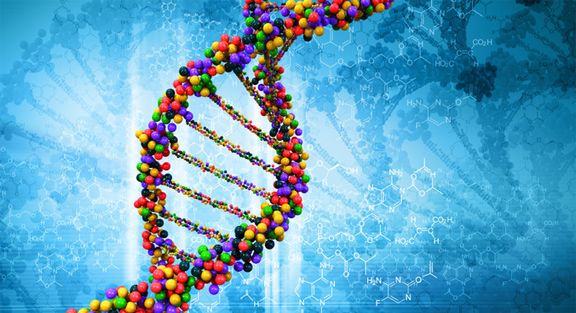
Biological information is determined by a molecule called DNA (deoxyribonucleic acid). DNA consists, among other things, of a multitude of genes—the so-called units of heredity—which pass genetic information from parents to children, or rather, the information according to which a body cell develops. A gene contains the information used to produce a specific protein molecule within the cell.
Genetic engineering
Genetic engineering enables the detection of genetically caused hereditary diseases through genetic diagnostics. In principle, genetic engineering makes it possible to treat hereditary diseases by replacing defective genes (gene therapy). However, the term genetic engineering also refers to processes used to produce therapeutic agents such as growth hormone (HGH) and erythropoietin (EPO) in large quantities. In these processes, the gene containing the information for the production of, for example, growth hormone (HGH) is inserted into the DNA (genetic information) of bacterial cells (E. coli). The cell then produces large quantities of, for example, growth hormone identical to that found in the human body. However, these processes are not referred to as gene doping, even though the end products produced for medical use, such as HGH and EPO, can be misused for doping purposes.
Genetic diagnostics
Genetic diagnostics refers to procedures that enable the detection of hereditary diseases through the analysis of a patient’s genes.
Gene therapy
Gene therapy can theoretically be used to treat genetically caused diseases (hereditary diseases). This involves using procedures to replace "defective" genes in a patient’s DNA with intact genes.
Knowledge about hereditary diseases is constantly growing, making gene therapy appear to be a promising form of treatment for the future.
A fundamental distinction must be made between interventions on somatic cells (somatic gene therapy) and on germ cells (germline therapy). In germline therapy—which is, however, prohibited in humans for ethical reasons—genetic changes are passed on to offspring. Somatic gene therapies, which affect only the treated somatic cells, are not prohibited and are currently under development for various diseases. However, no gene therapy procedure has been approved to date.
Significance as a Doping Method
In the realm of sports, there is certainly concern that gene therapy procedures, once available, will be misused if athletes believe they can gain a performance advantage from them.
Gene doping could be of interest to athletes for performance enhancement for the following two reasons: A) The body’s own stimulation of the synthesis of hormones such as erythropoietin, growth hormone, or testosterone, or B) the formation of more muscle mass or faster muscle fibers by influencing genes (e.g., via siRNA).
Gene therapy approaches have been developed for EPO in animal experiments, but not yet for humans. In these procedures, for example, the EPO gene is introduced into the cell nucleus of skin or muscle cells in mice, causing the animals to produce increased amounts of endogenous EPO.
A corresponding procedure was tested in monkeys and clearly showed altered forms of EPO that would be detected by the current test. The reason for this is that EPO is normally produced in kidney cells, whereas skin or muscle cells are used in genetic manipulations. The carbohydrate component of EPO is formed in a cell-specific manner and thus leads to different forms of EPO (see also Repoxygen).
Detection of Doping
Further information
- Overview article from Spektrum der Wissenschaft
Muscles, Genes, and Competitive Sports. By Jesper L. Andersen, Bengt Saltin, Peter Schjerling, Spektrum der Wissenschaft 3/2001, 70–75
In the journal Spektrum der Wissenschaft (German edition of Scientific American) - www.spektrum.de —a review article titled "Muscles, Genes, and Competitive Sports" by muscle physiologists Jesper L. Anderson, Peter Schjerland, and Bengt Saltin was published in the March 2001 issue, summarizing the current state of knowledge regarding slow, intermediate, and fast muscle fibers and their significance for competitive sports. The authors also point to future possibilities of gene doping regarding improved muscle structures (muscle fibers). The horror scenarios described could soon become reality. Article as PDF
Even the best training is of little help in making the leap to the world elite if the individual’s natural predispositions are not right. Will genetically enhanced superathletes one day compete in competitions?
- Gene Doping in Sports: Fact or Fiction
Thorsten Schulz, Kai Smolnikar, Patrick Diel, and Horst Michna, F.I.T. – Science Magazine of the German Sport University Cologne, 1 / 1998, 13–18.