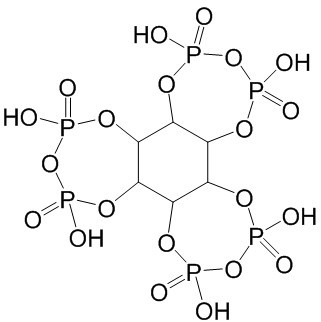
ITPP (myo-inositol trisphosphate)
Physiological and pharmacological effects
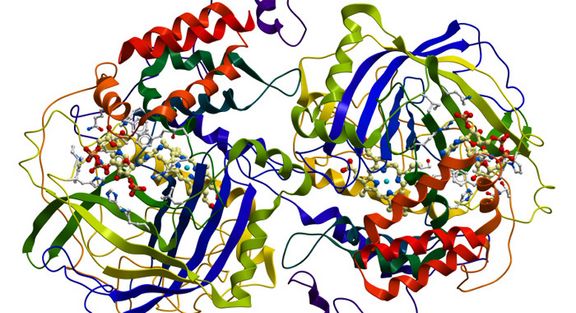
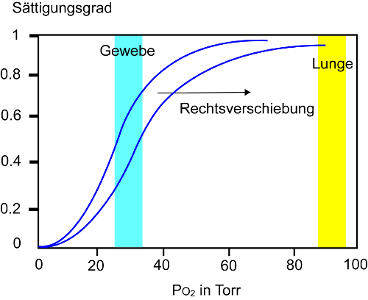
Myo-inositol trispyrophosphate (ITPP) is an allosteric regulator of hemoglobin and reduces its oxygen-binding affinity. In doing so, ITPP shifts the oxygen-binding curve of hemoglobin to the right, thereby improving oxygen release from blood vessels into tissues (Fig. 1).
Animal studies with ITPP have demonstrated improved tissue oxygenation and a dose-dependent improvement in endurance performance [1, 2].
Of medical interest, ITPP is being investigated for the treatment of cancer in combination with chemotherapy [3]. Clinical trials were initiated as early as 2014 under the compound name OXY111A [4]
References
[1] T. Watanabe. Reduction in hemoglobin–oxygen affinity results in the improvement of exercise capacity in mice with chronic heart failure. J. Am. Coll. Cardiol. 2008, 52, 779.
[2] A. Biolo, R. Greferath, D. A. Siwik, F. Qin, E. Valsky, S. Pothukanuri, C. D. Duarte, R. P. Schwarz, J. M. Lehn, C. Nicolau, W. S. Colucci. Enhanced exercise capacity in mice with severe heart failure treated with an allosteric effector of hemoglobin, myo-inositol trispyrophosphate. [1]Proc. Natl. Acad. Sci. 2009, 106, 1926.
[3] Limani P, Linecker M, Schneider MA, Kron P, Tschuor C, Kachaylo E, Ungethuem U, Nicolau C, Lehn JM, Graf R, Humar B, Clavien PA. The Allosteric Hemoglobin Effector ITPP Inhibits Metastatic Colon Cancer in Mice. Ann Surg. 2017 Nov;266(5):746-753.
[4] Limani P, Linecker M, Kron P, Samaras P, Pestalozzi B, Stupp R, Jetter A, Dutkowski P, Müllhaupt B, Schlegel A, Nicolau C, Lehn JM, Petrowsky H, Humar B, Graf R, Clavien PA. Development of OXY111A, a novel hypoxia-modifier as a potential antitumor agent in patients with hepato-pancreato-biliary neoplasms - Protocol of a first Ib/IIa clinical trial. BMC Cancer, (2016) 16(1), 812.
Relevance to Doping and Detection
For endurance athletes, ITPP (Fig. 2) could be of interest for unauthorized performance enhancement due to its potential ability to improve oxygen supply to the muscles.
ITPP thus acts similarly to the banned doping substance RSR13.
RSR13 (efaproxiral) is specifically listed on the WADA Prohibited List under the Prohibited Methods category
M2: Manipulation of blood and blood components.
See also the article on RSR13
Fig. 2 Chemical structural formula of ITPP
The substance ITPP is currently (2019) not specifically listed by name on the WADA Prohibited List. However, due to its similar effects to RSR13, it is classified as a related compound and is therefore relevant to doping. Furthermore, the substance can also be classified under the prohibited group S0 None-approved substances.
A corresponding detection method was developed and published in 2014 by Görgens et al. at the Center for Preventive Doping Research at the German Sport University Cologne:
Görgens C, Guddat S, Schänzer W, Thevis M. Screening and confirmation of myo-inositol trispyrophosphate (ITPP) in human urine by hydrophilic interaction liquid chromatography high-resolution/high-accuracy mass spectrometry for doping control purposes. Drug Test Anal. 2014 Nov-Dec;6(11-12):1102-7.
- Abstract
Myo-inositol trispyrophosphate (ITPP) is a novel allosteric effector of hemoglobin with high permeability selectivity across the red blood cell plasma membrane. Due to its potential to reduce the oxygen affinity of hemoglobin, ITPP administration results in enhanced oxygen release in hypoxic tissues. Therefore, ITPP is being investigated for the treatment of numerous conditions involving hypoxia, such as cardiovascular diseases, cancer, or Alzheimer’s disease. Similar to the prohibited substance Efaproxiral®, ITPP increases maximal exercise capacity in mice, presenting a high potential for misuse in sports. To keep pace with cheating athletes, a fast and reliable liquid chromatography-tandem mass spectrometry (LC-MS/MS) method for screening and confirmation of ITPP in human urine for doping control purposes was developed. Due to the molecule’s distinct hydrophilic properties, extraction from complex biological matrices is challenging, and conventional reversed-phase liquid chromatography (RPLC) separations are not suitable for its detection. Therefore, an approach based on hydrophilic interaction liquid chromatography (HILIC) Orbitrap mass spectrometry was established. The methodology was fully validated for qualitative purposes. The screening and confirmation assays are characterized by satisfactory specificity and robustness, adequate intra-day (screening: 4.9–8.1%; confirmation: 2.0–6.7%) and inter-day precision (screening: 4.6–9.1%; confirmation: 1.8–6.6%), excellent linear correlations (>0.99) with sufficient LLOD in the sub-ng/mL range (screening: 15 ng/mL; confirmation: 1 ng/mL). In addition, it was demonstrated that ITPP is stable in human urine under the mandatory storage period and conditions for doping control laboratories. To our knowledge, this is the first validated “dilute-and-inject” LC-MS/MS method for the reliable detection of ITPP in human urine.
Further reading
Görgens C, Guddat S, Södje D, Geyer H, Thevis M: Detection of myo-inositol trispyrophosphate (ITPP) in human urine following oral administration of ITPP – a pilot study. In: Thevis M, Geyer H, Mareck U (eds.) Recent advances in doping analysis (26). Sportverlag Strauß, Cologne (2018) 109–113
Download the article
Lam G, Zhao S, Sandhu J, Yi R, Loganathan D, Morrissey B. Detection of myo-inositol tris pyrophosphate (ITPP) in horses following administration of ITPP. Drug Test Anal. 2014 Mar;6(3):268-76.
Abstract