EPO (erythropoietin)
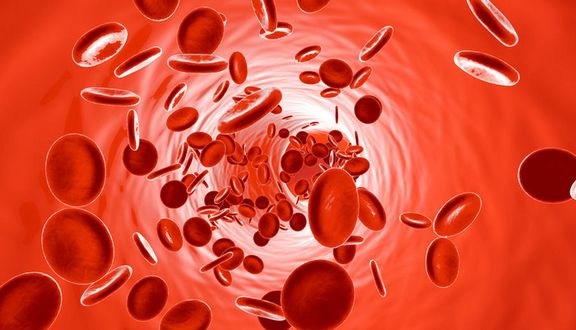
Blood doping was first added to the IOC’s list of prohibited methods in 1988. This method was used in an attempt to increase the total number of red blood cells (erythrocytes) in order to transport a greater amount of oxygen. The aim was to improve endurance performance. Genetically engineered EPO can achieve the same effects as blood doping, thereby avoiding the complex and dangerous method of blood transfusion.
EPO belongs to the group of glycoproteins. These are protein molecules linked to carbohydrate chains. EPO has a molecular weight of approximately 30,000, with the protein chain consisting of a total of 165 amino acids. At four points on the protein, there is a bond with complex carbohydrates. These carbohydrate chains are an absolute prerequisite for the biological activity of the compound. The carbohydrate content accounts for approximately 40% of the total molecule.
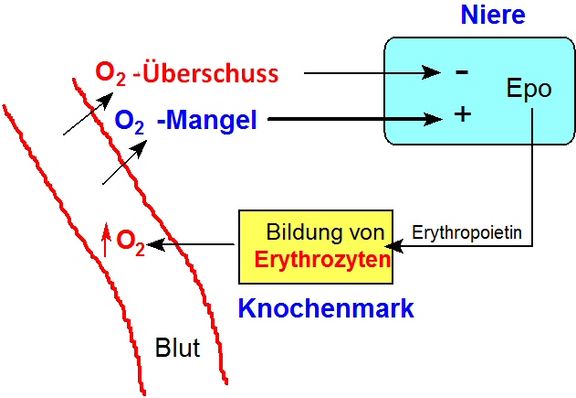
EPO is primarily produced in the kidneys and stimulates the maturation of erythrocytes in bone marrow stem cells.
This leads to an increase in the rate of erythrocyte formation, which are initially referred to as reticulocytes. EPO is used medically in patients who no longer produce sufficient EPO themselves and therefore have too few red blood cells, e.g., in cases of renal anemia or in dialysis patients.
Since 1988, EPO has been produced using genetic engineering, employing genetically modified mammalian cells (ovarian cells from Chinese hamsters). The EPO produced in this way is 100% identical to human EPO in terms of the amino acid sequence of the protein chain. However, there are minor differences in the carbohydrate content, which is seen as a potential means of distinguishing it from human EPO.
Furthermore, since June 1, 2001, a new erythropoietin-derived substance that stimulates erythropoiesis has been available for the treatment of renal anemia: darbepoetin alfa (NESP, Novel Erythropoiesis Stimulating Protein, Aranesp®), also from Amgen. This new product differs from the previously available recombinant EPO in that 5 amino acids have been replaced and additional sugar chains have been incorporated into the molecule.
This increases the relative molecular mass from 30,400 to 38,500 and the sugar content of the previous EPO from 40% to 52% of the total molecular weight.The half-life of darbepoetin (NESP) is approximately 21 hours after intravenous injection, whereas erythropoietin has a half-life of 8.5 hours. Following subcutaneous injection (injection into the subcutaneous tissue), the half-life is extended to approximately 49 hours (27–89 hours) or 16–24 hours for epoetin.