Research and Promotion of the Professional Perspective
Project Description
Educational situations are complex and dynamic, a fact characterized, among other things, by the rapid succession or simultaneous occurrence of a variety of events, many of which are unexpected or take unpredictable turns.
Teachers must therefore act flexibly and constantly make decisions under time pressure. The tasks that arise during instruction to support learning are diverse (e.g., providing subject-specific assistance, facilitating social processes, organizing procedures), and teachers must also address both the needs and requirements of the group as well as those of individual students. They must therefore be able to continually adapt their actions to the specific conditions of each situation.
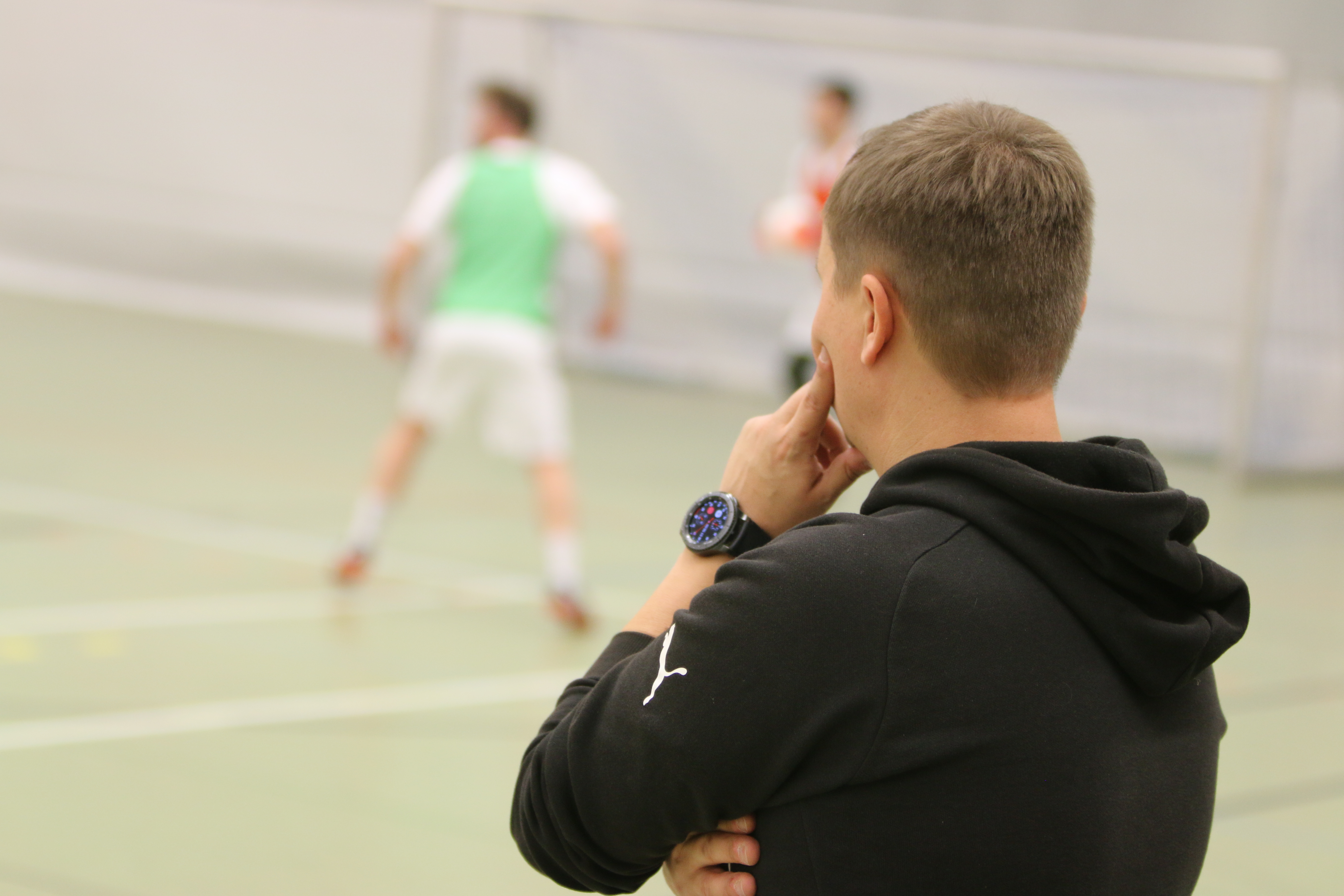
This requires the ability to distinguish between important and unimportant events in the complex classroom setting and to decide where to focus attention (selective attention), the ability to relate events to overarching teaching principles while taking context into account (well-founded interpretation), and the ability to make situation-appropriate decisions (decision-making), which are also described in the concept of the “professional gaze.” At the institute, this concept is being examined through various research questions. It has been demonstrated that, compared to novice teachers, experienced physical education teachers perceive different events, justify their pedagogical significance with a more theoretically grounded rationale, and make different decisions regarding their actions. Such differences are attributed in particular to differences in knowledge.
Currently, however, we are also investigating other influencing factors, such as the influence of beliefs on perception (“The Influence of Beliefs on the Professional Perspective of (Prospective) Physical Education Teachers”). In the context of diversity-sensitive teaching, we examine the social embeddedness of our perceptions and interpretations, focusing, among other things, on processes of discrimination (“The Professional Perspective of Physical Education Teachers on Diversity”). We are currently exploring questions regarding which events are perceived as relevant to learning and under what conditions. Little is known about such processes to date. Why are some events perceived as relevant to learning, while others are ignored? Uncovering such processes should help raise awareness among prospective physical education teachers regarding their selective attention and promote the professional perspective with regard to specific objectives.

