Research
“From Women’s Studies and Gender Studies to Diversity Studies in Sports”


Background
The history of Diversity Studies at the German Sport University Cologne is closely linked to the development of women’s and gender studies in sports science. It began with women’s studies, which emerged in the 1970s to highlight and critically examine social inequalities between women and men in sports. During this phase, the focus was primarily on structural disadvantages faced by girls and women: for example, in participation in sports clubs, in school sports, or in representation in sports media. Based on scientific research, these early works pursued an emancipatory agenda to promote gender equality in sports. At the same time, these works sometimes perpetuated a view of women as the “second” or “deficient” gender in sports.
In the 1990s and early 2000s, this focus expanded: Gender studies shifted the focus of analysis to the social construction of gender itself—that is, not merely the situation of women as a supposedly homogeneous group, but the question of how gender relations and differences are socially produced and reproduced. In this context, the German Sport University Cologne played a central role: The Chair of Women’s and Gender Studies in Sport, the only one of its kind in Germany, was established here at the Institute of Sociology of Sport in 1996 and filled by Ilse Hartmann-Tews. From then on, the research program on gender studies in sport at the DSHS Cologne was continuously developed.
At the same time, other categories of difference—such as migration, socioeconomic background, sexual orientation, age, or disability—gained increasing significance in the social sciences as well as in society and politics. This was accompanied by theoretical and methodological developments that ultimately gave rise to diversity studies: a research approach that takes into account diversity in all its facets—from gender relations to immigration and socioeconomic conditions to the intersectional interplay of various dimensions of inequality. Diversity studies understands diversity not merely as a description of social diversity, but as a field of analysis for structural inequalities, processes of discrimination, and opportunities for participation in sports.
At the GSU Cologne, this development became institutionally visible in 2021 when a dedicated professorship for Diversity Studies in sport was established within the Institute of Sociology and Gender Studies and filled by Bettina Rulofs.
Today, our department is dedicated to analyzing the structural conditions of exclusion and inequality in sports and developing concepts for inclusive sports practices. Our research topics range from discrimination and violence in sports to diversity and inclusion management in sports organizations and in school sports—always with the aim of providing theoretically and empirically grounded insights to promote equitable participation in sports.
Our research focuses on the following areas
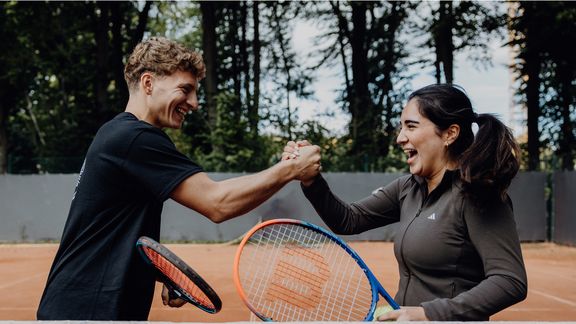
Gender Relations in Sports
Through various projects, we seek to answer the question of how societal gender norms shape the structures and practices of sports, thereby creating inequalities, and how these inequalities can be addressed. While we view the gender norms of sports as traditionally binary, our analyses go beyond this framework to acknowledge and understand gender and sexual orientation in all their diversity.
Research Projects: Gender Relations in Sports
Socioeconomic Inequality and Classism in Sports
People’s socioeconomic background continues to have a significant impact on their participation in sports. In the sociology of sport, however, research into vertical inequalities (social class, stratum) has increasingly fallen by the wayside in recent decades in favor of horizontal inequalities (gender, migration). We aim to close this research gap by addressing the issue of socioeconomic inequality and classism in sport.
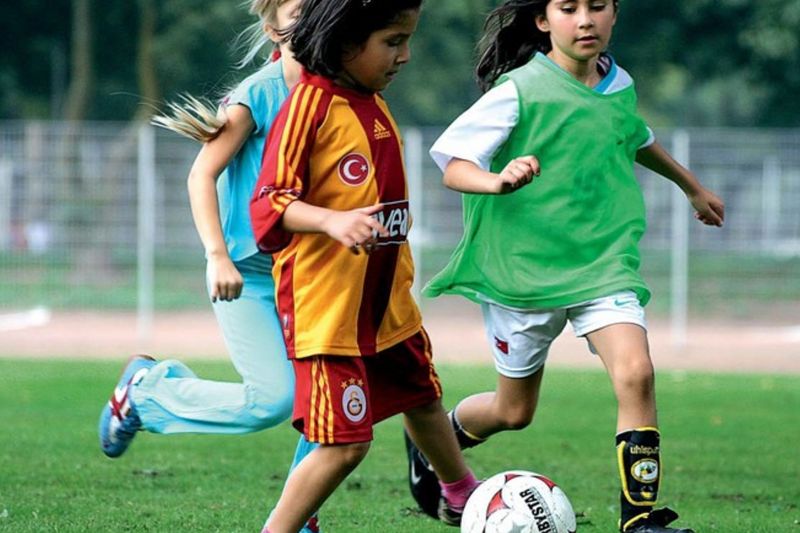
Migration, Refugees, and Racism in Sports
Global refugee movements and the associated immigration have transformed our society and the world of sports. Sport is widely recognized as having great potential for social integration and fostering cohesion. At the same time, sport is also a setting where intercultural conflicts and racism can arise. In the Department of Diversity Studies, we analyze these issues from a perspective critical of discrimination and seek to develop approaches to promote social integration in organized sports and school sports.
Research Projects: Migration, Refugees, and Racism in Sports

Sexual and Interpersonal Violence in Sports
While sexual violence in sports was long considered a taboo subject, studies conducted at the German Sport University Cologne under the direction of Bettina Rulofs have helped shed light on this problem in sports. We understand sexualized violence, as well as other forms of interpersonal violence such as psychological and physical violence, as forms of power exercise embedded in social inequalities (e.g., gender and generational relations).
In this area of research, we have been collaborating for many years with internal and external partners to facilitate interdisciplinary research. Our partners include Dr. Jeannine Ohlert (Department of Psychology at GSU Cologne), Prof. Dr. Martin and Dr. Caroline Bechtel (Institute for Sports Law at GSU Cologne), Prof. Dr. Marc Allroggen (University Hospital Ulm), and Prof. Dr. Mike Hartill (Edge Hill University).
For knowledge transfer, we collaborate with various sports associations (including the German Sports Youth, the German Olympic Sports Confederation, and the North Rhine-Westphalia State Sports Federation) to develop practical concepts and tools for protection against interpersonal violence.
Research Projects: Sexual and Interpersonal Violence in Sports
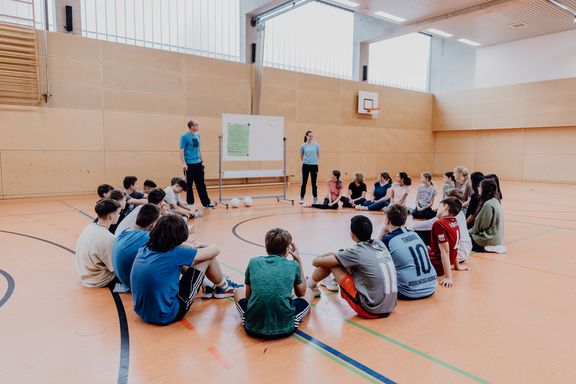
Addressing Diversity and Promoting Inclusion in School Sports
School sports is the setting where all children and adolescents are first introduced to sports. To promote lifelong participation in sports for everyone, the groundwork can therefore be laid as early as in school sports.
In this area, with funding from the Federal Ministry of Education and Research, we have conducted various projects to more closely examine how heterogeneity is addressed in school sports through studies and have developed concepts and materials to promote inclusion and participation in school sports.