Innovation from Research
At the German Sport University Cologne, we generate innovations and research findings that are relevant to society. We promote the transfer of knowledge and technology by putting scientific findings into practice at an early stage, developing them further in collaboration with partners, and embedding them sustainably in society, in the fields of sport and healthcare, in politics and in business.
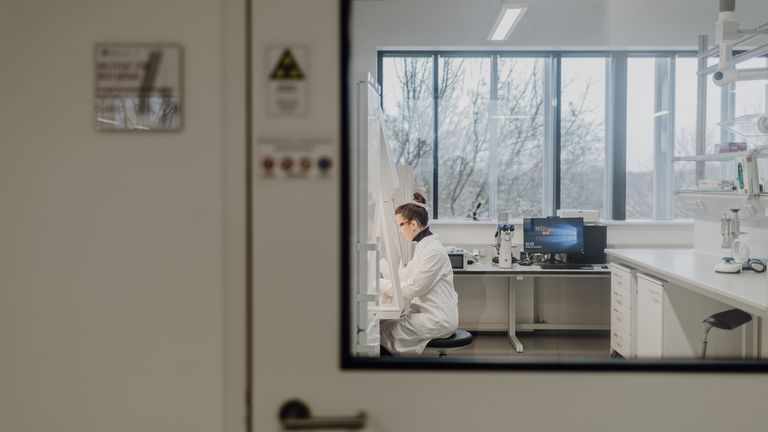
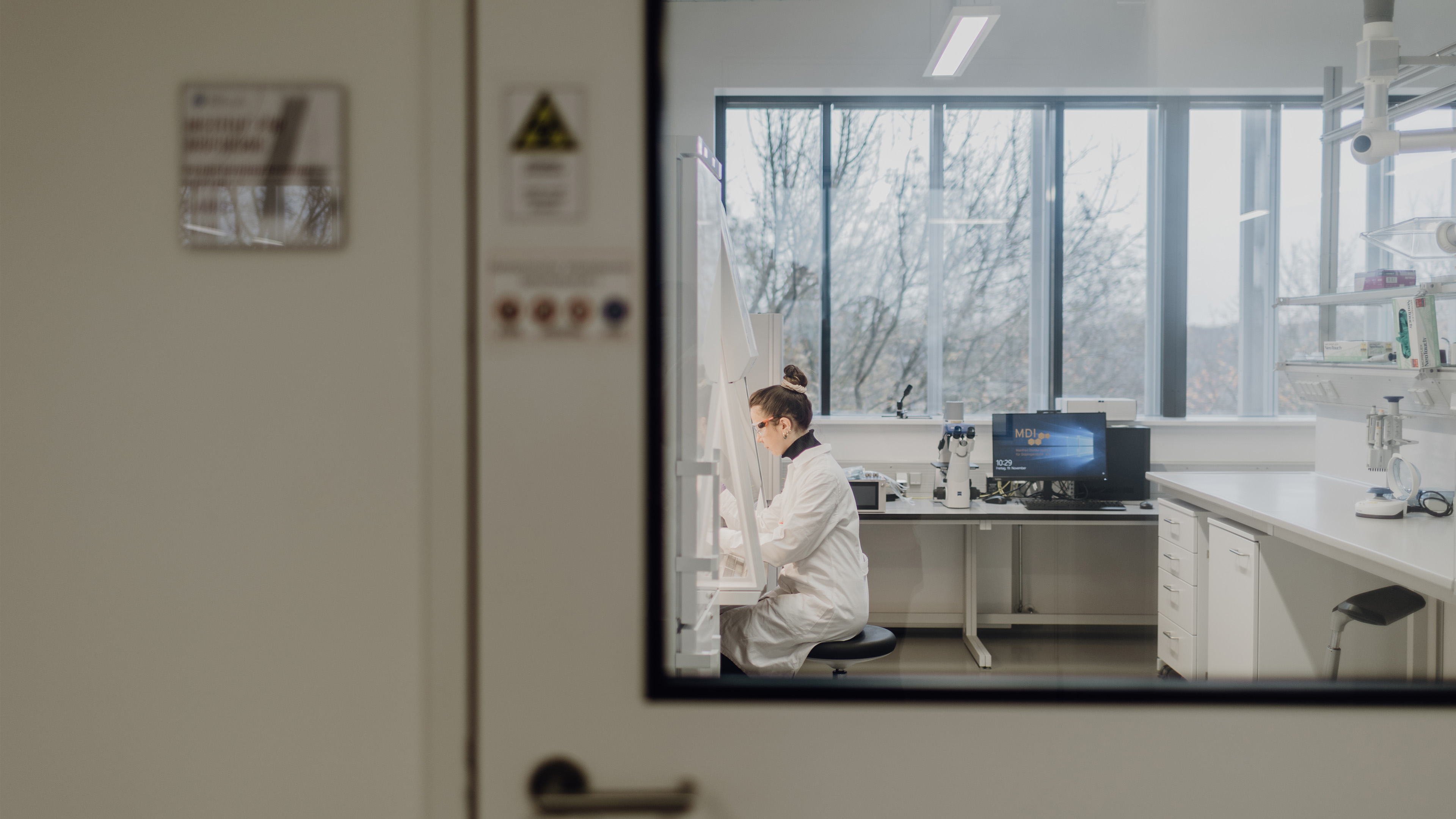
Knowledge and technology transfer in sport, physical activity and health
The German Sport University Cologne sees itself as a leading research and educational institution in the fields of sport, physical activity, health and performance. We develop innovative solutions to promote a healthy, physically active and high-performing society, as well as social cohesion. We combine academic excellence with social responsibility.
We’re the right choice for you if you …
- as a researcher, you wish to put research findings into practice or seek collaboration partners
- if you are a business wishing to utilise scientific expertise for innovative products, services or projects
- if you are a local authority, school or public body looking for evidence-based solutions for physical activity, sport or health
- if you are an institution or association wishing to tackle societal challenges in collaboration with the scientific community
- are interested in research that makes a difference and the transfer of scientific findings into practice
- wish to develop innovations in the fields of sport and health with scientific support
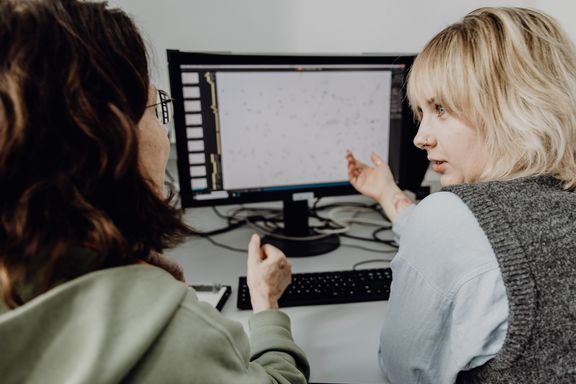
Our understanding of transfer
Sharing knowledge. Shaping the future.
We regard knowledge transfer as an integral part of the entire research process, enabling research to generate added value for society (knowledge valorisation).
Active knowledge and technology transfer is a two-way process and, for us, involves gaining scientific insights through collaboration with university and non-university partners and making these applicable and usable within society. Transfer is a central component of our university’s strategic direction.
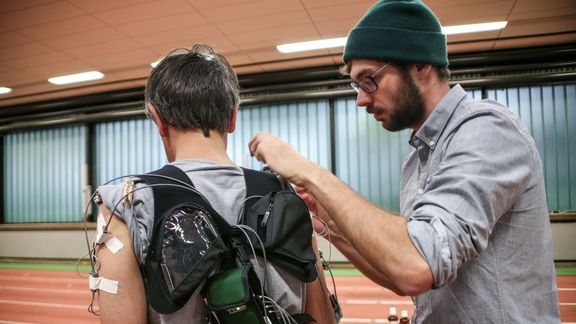
Our transfer activities
We support a wide range of forms of knowledge transfer, including:
- Support for business start-ups and start-up mentoring
- Patents, intellectual property rights and licensing
- Collaborations with businesses, local authorities and schools
- Science communication and public engagement
- Networks linking research, industry and society
Our culture of knowledge transfer is characterised by openness, responsibility and cooperation on an equal footing. Researchers, students and staff at the German Sport University Cologne work together with partners to translate scientific findings into sustainable products, services, concepts, interventions, decision-making frameworks and societal solutions. This is not merely about transferring knowledge from the university, but about shared processes of learning, development and innovation.
In this way, the German Sport University Cologne strengthens its role as a scientific driving force in the field of sport and physical activity: regionally rooted in Cologne and North Rhine-Westphalia, nationally networked with stakeholders in sport, and internationally connected within the European innovation and knowledge transfer landscape.
Our Key Areas of Transfer
People on the Move
In this research focus, the German Sport University Cologne is contributing to the adaptation of structures and processes to promote physical activity, as well as to the improvement of physical skills and programmes, with the aim of encouraging ‘physically inactive’ people in particular to become active within their own everyday environments.
Spaces for Physical Activity
In cooperation with local partners, the German Sport University Cologne facilitates access to healthy physical activity by designing social, attractive and contemporary recreational sports spaces. It also helps to reduce the barriers to the integration of physically inactive people into organised sport through diverse and inclusive (grassroots) sports clubs.
Healthy Physical Activity
In this focus area, technological and social innovations are developed in collaboration with target groups and practical partners from the sports market and the health sector, enabling active people to exercise in a healthy and effective manner. The implementation and management of healthy exercise practices contribute to prevention, diagnosis and therapy within sports science.
Performance
This priority area is dedicated to the technological, organisational and skills-based development of elite sport and its athletes. This priority area is already largely covered by the existing transfer centres.


Our Transfer Strategy
We regard it as our task to adapt findings from sports science, derived from high-quality research, more effectively to the needs of specific target groups, whilst taking into account the challenges, requirements and trends in sports practice and society, and to ensure they have a targeted impact. We have therefore defined knowledge and technology transfer as a strategic area of development. The transfer strategy is thus a central component of our university’s overall strategy.
Transfer potential
- A strong focus on practical application and interdisciplinary transfer potential in the context of sport and physical activity: a high proportion of third-party funding from industry and sports organisations. Direct societal relevance of inter- and transdisciplinary research topics (e.g. in the field of health and social inclusion through sport and physical activity).
- Excellent conditions: numerous individual and collaborative projects with a transfer focus carried out by our researchers; on this basis, a wide range of enquiries for collaborations with non-university partners arise.
- University continuing education: a range of over 80 different continuing education courses designed to share the latest scientific findings with professionals in the sports sector, academics, career changers and interested members of the public.
- Scientific dialogue: a wide range of events to promote scientific dialogue with the wider community in Cologne, attracting an audience from beyond the region.
- Start-ups: A vibrant start-up scene at our university and within the GATEWAY network of Cologne’s higher education institutions.
Get in touch with our transfer experts!

Anja Chevalier
Head of the Transfer & Start-up Department

Pavana Lakshmi Vaddavalli
Innovation & Transfer
Transfer & Incorporation
-
location_on
Institute Building III / Spoho Campus
- mail transferstelle(at)dshs-koeln.de
Close collaboration between research and knowledge transfer
At the German Sport University Cologne, research and knowledge transfer are closely interlinked. Teams from both areas engage in regular dialogue in order to identify the innovation potential of research findings at an early stage and to harness their potential added value for society, the economy and academia.
Knowledge transfer is not viewed as an additional step at the end of a research project, but rather as an approach that accompanies research processes from the very beginning. In this way, findings from sport science give rise to new applications, collaborations and start-up ideas that provide impetus for sport, health and physical activity in practice.