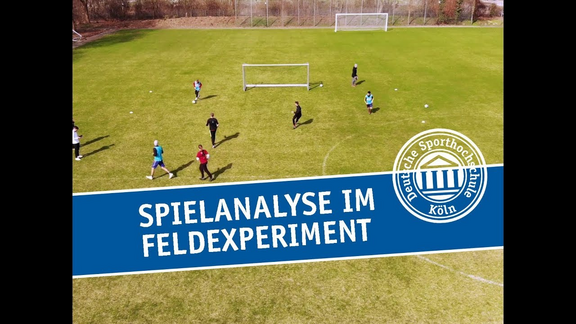
Game Analysis
Conference: The Match Plan Conference
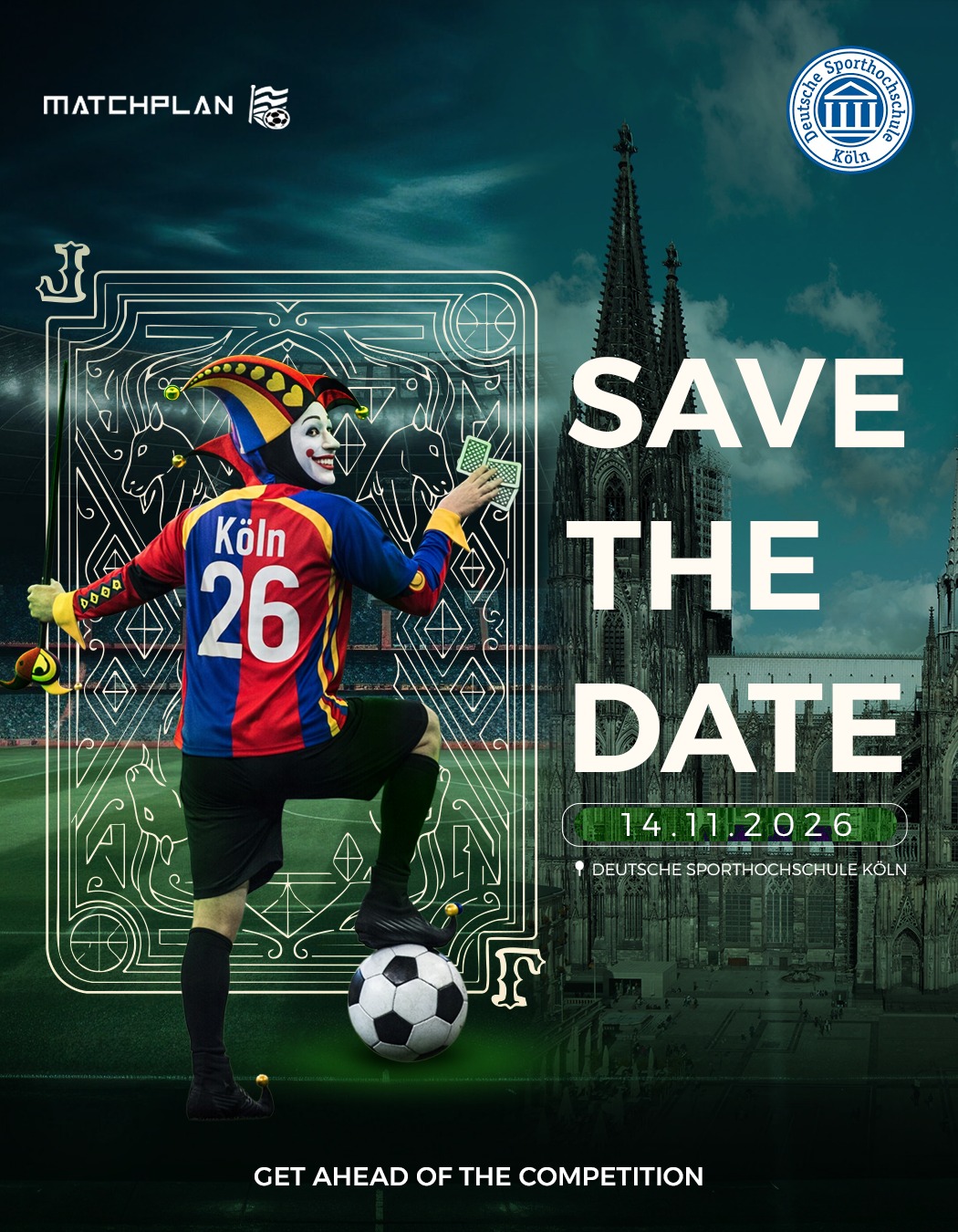
On November 14, the unique event for soccer enthusiasts and experts returns to the German Sport University for the third time: the Matchplan Conference. Under the academic direction of Prof. Dr. Memmert, the event offers an outstanding platform for lectures and workshops led by leading experts from the world of professional soccer. We will be able to welcome a maximum of 500 participants. Advance ticket sales have begun.
Education: Certificate program "Cologne Game Analysis Team"
since 2005 | DFB: German Men's National Team
For several years, the DSHS has been conducting a match analysis project funded by the DFB, which has been offered as a university continuing education program under the title “Match Analysis Team Cologne” since September 1, 2015. From 2005 to 2015, Dr. Nopp served as co-project director of the DFB Scouting Project, which focuses on supporting the coaching and scouting staff of the German men’s senior national team in preparing for opponents through systematic computer- and video-based game analysis.
In this context, the Game Analysis Unit at the DSHS has played a central role in eight final tournaments to date. A total of around 600 students have been trained through this program, some of whom have continued their professional careers in the field of game analysis—including at professional soccer clubs and companies.
Education: Certificate program "Cologne Game Analysis Team"
Student analysts make up the analysis team at DFB scouting tournaments (Duisburg).
During the 2007 and 2015 FIFA World Cup finals, staff members from the Game Analysis Unit provided support to the German women’s national team in their capacity as freelancers. In 2007, Dr. Nopp was responsible for opponent analysis and post-match analysis for the German team before and during the 2007 FIFA Women’s World Cup in China. At the 2015 FIFA Women’s World Cup, Dennis Hill and Martin Vogelbein were part of the on-site scouting team.
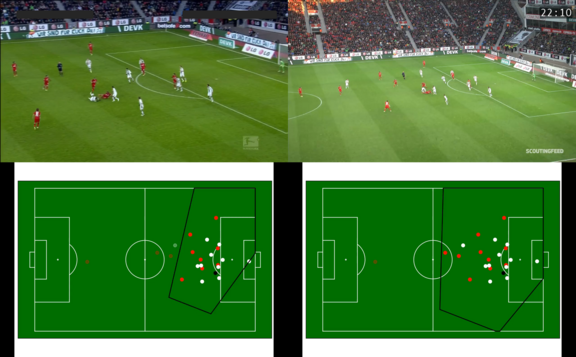
Position data in top-level soccer
2015 | DFL: Position data in professional soccer
In a competitive project titled “Position Data in Professional Soccer” announced by the German Football League (DFL), the Institute for Cognitive and Sports Game Research at the German Sport University Cologne was awarded the contract. In making its selection, the DFL considered criteria such as (applied) research expertise, resource allocation, methodology, and project content in accordance with scientific standards, as well as innovation capacity (exemplary product ideas) and practical relevance. According to the DFL, the results can benefit the professional squads of the clubs and corporations in the Bundesliga and the 2. Bundesliga (“clubs”), but also support the work of youth development centers and coach training. The applicant, Prof. Daniel Memmert, summarizes: “We are very pleased that, based on our six years of basic research in computer science supported by the DFG, we are now able to apply our expertise in an application-relevant context—the 1st and 2nd Bundesliga.
The central goal of the project is to automatically calculate various novel key performance indices using neural networks. The number of games analyzed could be set at up to 50 1st Bundesliga games and 50 2nd Bundesliga games. This study can provide insightful findings regarding tactical components for both movement/training science and practical applications (clubs: analyzing game behavior, managing training processes, and improving transfer decisions), and above all for public perception (e.g., media: new products for reporting) of the sport.
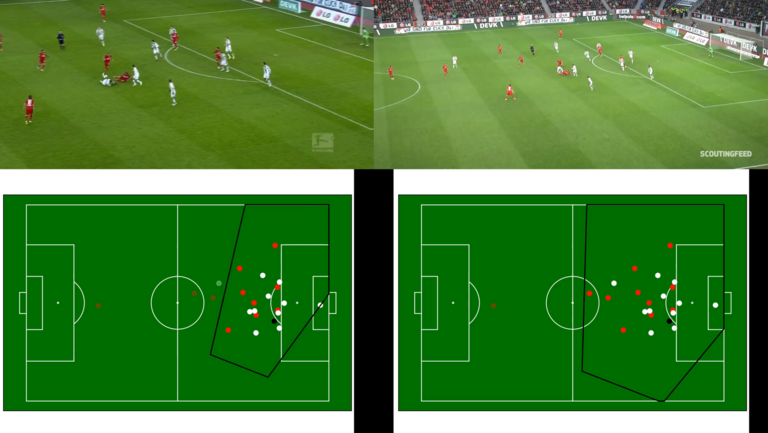
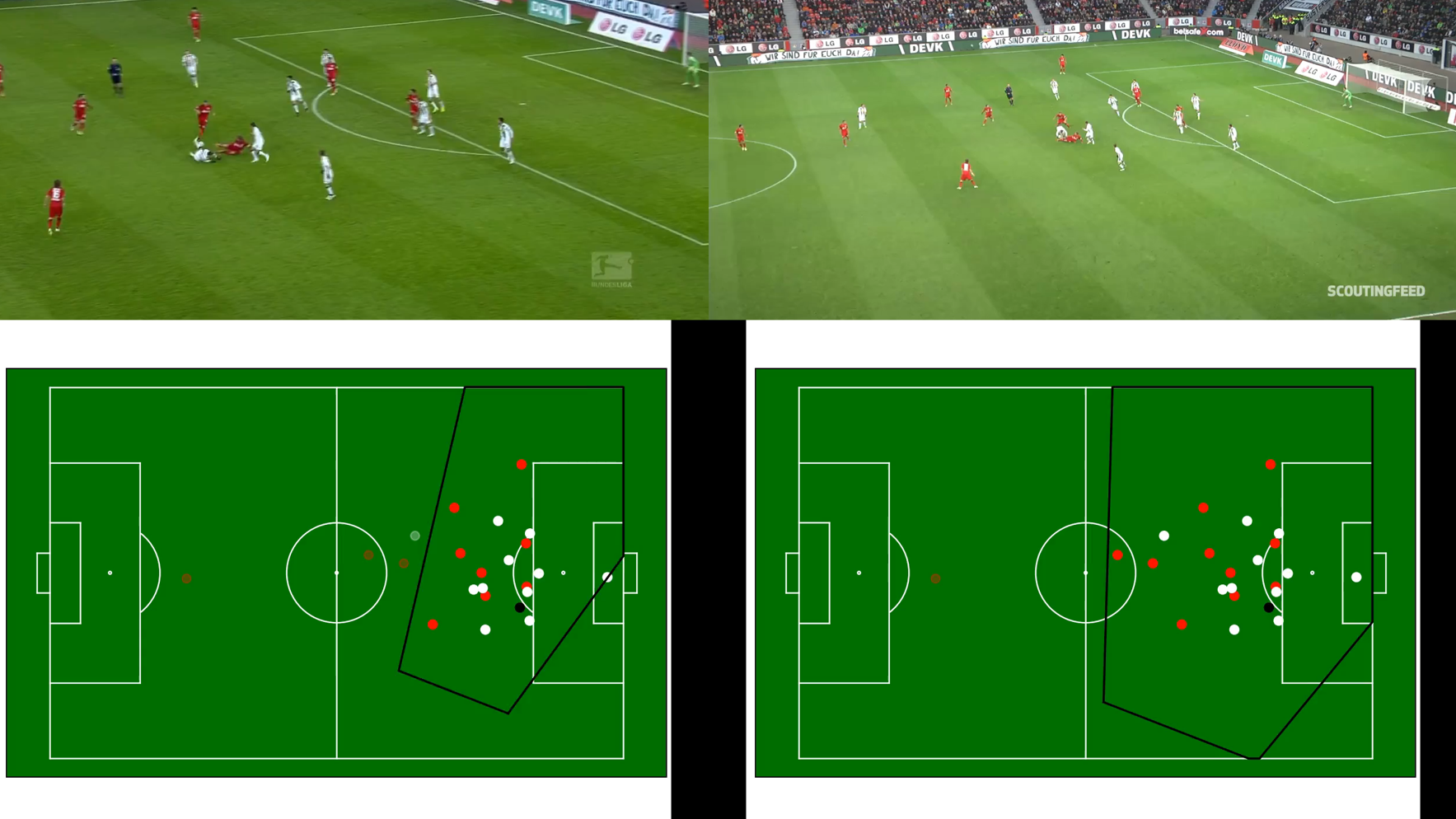
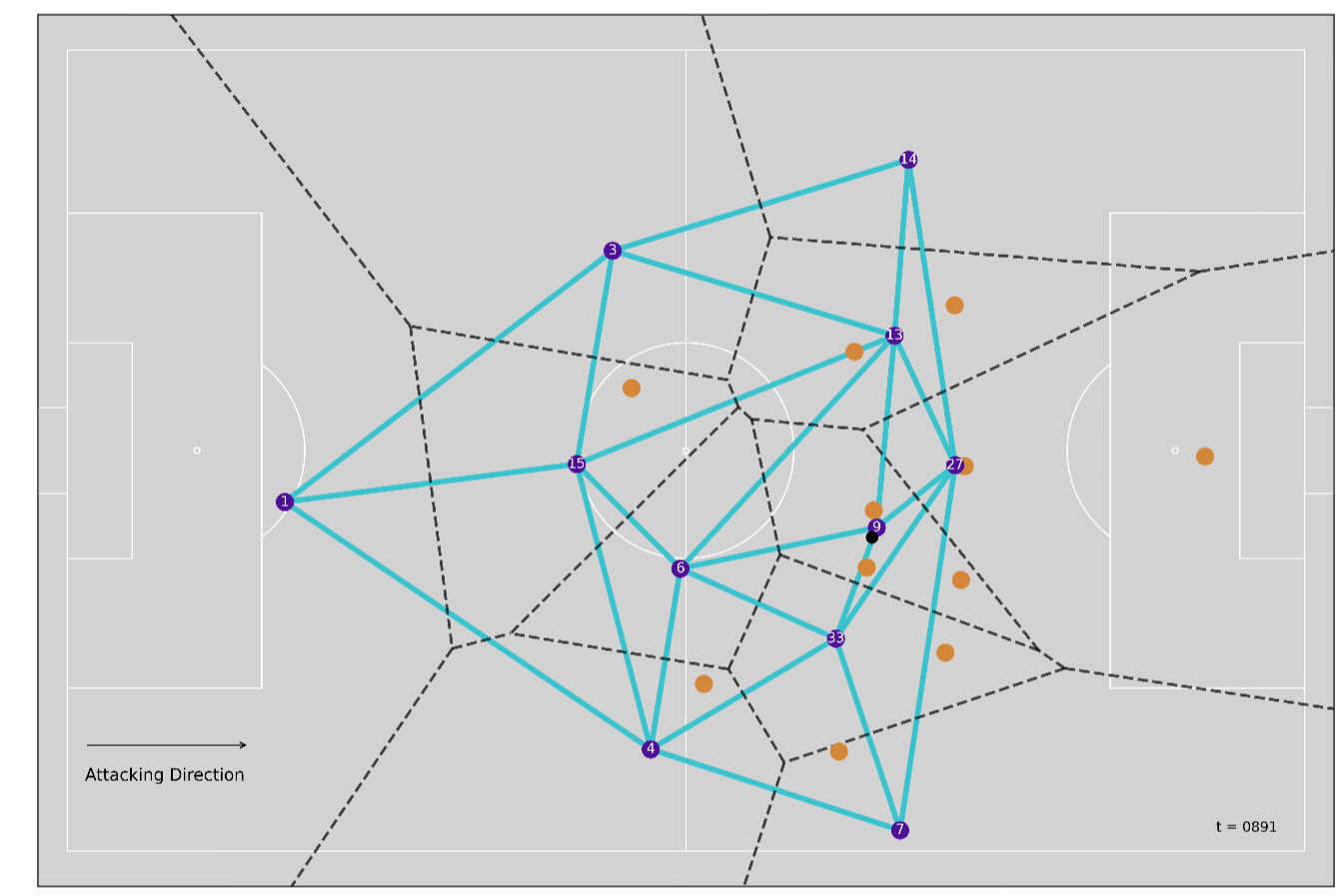
The SOCCER analysis tool developed by Prof. Perl and Prof. Memmert is used in this project, which combines conventional data analysis, dynamic state-event modeling, and artificial neural networks. Events such as ball recovery or ball loss are calculated based on player and ball positions. Based on these positions, a neural network also identifies time-dependent player positions, thereby enabling the embedding of events and the resulting processes—such as defensive buildup, ball recovery, or attack—within their respective situational contexts. Using a suitable success indicator, actions and processes can then be automatically evaluated in terms of their success, and both quantitative and qualitative analyses within the situational context become possible.
Position data in top-level soccer
In a competitive project titled “Position Data in Professional Soccer” announced by the German Football League (DFL), the Institute for Cognitive and Sports Game Research at the German Sport University Cologne was awarded the contract. In making its selection, the DFL considered criteria such as (applied) research expertise, resource allocation, methodology, and project content in accordance with scientific standards, as well as innovative capacity (exemplary product ideas) and practical relevance. According to the DFL, the results can benefit the professional squads of Bundesliga and 2. Bundesliga clubs and corporations (“clubs”), as well as support the work of youth development centers and coach training. The applicant, Prof. Daniel Memmert, summarizes: “We are very pleased that, based on our six years of basic research in computer science supported by the DFG, we are now able to apply our expertise in an application-relevant context—the 1st and 2nd Bundesliga.
The central goal of the project is to automatically calculate various novel key performance indices using neural networks. The number of games analyzed could be set at up to 50 1st Bundesliga games and 50 2nd Bundesliga games. This study can provide insightful findings regarding tactical components for both movement/training science and practical applications (clubs: analyzing game behavior, managing training processes, and improving transfer decisions), and above all for public perception (e.g., media: new products for reporting) of the sport.
The SOCCER analysis tool developed by Prof. Perl and Prof. Memmert is used in this project, which combines conventional data analysis, dynamic state-event modeling, and artificial neural networks. Events such as ball recovery or ball loss are calculated based on player and ball positions. Based on these positions, a neural network also identifies time-dependent player positions, thereby enabling the embedding of events and the resulting processes—such as defensive buildup, ball recovery, or attack—within their respective situational contexts. Using a suitable success indicator, actions and processes can then be automatically evaluated for their success, and both quantitative and qualitative analyses within the situational context become possible.
Staff
Prof. Dr. Daniel Memmert (Project Leader)
Domink Raabe (research assistant)
Aljoscha Franzen (student assistant)
Research: Big Data in Sports
Key Findings
- Identification of team and group tactical processes in soccer
- Analysis of interaction processes based on positional data
- Identification and classification of team tactical processes
- Identification and classification of group tactical processes
- Recognition and classification of individual tactical processes
- Assessment of tactical creativity/game intelligence
- Analysis of creativity-oriented training programs
- Complex decision-making research
- Analysis and simulation of complex game behavior using dynamic neural networks
- Visualization of game processes through trajectories on neural networks
- Pattern recognition analysis of complex game processes in soccer using trajectories on neural networks
Grant applications and awards
- German Research Foundation (DFG, 2008–2013) (ME 2678/7-1)
- DFG (ME 2678/3-2) Federal Institute for Sports Science (BISp, 2004–2006) (VF 407/06/12/2001–2002) BISp (VF 07/06/04/2005–2006)
- Documenta 2007
- DAAD 2010 and ERASMUS 2008, 2009, 2010
- ERASMUS Scholarship (2004, 2007, 2009)
- German Academic Exchange Service (DAAD, 2010–2011)
Success in Sports Thanks to AI? A research project in sports data analysis using data from soccer, basketball, and handball [BMBF]