FocusRun
Attention Deficit Hyperactivity Disorder (ADHD) is one of the most common neurodevelopmental conditions affecting individuals across the lifespan, including adults. Existing therapeutic approaches have, however, focused predominantly on children and adolescents, and are in some cases only partially effective. Physical exercise may offer a promising complementary approach. But how exactly does aerobic exercise affect ADHD symptomatology in adults? And how should training be structured to achieve optimal outcomes? This research project examines various training methods (continuous vs. interval) and exercise intensities (moderate vs. intense) in running, and analyses the psychological and neurophysiological effects.
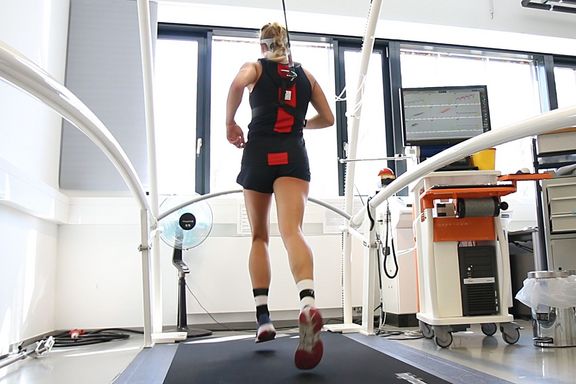
Project Description
Background:
Current treatment of ADHD relies primarily on psychopharmacological interventions, which are not always sufficiently effective for all individuals. Physical exercise may serve as a valuable adjunct. In children and adolescents with ADHD, endurance-based exercise in particular appears to alleviate certain symptoms and support executive functioning. Findings in adults with ADHD remain scarce and neural explanations for these effects remain lacking. Furthermore, it remains unclear to what extent different training methods (continuous vs. interval) and exercise load characteristics (moderate vs. intense) influence outcomes. A deeper understanding of the exercise-induced mechanisms is essential for the evidence-based implementation of exercise as a therapeutic tool for adults with ADHD.
Methodology:
In a randomised, controlled crossover study, participants complete the following running protocols based on a graded exercise test: (1) moderate-intensity continuous training (MICT) for 30 minutes, as well as two 20-minute, distance-matched interval runs (1 min × 1 min) at moderate intensity (MIIT) and high intensity (HIIT). Using a pre-post design, affective state, cognitive performance, and brain activity are recorded using electroencephalography (EEG).
Partners & Sponsors
Funding
This research project is funded by the internal research funding program of the German Sport University Cologne, awarded to Leonard Braunsmann (L-11-10011-281-152000).
Network partners
Dr. Aylin Mehren (University Hospital Bonn, Department of Psychiatry and Psychotherapy)