Research & Projects
Learn more about our research activities
Research Areas
Department I - Movement Techniques, Motor Learning, and Media Pedagogy - Track and Field, Swimming, Gymnastics, Golf
The department’s staff are involved in the overarching areas of competitive sports, recreational sports, and school sports. In these areas, the fundamental types of motor stress are examined, which are applied within the context of movement techniques in the primary fields of application (gymnastics, track and field, swimming, golf, and related individual sports).
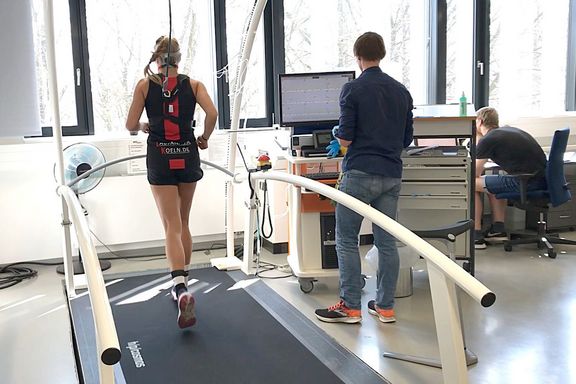
The focus is on coordination, strength, endurance, and flexibility, which are not considered in isolation but within the context of sport-specific movement techniques. Technique analysis plays a significant role in this context. It goes beyond a mere description of motor solutions to movement tasks and focuses primarily on identifying the movement-technical factors that determine motor performance.
Closely intertwined with this understanding of technique analysis are, in particular, aspects of neuromuscular coordination and its temporal sequence. However, the energetic implementation and neural generation of movement programs, their optimization and modification, their stability, and their dependence on age and health
Department II - Movement Neuroscience
The department’s primary focus is on researching the influence and interaction of various forms of physical exertion on the brain, with particular emphasis on the many nuances of the major types of motor stress — coordination, strength, and endurance. A central research project involves the analysis of the brain’s neural and endocrine systems during motor activity, as well as the measurement of cerebral blood flow and brain metabolism during cognitive and physical exertion in trained and untrained individuals of various age groups.
The findings are discussed, among other things, in terms of their relevance to health status, central fatigue, overtraining, and mood. The significance of the neurotransmitters serotonin and dopamine for physical and cognitive performance, as well as the adaptations of these neurotransmitter systems to training of varying intensities, is the focus of research interest.
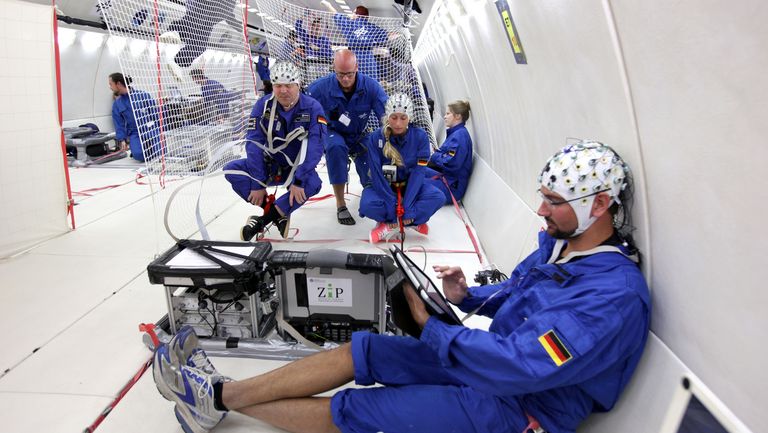
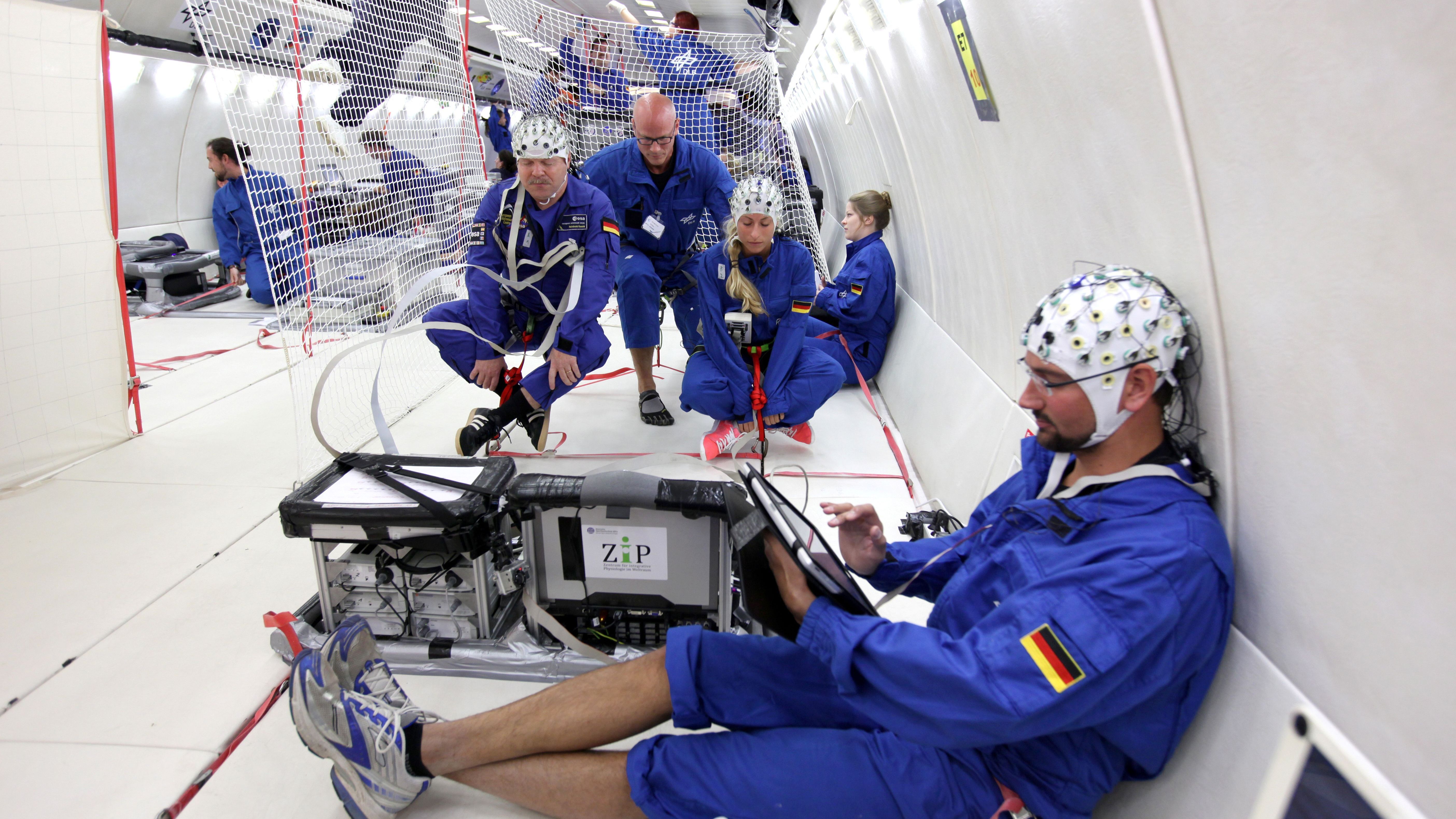
The influence of specific environmental conditions, e.g., weightlessness, on motor performance and learning ability is also investigated, taking into account the interaction of physiological, endocrinological, and psychological findings.
Department III - Physical Activity and Health Promotion
In 2008, the institute expanded its research area focused on movement and health promotion. Today’s lifestyle leads to obesity and reduced physical fitness among children and adolescents, as well as adults. This is associated with secondary and comorbid conditions such as diabetes mellitus, hypertension, etc.
These developments present new challenges for both science and practice. The department’s work focuses on the scientific analysis of potential correlations and the development of effective and sustainable countermeasures (www.chilt.de). To this end, in addition to designing motor assessment procedures for children and adolescents (www.fitnessolympiade.de), real-life-oriented programs are developed and evaluated. In cooperation with the Cologne Center for Prevention in Childhood and Adolescence, the benefits of physical activity during pregnancy in terms of prenatal imprinting are being investigated in order to derive practical recommendations for action based on these findings.
Department IV - Movement Rehabilitation, Neuromechanics, and Paralympic Sports
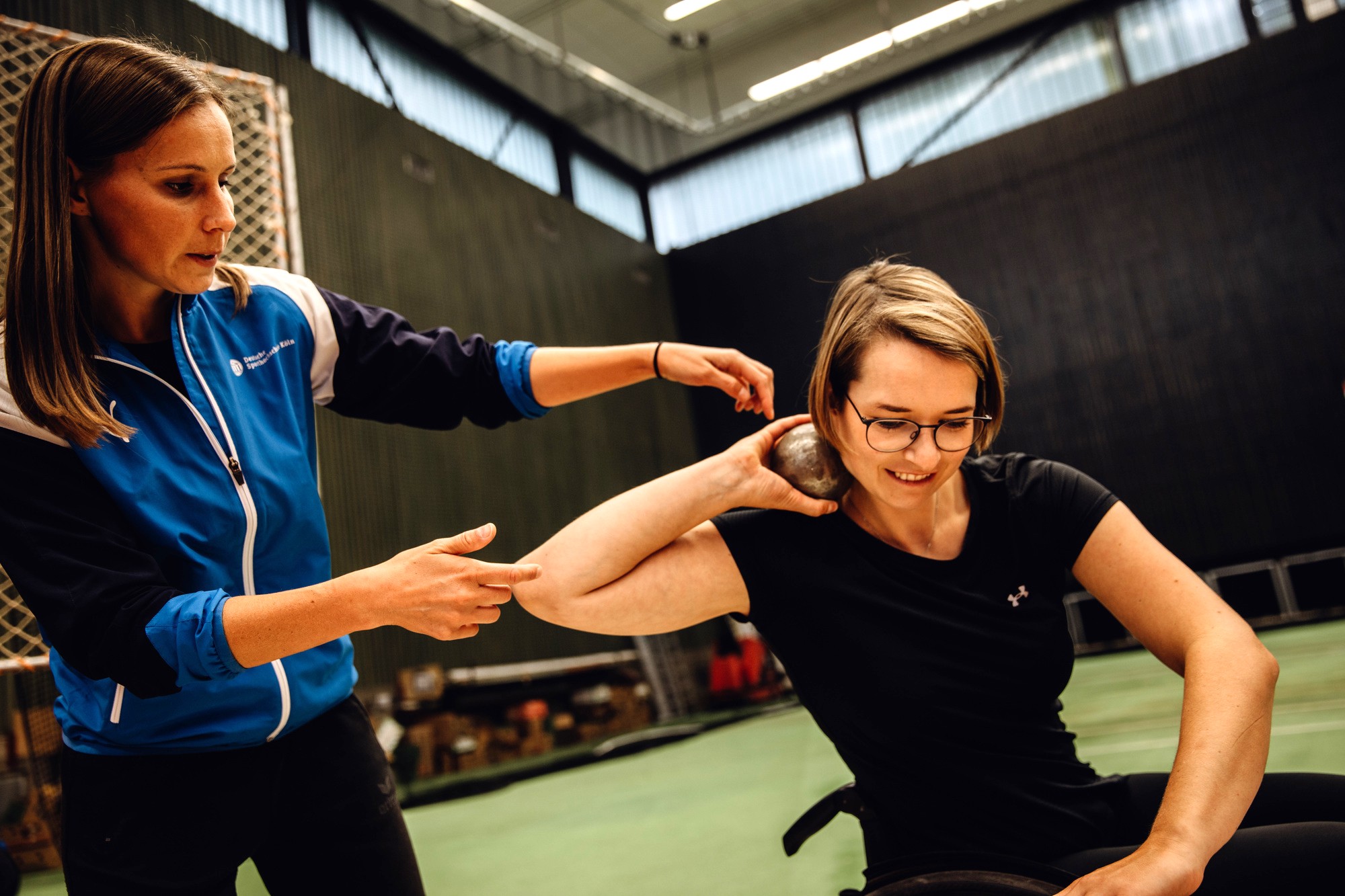
The staff of Department IV focus on specific aspects of movement science, ranging from rehabilitation to elite sports, with a particular emphasis on Paralympic sports.
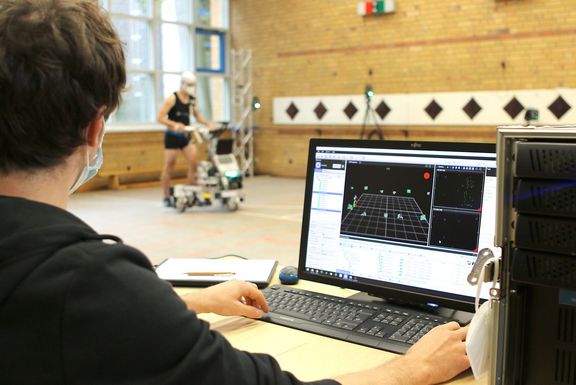
In movement rehabilitation, the primary priority is on developing intelligent technologies designed to optimize rehabilitation processes, ensuring that people can become independent in their daily lives and enabling the fullest possible participation in all areas of life.
Movement neuromechanics represents an interdisciplinary approach to movement research in this context. It combines methods and insights from neuroscience and the mechanics of the musculoskeletal system. The emphasis is on the complexity and dynamics of the entire system, comprising the central planning and generation of movement, neural control, and the involvement of mechanical components of the musculoskeletal system. The knowledge generated regarding uman body movement is applied for analysis and performance enhancement in recreational, preventive, and rehabilitative sports, as well as in Paralympic and Olympic elite sports.


