Teacher training at the GSU
Teaching sport, promoting physical activity and supporting young people: the teacher training programme at the German Sport University Cologne lays the foundations for this.
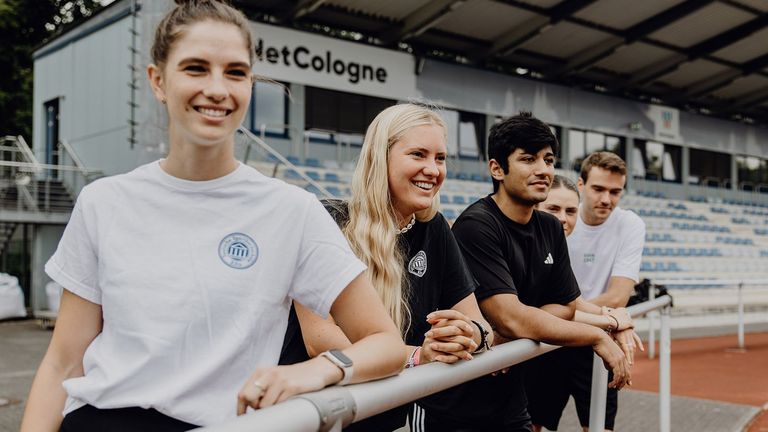
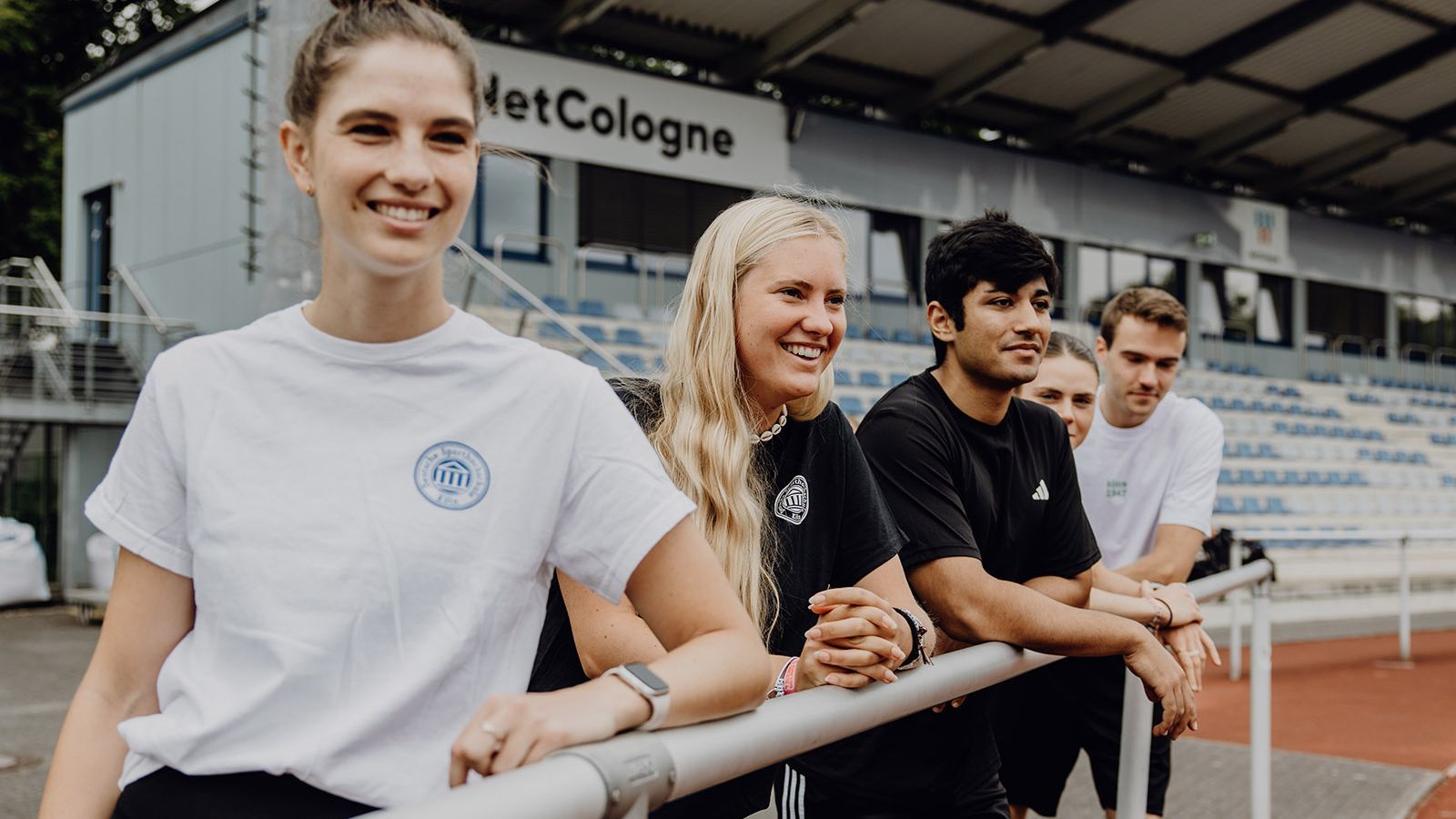
Would you like to become a PE teacher and inspire children and young people to take part in physical activity? The German Sport University Cologne offers a university-level teacher training programme in Physical Education for five types of school. The teacher training programme combines sport science with pedagogical skills and provides you with targeted preparation for a future career in teaching.
The programme is structured as a six-semester Bachelor’s degree (B.A.), a four-semester Master’s degree (M.Ed.) and the subsequent teaching placement (Referendariat). The aim is to qualify you for teacher training at state schools in North Rhine-Westphalia.
In addition to Physical Education, you will study a second subject at one of the partner universities – the University of Cologne or the University of Siegen. To qualify for teacher training at grammar schools and comprehensive schools, you will also complete a course in educational science at the German Sport University Cologne.
The teacher training programme is tailored to specific school types and combines theoretical content with practical experience in a school setting.
What types of school can you study at GSU?



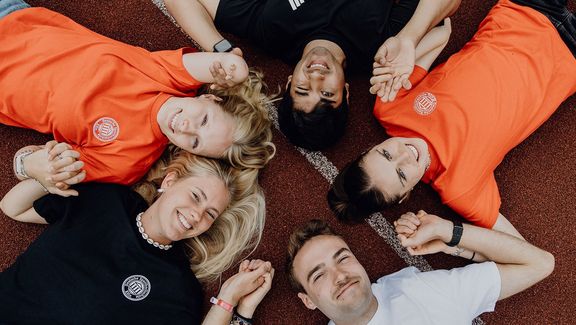
Are you interested in studying to become a teacher at GSU?
At the Teacher Training Information Session on campus, you’ll find out everything you need to know about the five types of school.
Agenda
- Study program and content in teacher training
- What makes the teacher training programme at GSU special
- Entry requirements for the subject of Physical Education
- Starting your studies – application and admission
- Is teacher training right for me?
- Open Q&A session
Exciting events for prospective students

Frequently Asked Questions about Teacher Training
Yes, proof of particular aptitude for a degree in sport (Physical aptitude test/physical aptitude test) is an entry requirement for the Bachelor’s degree programme in Physical Education.
If you wish to study Sport in Cologne, you must apply to and enrol at the German Sport University Cologne. In addition, you must apply for your chosen second subject at the partner university (the University of Siegen or the University of Cologne). You will therefore be studying at two universities (the German Sport University Cologne and the partner university).
You cannot choose your status as a first-time student freely; instead, this status is compulsory at the university where you are studying Educational Sciences (BiWi). This is also where you pay your semester fee. First-time student status at the German Sport University Cologne is only compulsory or possible for the teacher training programme for grammar schools and comprehensive schools.
The supplementary subject can only be studied at one of GSU’s two partner universities: the University of Cologne or the University of Siegen.
Educational sciences are studied at the respective university where one holds first-year student status.
First-year student status at GSU is only compulsory or possible for the teacher training programme for grammar schools and comprehensive schools. The following rules apply:
- In cooperation with the University of Cologne, first-year student status at GSU is compulsory for both Bachelor’s and Master’s programmes.
- In co-operation with the University of Siegen, for first-year student status in the Bachelor’s programme, one of the two universities (GSU or the University of Siegen) may be chosen. In the Master’s programme, first-year student status – and thus the BiWi programme – at the University of Siegen is compulsory.
For all other four school types, the educational sciences programme must therefore always be completed at the partner university!
If you are studying a joint degree programme at two university campuses – which is the case for teacher training programmes – the semester fee is paid to the university where you are registered as your primary institution. There is no double payment.
Yes, but in order to successfully complete a teacher training degree programme, a second subject must be studied at a GSU partner university as part of a subject combination recognised under the Teacher Training Admission Regulations. Proof of this second subject must be provided by the end of the second academic semester in the subject of Sport at the latest. Provisional enrolment in the subject of Sport without admission to a suitable second subject is therefore possible – albeit for a limited period.
It is not possible to study Physical Education as a third subject as part of the teacher training programme at the University of Cologne. On its website, the University of Cologne explains that the selection of third subjects is based on the fact that all other subjects (including Physical Education) are subject to admission restrictions, and that students choosing a third subject should not take places away from other students.
Do you have any further questions or need more information?
The Centre for Sports Teacher Training is always on hand to help you.
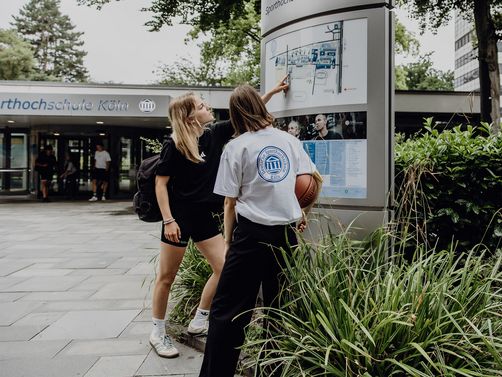
Do I have what it takes to be a teacher?
The teaching profession is varied and involves a great deal of responsibility – no two school days are the same. You work closely with children and young people, supporting them through important stages of their lives and playing an active role in shaping their personal and academic development.
Teaching and educating are at the heart of the profession. As well as imparting subject knowledge, this involves assessing pupils’ learning progress, providing individual support and responding to the diverse needs within the class. Educational tasks and the pedagogical approach to young people are an essential part of day-to-day work.
The following qualities are particularly important for teacher training and the subsequent career: a love of working with children and young people, empathy, good communication skills, as well as commitment and patience. Organisational skills, resilience, an open-minded attitude and a positive, reflective approach to the challenges of everyday school life are also essential.