home Startseite arrow_back zurück

  • Intranet für Studierende und Mitarbeitende

  • north_east Forschungsinformationssystem (FIS)

  • north_east Jobbörse

  • north_east Mensa

  • north_east mySpoho

  • Personenverzeichnis

  • north_east Spohoshop

  • Zentralbibliothek
home Startseite arrow_back zurück

  • Universität

    • Universität

    • Profil

      • Profil

      • Porträt

      • Unser Leitbild

      • Zahlen und Fakten

      • Auszeichnungen und Preise

      • Gleichstellung und Diversität

        • Gleichstellung und Diversität

        • Karriereförderung für Frauen

      • Nachhaltigkeit und Umweltschutz

      • International

        • International

        • Hochschulpartnerschaften

      • Partnerschaften und Kooperationen

        • Partnerschaften und Kooperationen

        • Kooperationsmöglichkeiten

    • Organisation

      • Organisation

      • Hochschulleitung

        • Hochschulleitung

        • Das Rektorat

          • Das Rektorat

          • Amtliche Mitteilungen

        • Der Senat

        • Der Hochschulrat

      • Verwaltung und Stabsstellen

      • Organe und Gremien

        • Organe und Gremien

        • Universitätskommissionen

        • Gleichstellungskommission

        • Nachhaltigkeitskommission

        • Ethikkommission

        • Prüfungsausschüsse

        • Promotionsausschuss

        • Habilitationsausschuss

      • Institute und wissenschaftliche Einrichtungen

      • Anlaufstellen und Services

        • Anlaufstellen und Services

        • Ambulanz

        • Career Service

        • Familienservice

        • Gästehaus

        • InfoPoint

        • International Office

        • Marketing

          • Marketing

          • Spohoshop

        • Presse und Kommunikation

        • Prüfungsamt

        • Studienberatung

        • Studierendensekretariat

        • Zentrale Betriebseinheit Informationstechnologie

      • Personenverzeichnis

    • Die Uni als Arbeitgeberin

      • Die Uni als Arbeitgeberin

      • Unsere Stellenangebote

      • Praktikum

        • Praktikum

        • Übersicht Praktikumsstellen

      • Personalentwicklung

      • Gesundheitsmanagement

    • Campusleben

      • Campusleben

      • Sport und Kultur

      • Wohnen und Übernachten

    • Newsroom

      • Newsroom

      • Podcast

        • Podcast

        • Wissenschaftspodcast Eine Runde mit

        • Studierendenpodcast Auszeit

      • Termine & Veranstaltungen

      • Meldungen

        • Meldungen

        • Pressemitteilungen

      • Publikationen

        • Publikationen

        • Campusmagazin ZeitLupe

          • Campusmagazin ZeitLupe

          • Sport und Ernährung

          • Olympische Spiele in Köln?

          • Gefahr im Gedränge

          • Darts - Ist das wirklich Sport?

        • Jahresbericht KOMPAKT

        • ZSLS

          • ZSLS

          • Hinweise für Autor*innen

          • Aktuelles

          • Impressum

      • Presseverteiler

      • Proband*innennewsletter

      • Pressespiegel

  • Studium

    • Studium

    • Vor dem Studium

      • Vor dem Studium

      • Veranstaltungen für Studieninteressierte

      • Bachelorstudium

        • Bachelorstudium

        • Sport- und Bewegungsvermittlung in Freizeit- und Breitensport

        • Sport und Gesundheit in Prävention und Therapie

        • Sportjournalismus

        • Sportmanagement und Sportkommunikation

        • Sport und Leistung

      • Masterstudium

        • Masterstudium

        • M.Sc. Sporttourismus und Destinationsmanagement

        • M.A. Sport-, Medien- und Kommunikationsforschung

        • M.Sc. Sport- und Bewegungstherapie, Prävention und bewegungsbezogene Gesundheitsforschung

        • M.Sc. Leistung, Training und Coaching im Spitzensport

        • M.Sc. Human Technology in Sports and Medicine

        • M.Sc. Psychology in Sport and Exercise

        • M.Sc. Sport Management

        • M.A. International Sport Development and Politics

      • Lehramtsstudium

        • Lehramtsstudium

        • Lehramt an Gymnasien und Gesamtschulen

        • Lehramt an Grundschulen

        • Lehramt an Haupt-, Real-, Sekundar- und Gesamtschulen

        • Lehramt an Berufskollegs

        • Lehramt für sonderpädagogische Förderung

      • Weiterbildendes Master­studium

        • Weiterbildendes Master­studium

        • Führungskompetenz und Management im Spitzensport

          • Führungskompetenz und Management im Spitzensport

          • Voraussetzungen und Bewerbung

        • Olympic Studies

          • Olympic Studies

          • Voraussetzungen und Bewerbung

          • Curriculum & Module

        • M.A. Spielanalyse

          • M.A. Spielanalyse

          • Voraussetzungen und Bewerbung

        • Tanz – Vermittlung, Forschung, künstlerische Praxis

          • Tanz – Vermittlung, Forschung, künstlerische Praxis

          • Zugangsvoraussetzungen, Bewerbung & Gebühren

        • Sport, Bewegung und Ernährung

          • Sport, Bewegung und Ernährung

          • Voraussetzungen und Bewerbung

        • Sportphysiotherapie

          • Sportphysiotherapie

          • Zugangsvoraussetzungen, Bewerbung und Gebühren

        • Schutz vor sexualisierter Gewalt und Machtmissbrauch in Organisationen

      • Campustag

      • Bewerbung

      • Voraussetzungen

        • Voraussetzungen

        • Eignungstest

        • Übetage

      • Immatrikulation

      • Studieren in besonderen Lebenslagen

        • Studieren in besonderen Lebenslagen

        • Studieren mit Kind oder Pflegeaufgaben

        • Studieren mit Behinderung oder chronischer Erkrankung

      • Studium und Spitzensport vereinen

      • Study@GSU

      • Gasthörerschaft

    • Während des Studiums

      • Während des Studiums

      • Veranstaltungen für Studierende

      • Anerkennung und Studiengangswechsel

      • Rückmeldung

      • Exmatrikulation

      • Next Career

    • Nach dem Studium

      • Nach dem Studium

      • Absolvent*innenfeier

      • Career Fitness Program

        • Career Fitness Program

        • Veranstaltungen

      • themenwochen

      • Alumni-Netzwerk

    • Studienstart Bachelor und Lehramt

    • Studienstart Master

    • Weiterbildung

    • In Köln studieren

      • In Köln studieren

      • Studienfinanzierung

        • Studienfinanzierung

        • Deutschlandstipendium

        • NRW-Sportstiftungs-Stipendium

    • Qualität in Studium und Lehre

      • Qualität in Studium und Lehre

      • Qualitätsmanagement

      • Feedback in Studium & Lehre

      • Lehrpreise und Förderprogramme

  • Forschung

    • Forschung

    • Forschungskultur

    • Institute und wissenschaftliche Einrichtungen

    • Wissenschaftliche Laufbahn

      • Wissenschaftliche Laufbahn

      • Promotion

        • Promotion

        • Promotionsstudium

      • Postdocs & Karriereentwicklung

      • Habilitation & Tenure Track

      • Professur

      • Interne Förderprogramme

    • Forschungs­management

      • Forschungs­management

      • Forschungsförderung

      • Forschungsinfrastruktur

      • Forschung international

      • Fit für Forschung und Transfer

      • Studien & Befragungen

        • Studien & Befragungen

        • Teilnehmende für eine Studie mit trans* Personen gesucht

        • Teilnehmende für Long-COVID-Studie gesucht

        • Wissenschaftliche Studie zu Ecdysteron, Muskelaufbau und Kraftentwicklung

        • Wie beeinflussen deine Zyklussymptome deine sportliche Leistungsfähigkeit und Trainingsbeteiligung?

        • Exoskelett-Forschung an der Deutschen Sporthochschule Köln

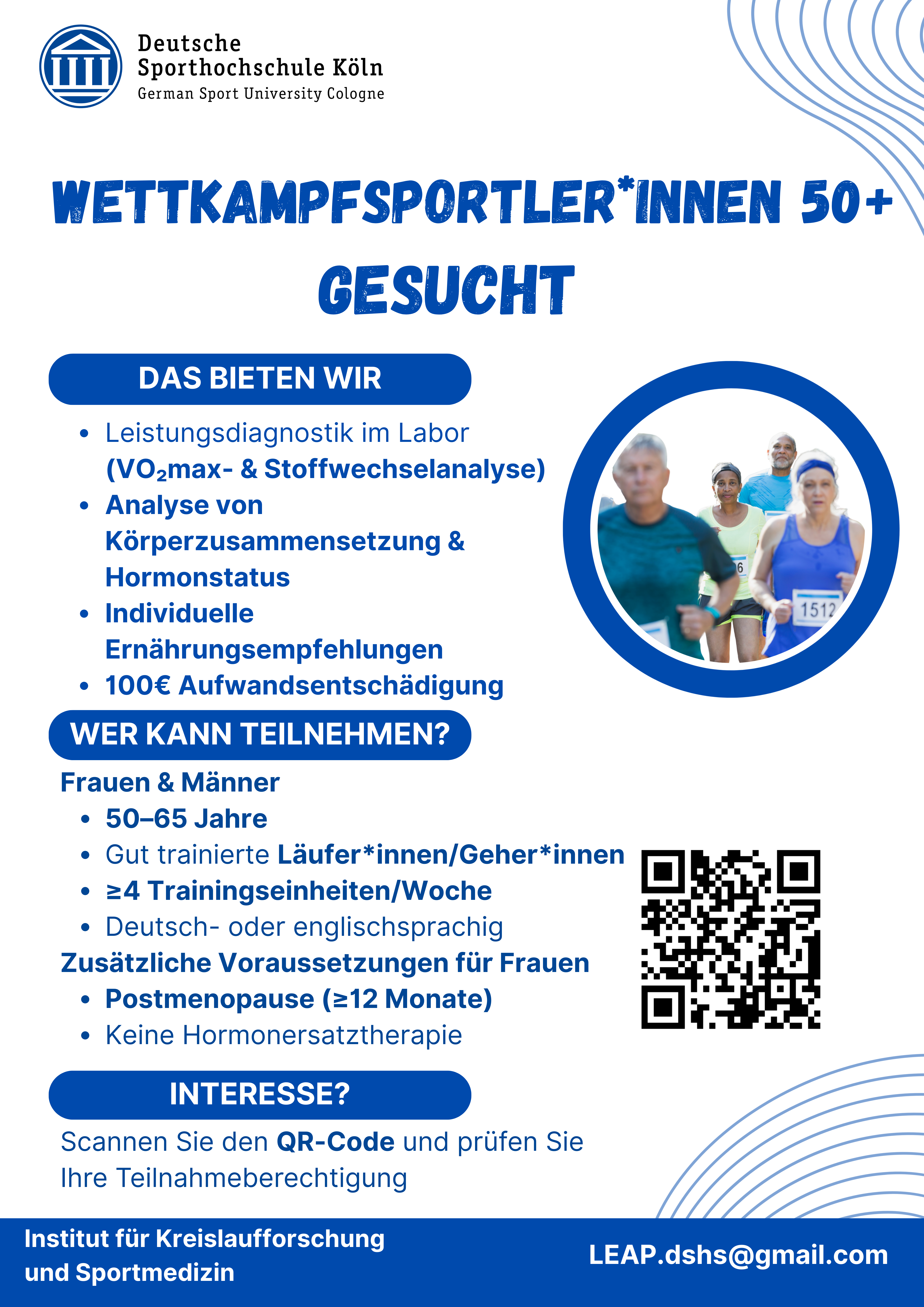
        • LEAP-Studie

        • Vorhersage der Sauerstoffaufnahme

        • Mechanoprotektive Mechanismen im Skelettmuskel

        • VR-Bewegungstraining

        • Golfen trotz Rückenschmerzen?

        • Relatives Energiedefizit im Sport (REDs)

        • Bewegung, Omega-3 und Curcumin

  • Transfer

    • Transfer

    • Innovationen aus der Forschung

      • Innovationen aus der Forschung

      • Transferberatung & Coaching

      • Transferförderung & Programme

      • Erfindungen, Patente & Schutzrechte

      • Transferprojekte & Initiativen

        • Transferprojekte & Initiativen

        • Sport und Schwangerschaft

        • mentaltalent

        • MentalGestärkt

        • Kinderonko

        • Schulsportlandschaft

          • Schulsportlandschaft

          • Podcast der Schulsportlandschaft

          • Videos & Kurzfilme

          • Tipps für den Schulalltag

          • Forschung, Projekte & Buchtipps

          • Fortbildungen & Veranstaltungen

          • Gimmicks

    • Gründung & Start-ups

      • Gründung & Start-ups

      • Gründungsberatung

      • Angebote & Förderungen

        • Angebote & Förderungen

        • StarS-Kader

        • Gateway EM*power

        • DSHS-Ideathlon

      • Unsere Start-ups

    • Weiterbildungsangebote
Filtern nach
Seiten close Person close News close Event close

4221 Ergebnisse
  • Relevanz
  • Alphabetisch
  • Erstellungsdatum

  • wada_2010_list_modifications.pdf
    1 September 19, 2009 2010 Prohibited List Summary of Major Modifications INTRODUCTORY PARAGRAPH The introductory sentence on the use of drugs limited to medically justified indications has been deleted. The reference to Specified Substances has been amended in accordance with changes introduced in section S2. SUBSTANCES AND METHODS PROHIBITED AT ALL TIMES (IN- AND OUT-OF- COMPETITION) S1: Anabolic Agents The International Nonproprietary Name (INN) for methyltrienolone has been included (metribolone) Comment S1.1b, including revisions, is addressed in another WADA document (Technical Document MRPL). S2. Peptide Hormones, Growth Factors and Related Substances In order to better define the substances within this category, the title has been revised to “Peptide Hormones, Growth Factors and Related Substances”. To reflect the growing number of new erythropoeisis-stimulating substances available, methoxy polyethylene glycol-epoetin beta (CERA) has been added as an example. The issue of growth factors enhancing certain functions was addressed in more detail. Additional examples of growth factors affecting muscle, tendon or ligament protein synthesis/degradation, vascularisation, energy utilization, regenerative capacity or fibre type switching [e.g. Platelet-derived Growth Factor (PDGF), Fibroblast Growth Factors (FGFs), Vascular-Endothelial Growth Factor (VEGF), Hepatocyte Growth Factor (HGF)] were included. The status of Platelet-derived preparations (e.g. Platelet Rich Plasma, “blood spinning”) has been clarified. Comment S2 is addressed in another WADA document (Technical Document MRPL). 2 S3. Beta-2 Agonists The use of salbutamol and salmeterol by inhalation no longer requires a TUE but a declaration of Use. It is specified that the maximum dose for the controlled pharmacokinetic study cannot exceed the maximum therapeutic dose for inhaled salbutamol (1600 µg/day). S4. Hormone antagonists and Modulators Two examples of aromatase inhibitors, androstene-3,6,17 trione (6-oxo) and androsta-1,4,6-triene-3,17-dione (androstatrienedione) have been added in view of their wide availability as components of nutritional supplements. S5. Diuretics and Other masking Agents The status of glycerol (oral and intravenous) as a plasma expander was clarified and is now included as another example. The non-prohibited status of pamabrom was clarified because it is a weak diuretic largely available as a combined over-the-counter medication for pre- menstrual/menstrual symptoms. PROHIBITED METHODS M1. Enhancement of Oxygen Transfer Supplemental oxygen is no longer prohibited. M2. Chemical and Physical Manipulation Proteases have been added as an example of sample adulteration. The status of intravenous infusions has been reviewed and now reads: “Intravenous infusions are prohibited except for those legitimately received in the course of hospital admissions or clinical investigations.” M3. Gene Doping For clarification purposes the gene doping definition was reworded and split into 2 points. 3 SUBSTANCES AND METHODS PROHIBITED IN-COMPETITION S6. Stimulants Three stimulants, namely benfluorex, prenylamine, both known to metabolize to non-specified stimulants (amphetamine or norfenfluramine) as well as methylhexeneamine, a non-therapeutic substance, were added to the closed list of non-specified stimulants. Until 2003, the stimulant pseudoephedrine had been prohibited in sports with a threshold of 25 μg/mL. Pseudoephedrine has been included in the Monitoring Program since 2004. Results from the Monitoring Program over the past 5 years have shown a sustained increase in urinary concentrations of pseudoephedrine. In addition, there is clear evidence of abuse in some sports and some regions which show clusters of samples with high pseudoephedrine concentrations many times in excess of concentrations normally found. Furthermore, the available literature demonstrates scientific proof of its performance enhancing effects at certain doses. Therefore, the List Committee has reintroduced pseudoephedrine as a specified stimulant in the 2010 Prohibited List at a urinary threshold of 150 µg/mL based on the results from controlled excretion studies as well as the literature. Given the wide availability of pseudoephedrine-containing medicines, WADA recommends that the reintroduction of pseudoephedrine is supported by active information/education campaign by all stakeholders. Although pseudoephedrine is now prohibited, it will remain in the Monitoring Program for urinary concentrations below 150 µg/mL. S8. Cannabinoids It is clarified that synthetic cannabinoids are covered by this section. SUBSTANCES PROHIBITED IN PARTICULAR SPORTS P1. Alcohol and P2. Beta-blockers As the responsibility for testing in the sports of Boules and Archery has been transferred from the International Paralympic Committee (IPC) to the World Bowling Federation and the International Archery Federation (FITA), respectively, references to the IPC have been deleted.

  • wada_2008_list_modifications.pdf
    CONFIDENTIAL 1 April 21st, 2007 2008 Prohibited List Summary of Major Modifications SUBSTANCES AND METHODS PROHIBITED AT ALL TIMES (IN- AND OUT-OF-COMPETITION) S1. Anabolic Steroids • The fourth paragraph of the explanatory note has been divided into two parts: 1) In the first part, the first sentence has been expanded to emphasize the notion that abnormal steroid indicators other than the T/E ratio > 4 can also trigger further investigations to determine the origin of an endogenous substance. This is reflected in the phrase "…or other indicators point towards a result that is unlikely to be consistent with normal endogenous production". 2) In the second part, two additional sentences have been added to establish that if an initial result for an endogenous anabolic steroid triggers additional investigations in order to determine the endogenous or exogenous origin of the substance, then the sample should be reported as abnormal instead of an Adverse Analytical Finding. This concept of abnormal result is incorporated as follows: " For testosterone, or any other anabolic androgenic steroid, capable of being produced endogenously, when further investigation is required [e.g. a reliable analytical method (e.g. IRMS) has not determined the exogenous origin of the substance], the result shall be reported by the laboratory as abnormal and not as adverse." and "The result that triggered this longitudinal study shall be reported as abnormal". S2. Hormones and Related Substances • To be consistent with the presentation of the other sections, the introductory sentence was split in two before and after the list of examples. • It is noted that LH and hCG are just 2 examples of Gonadotrophins by adding “e.g.” CONFIDENTIAL 2 • Myostatin inhibitors are explicitly named as examples of Hormones and related substances. • The last paragraph of the section has been deleted to avoid redundancies with “including other substances with similar chemical structure or similar biological effect(s)”. SUBSTANCES AND METHODS PROHIBITED IN-COMPETITION S6. Stimulants • The statuses of pseudoephedrine and cathine have been debated over the last year or more. The WADA List Committee recognizes the analytical problems that arise from the fact that cathine, metabolite of pseudoephedrine (and drug per se) is listed but not the parent compound (pseudoephedrine). To address the issue, three options are being considered. The List Committee recommends option 1. The stakeholders are invited to express their preferred option. The options are as follows: 1) Include cathine in the Monitoring Program. With this option cathine will no longer be considered a Prohibited Substance. 2) Increase the threshold of cathine to 10µg/mL. Higher concentrations will be considered an Adverse Analytical Finding regardless of the presence or absence of pseudoephedrine. 3) Re-instate pseudoephedrine as a Prohibited Substance with a threshold of 100 µg/mL, while leaving cathine at 5µg/mL. SUBSTANCES PROHIBITED IN PARTICULAR SPORTS P1. Alcohol • At the request of the CMSB (Boules), this Federation is removed from this section. SPECIFIED SUBSTANCES • It is clarified that the beta-2-agonist clenbuterol is listed in the S1.2 section as Other Anabolic Agents. Summary of Major Modifications

  • wada_2008_list_modifications.pdf
    CONFIDENTIAL 1 April 21st, 2007 2008 Prohibited List Summary of Major Modifications SUBSTANCES AND METHODS PROHIBITED AT ALL TIMES (IN- AND OUT-OF-COMPETITION) S1. Anabolic Steroids • The fourth paragraph of the explanatory note has been divided into two parts: 1) In the first part, the first sentence has been expanded to emphasize the notion that abnormal steroid indicators other than the T/E ratio > 4 can also trigger further investigations to determine the origin of an endogenous substance. This is reflected in the phrase "…or other indicators point towards a result that is unlikely to be consistent with normal endogenous production". 2) In the second part, two additional sentences have been added to establish that if an initial result for an endogenous anabolic steroid triggers additional investigations in order to determine the endogenous or exogenous origin of the substance, then the sample should be reported as abnormal instead of an Adverse Analytical Finding. This concept of abnormal result is incorporated as follows: " For testosterone, or any other anabolic androgenic steroid, capable of being produced endogenously, when further investigation is required [e.g. a reliable analytical method (e.g. IRMS) has not determined the exogenous origin of the substance], the result shall be reported by the laboratory as abnormal and not as adverse." and "The result that triggered this longitudinal study shall be reported as abnormal". S2. Hormones and Related Substances • To be consistent with the presentation of the other sections, the introductory sentence was split in two before and after the list of examples. • It is noted that LH and hCG are just 2 examples of Gonadotrophins by adding “e.g.” CONFIDENTIAL 2 • Myostatin inhibitors are explicitly named as examples of Hormones and related substances. • The last paragraph of the section has been deleted to avoid redundancies with “including other substances with similar chemical structure or similar biological effect(s)”. SUBSTANCES AND METHODS PROHIBITED IN-COMPETITION S6. Stimulants • The statuses of pseudoephedrine and cathine have been debated over the last year or more. The WADA List Committee recognizes the analytical problems that arise from the fact that cathine, metabolite of pseudoephedrine (and drug per se) is listed but not the parent compound (pseudoephedrine). To address the issue, three options are being considered. The List Committee recommends option 1. The stakeholders are invited to express their preferred option. The options are as follows: 1) Include cathine in the Monitoring Program. With this option cathine will no longer be considered a Prohibited Substance. 2) Increase the threshold of cathine to 10µg/mL. Higher concentrations will be considered an Adverse Analytical Finding regardless of the presence or absence of pseudoephedrine. 3) Re-instate pseudoephedrine as a Prohibited Substance with a threshold of 100 µg/mL, while leaving cathine at 5µg/mL. SUBSTANCES PROHIBITED IN PARTICULAR SPORTS P1. Alcohol • At the request of the CMSB (Boules), this Federation is removed from this section. SPECIFIED SUBSTANCES • It is clarified that the beta-2-agonist clenbuterol is listed in the S1.2 section as Other Anabolic Agents. Summary of Major Modifications

  • wada_2011_list_modifications.pdf
    1 Summary of Major Modifications 18 September 2010 18 September 2010 2011 Prohibited List Summary of Major Modifications INTRODUCTORY PARAGRAPH (S0 Section) • An introductory sentence emphasizing the status of drugs with no official approval and not covered by other sections of the Prohibited List has been added. SUBSTANCES AND METHODS PROHIBITED AT ALL TIMES (IN- AND OUT-OF-COMPETITION) S2. Peptide Hormones, Growth Factors and Related Substances • To reflect the growing number of substances developed to stimulate erythropoeisis, hypoxia-inducible factor (HIF)-stabilizers have been added as an example. • The non-proprietary name of Hematide has been added (peginesatide) • Intra-muscular use of Platelet-Derived Preparations (PRP) has been removed from the Prohibited List. S3. Beta2-agonists: • All references to the Declaration of Use have been deleted. S5. Diuretics and Other Masking Agents • Desmopressin has been added as an example of masking agent. 2 Summary of Major Modifications 18 September 2010 • The last paragraph of section S5 has been revised to more clearly explain the consequences of detecting an exogenous threshold substance at a sub-threshold concentration in the presence of a diuretic or other masking agent. PROHIBITED METHODS M2. Chemical and Physical Manipulation • Methods that consist of sequentially withdrawing, manipulating and reinfusing whole blood into the circulation have been added to this category. M3. Gene Doping • For clarification purposes the gene doping definition was reworded and split into three points. SUBSTANCES AND METHODS PROHIBITED IN-COMPETITION S6. Stimulants • The spelling of levmetamfetamine has been corrected as per its International Non-proprietary Name. • Methylhexaneamine has been transferred to the list of specified stimulants. S8. Cannabinoids. • The definition was reworded to clarify that all cannabimimetics are included in this section 9. Glucocorticosteroids • Only the prohibited routes of administration are now listed in this section. 3 Summary of Major Modifications 18 September 2010 SUBSTANCES PROHIBITED IN PARTICULAR SPORTS P1. Alcohol • At the request of the Union Internationale de Pentathlon Moderne (UIPM) and due to changes introduced in the format of the competition, alcohol is no longer prohibited in Modern Pentathlon for disciplines involving shooting. P2. Beta-blockers • It is clarified that, in addition to Bobsleigh, beta-blockers are also prohibited in Skeleton, which are both governed by the Fédération Internationale de Bobsleigh et de Tobogganing (FIBT). • At the request of the Fédération Internationale de Gymnastique (FIG), gymnastics has been removed from this category. • At the request of the World Darts Federation (WDF), darts have been added to this category. Summary of Major Modifications

  • wada_2011_list_modifications.pdf
    1 Summary of Major Modifications 18 September 2010 18 September 2010 2011 Prohibited List Summary of Major Modifications INTRODUCTORY PARAGRAPH (S0 Section) • An introductory sentence emphasizing the status of drugs with no official approval and not covered by other sections of the Prohibited List has been added. SUBSTANCES AND METHODS PROHIBITED AT ALL TIMES (IN- AND OUT-OF-COMPETITION) S2. Peptide Hormones, Growth Factors and Related Substances • To reflect the growing number of substances developed to stimulate erythropoeisis, hypoxia-inducible factor (HIF)-stabilizers have been added as an example. • The non-proprietary name of Hematide has been added (peginesatide) • Intra-muscular use of Platelet-Derived Preparations (PRP) has been removed from the Prohibited List. S3. Beta2-agonists: • All references to the Declaration of Use have been deleted. S5. Diuretics and Other Masking Agents • Desmopressin has been added as an example of masking agent. 2 Summary of Major Modifications 18 September 2010 • The last paragraph of section S5 has been revised to more clearly explain the consequences of detecting an exogenous threshold substance at a sub-threshold concentration in the presence of a diuretic or other masking agent. PROHIBITED METHODS M2. Chemical and Physical Manipulation • Methods that consist of sequentially withdrawing, manipulating and reinfusing whole blood into the circulation have been added to this category. M3. Gene Doping • For clarification purposes the gene doping definition was reworded and split into three points. SUBSTANCES AND METHODS PROHIBITED IN-COMPETITION S6. Stimulants • The spelling of levmetamfetamine has been corrected as per its International Non-proprietary Name. • Methylhexaneamine has been transferred to the list of specified stimulants. S8. Cannabinoids. • The definition was reworded to clarify that all cannabimimetics are included in this section 9. Glucocorticosteroids • Only the prohibited routes of administration are now listed in this section. 3 Summary of Major Modifications 18 September 2010 SUBSTANCES PROHIBITED IN PARTICULAR SPORTS P1. Alcohol • At the request of the Union Internationale de Pentathlon Moderne (UIPM) and due to changes introduced in the format of the competition, alcohol is no longer prohibited in Modern Pentathlon for disciplines involving shooting. P2. Beta-blockers • It is clarified that, in addition to Bobsleigh, beta-blockers are also prohibited in Skeleton, which are both governed by the Fédération Internationale de Bobsleigh et de Tobogganing (FIBT). • At the request of the Fédération Internationale de Gymnastique (FIG), gymnastics has been removed from this category. • At the request of the World Darts Federation (WDF), darts have been added to this category. Summary of Major Modifications

  • wada_2012_list_modifications.pdf
    1 Summary of Major Modifications 24 August 2011 24 August 2011 2012 Prohibited List Summary of Major Modifications and Explanatory Notes INTRODUCTION Members of the Anti-Doping Community should be aware that careful consideration has been given to all of the thoughtful comments that have been provided in response to the distribution of the draft 2012 List. It will be recognized that not all suggestions have been accepted or incorporated into the 2012 List but, as is explained below, modifications to the draft have been made possible because of the contributions and submissions of many of our colleagues. INTRODUCTORY SENTENCE • For clarity, the statement on Specified Substances now includes a reference to the Code. SUBSTANCES AND METHODS PROHIBITED AT ALL TIMES (IN- AND OUT-OF-COMPETITION) PROHIBITED SUBSTANCES S0: Non-Approved Substances • S0 has been moved under “Prohibited Substances” to clarify that it does not include “Methods” • “i.e” has been replaced by “e.g” and more examples have been added. This section has been moved under the heading Prohibited Substances in order to clarify that the scope of this provision relates only to substances and not to methods. 2 Summary of Major Modifications 24 August 2011 To broaden the scope of the section, “i.e” has been replaced by “e.g” and more examples have been added to clarify the substances covered by this section. Substances included in S0 are considered as specified. As a reminder, it is stressed that if a designer drug or any other non-approved substance falls into any of the S1-S9 categories (e.g. “similar chemical structure and/or biologic effect”) then it will be deemed to be included in that section. Inclusion in S0 applies only after all the other categories have been considered inadequate. As a rule, a designer drug is defined as a synthetic analogue of a legally restricted or prohibited drug, devised to circumvent drug laws. S1. Anabolic Agents • The IUPAC name of bolandiol (estr-4-ene-3β, 17β-diol) is now included in S1.a. • Metabolites of DHEA (7α-hydroxy-DHEA, 7β-hydroxy-DHEA and 7-keto- DHEA) have been added to S1.b and it has been clarified that the endogenous metabolites is now an open list. The list of endogenous AAS remains closed. The INN will be used if existing; IUPAC nomenclature will also be used when necessary for further clarity; common names will be added where considered helpful. S2 Peptide Hormones, Growth Factors and Related Substances As a reminder from the Explanatory Note for the 2011 List, Platelet-derived preparations were removed from the List after consideration of the lack of any current evidence concerning the use of these methods for purposes of performance enhancement notwithstanding that these preparations contain growth factors. Despite the presence of some growth factors, current studies on PRP do not demonstrate any potential for performance enhancement beyond a potential therapeutic effect. Note that individual growth factors are still prohibited when given separately as purified substances as described in S.2.5 S3. Beta2-agonists: • Formoterol by inhalation up to a maximum daily therapeutic dose of 36 micrograms is included as an exception in the prohibited beta-2-agonists section. If more than 30 ng/mL formoterol is detected in urine, this will be considered an Adverse Analytical Finding unless the Athlete proves, through a controlled pharmacokinetic study, that the abnormal result was the consequence of the use of the stated therapeutic inhaled dose. 3 Summary of Major Modifications 24 August 2011 Taking into account recent research results and concerns expressed by members of the Sport Community, inhaled formoterol at therapeutic doses is no longer prohibited. Concerns continue to exist about the performance-enhancing effects of beta-2-agonists when taken systemically and/or in large quantities. The List prohibits the administration of all beta-2-agonists except salbutamol (maximum 1600 micrograms over 24 hours), formoterol (maximum 36 micrograms over 24 hours, expressed as inhaled/delivered dose) and salmeterol when taken by inhalation. Urinary thresholds apply to the management of salbutamol and formoterol; work is ongoing to develop thresholds for other beta-2-agonists. If there is a medical situation requiring doses beyond those specified above, then a retrospective (emergency) TUE should be submitted. The issue of beta-2-agonists will continue to be the focus of WADA’s research activity in order to ensure that the administration of large doses of these substances is prevented and prohibited, but that the appropriate care and treatment of asthmatic athletes is facilitated. Ongoing surveillance of the use of these medications will continue as a priority; it is to be anticipated that there may be further changes in the way in which these substances are addressed in the future. S4. Hormone and Metabolic Modulators • The title has been modified from “Hormone Antagonists and Modulators” to “Hormone and Metabolic Modulators” to reflect the addition of a new subsection. • Peroxisome Proliferator Activated Receptor δ (PPARδ) agonists (e.g. GW 1516) and PPARδ-AMP-activated protein kinase (AMPK) axis agonists (e.g. AICAR) have been re-categorized as substances that modify cellular metabolism. S5: Diuretics and Other masking agents • Felypressin used in dental anaesthesia has been added as an exception to the inclusion of products having a similar effect to desmopressin. Glycerol is prohibited as a plasma expander which requires the ingestion of quantities far beyond that which are commonly found in foodstuffs and toiletries PROHIBITED METHODS M2. Chemical and Physical Manipulation • Catheterisation has been removed as an example • The volume and frequency of intravenous infusions and/or injections have been clarified as greater than 50 mL per 6 hour period. 4 Summary of Major Modifications 24 August 2011 • M2.3 has been reworded for clarification M2.1: Catheterisation remains prohibited if used to tamper or attempt to tamper with the integrity of a sample or sample collection. It is recognized that catheterization may be necessary for medical purposes. M2.2: Attention is drawn to the fact that updated medical information is provided on the WADA Web site (http://www.wada- ama.org/Documents/Science_Medicine/Medical_info_to_support_TUECs/WADA_Medical_info_IV_ infusions_3.0_EN.pdf) to support the decisions of TUECs regarding the use of intravenous infusions. For clarity, the volume and frequency of intravenous infusions/injections is included in the List. M2.3: To avoid any possibility of confusion with M2.2, the term “reinfusion” has been changed to “reintroduction” in order to specify that any volume of blood readministered is prohibited. The prohibition of “the sequential withdrawal, manipulation, and reintroduction of any quantity of whole blood” is not intended to prevent plasmapheresis, a specialized form of blood donation, and similar processes which are often undertaken by civic-minded Athletes and do not involve the re-administration of whole blood; rather it specifically addresses the process in which an Athlete’s blood is removed, treated or manipulated, and then reintroduced. Those undergoing hemodialysis, as part of the treatment of chronic kidney disease, will require a TUE for such procedures (and the substances that are often used to treat such disorders). M3. Gene Doping • To enable a more precise definition of Gene Doping, the examples in M3.3 have been re-categorized in S4.5. SUBSTANCES AND METHODS PROHIBITED IN-COMPETITION S6: Stimulants : • The note to adrenaline has been clarified with respect to its use. As a reminder some stimulants may be available under several other names, for example “methylhexaneamine”, sometimes presented as dimethylamylamine, pentylamine, geranamine, Forthane, 2- amino-4-methylhexane, geranium root extract or geranium oil. S9 Glucocorticosteroids The section remains unchanged from the 2011 List insofar as the prohibited routes of administration of glucocorticosteroids are concerned. Surveillance of the use of these substances continues and work is ongoing to develop threshold levels to assist in the detection and management of these substances. It is to be anticipated that there will be further changes in this section in the future. References to “Declarations of Use” and “Therapeutic Use Exemptions” were removed in 2011. http://www.wada-ama.org/Documents/Science_Medicine/Medical_info_to_support_TUECs/WADA_Medical_info_IV_infusions_3.0_EN.pdf http://www.wada-ama.org/Documents/Science_Medicine/Medical_info_to_support_TUECs/WADA_Medical_info_IV_infusions_3.0_EN.pdf http://www.wada-ama.org/Documents/Science_Medicine/Medical_info_to_support_TUECs/WADA_Medical_info_IV_infusions_3.0_EN.pdf 5 Summary of Major Modifications 24 August 2011 SUBSTANCES PROHIBITED IN PARTICULAR SPORTS P1. Alcohol • At the request of Federation Internationale des Quilleurs (FIQ) alcohol is no longer prohibited in Ninepin and Tenpin Bowling. P2. Beta-blockers • Bosbsleigh and Skeleton (FIBT), Curling (WCF), Modern Pentathlon (UIPM), Motorcycling (FIM), Sailing (ISAF), Wrestling (FILA) are removed from the list of sports in which beta-blockers are prohibited. WADA is re-evaluating the prohibition of beta-blockers in certain sports in conjunction with the concerned federations and other stakeholders. This has led to the removal of 6 sports from this section. MONITORING PROGRAM • In order to detect potential patterns of abuse, the following have been added to the Monitoring Program: • In-competition: nicotine, hydrocodone, tramadol. • Out-of-competition: glucocorticosteroids. Summary of Major Modifications and Explanatory Notes

  • wada_2012_list_modifications.pdf
    1 Summary of Major Modifications 24 August 2011 24 August 2011 2012 Prohibited List Summary of Major Modifications and Explanatory Notes INTRODUCTION Members of the Anti-Doping Community should be aware that careful consideration has been given to all of the thoughtful comments that have been provided in response to the distribution of the draft 2012 List. It will be recognized that not all suggestions have been accepted or incorporated into the 2012 List but, as is explained below, modifications to the draft have been made possible because of the contributions and submissions of many of our colleagues. INTRODUCTORY SENTENCE • For clarity, the statement on Specified Substances now includes a reference to the Code. SUBSTANCES AND METHODS PROHIBITED AT ALL TIMES (IN- AND OUT-OF-COMPETITION) PROHIBITED SUBSTANCES S0: Non-Approved Substances • S0 has been moved under “Prohibited Substances” to clarify that it does not include “Methods” • “i.e” has been replaced by “e.g” and more examples have been added. This section has been moved under the heading Prohibited Substances in order to clarify that the scope of this provision relates only to substances and not to methods. 2 Summary of Major Modifications 24 August 2011 To broaden the scope of the section, “i.e” has been replaced by “e.g” and more examples have been added to clarify the substances covered by this section. Substances included in S0 are considered as specified. As a reminder, it is stressed that if a designer drug or any other non-approved substance falls into any of the S1-S9 categories (e.g. “similar chemical structure and/or biologic effect”) then it will be deemed to be included in that section. Inclusion in S0 applies only after all the other categories have been considered inadequate. As a rule, a designer drug is defined as a synthetic analogue of a legally restricted or prohibited drug, devised to circumvent drug laws. S1. Anabolic Agents • The IUPAC name of bolandiol (estr-4-ene-3β, 17β-diol) is now included in S1.a. • Metabolites of DHEA (7α-hydroxy-DHEA, 7β-hydroxy-DHEA and 7-keto- DHEA) have been added to S1.b and it has been clarified that the endogenous metabolites is now an open list. The list of endogenous AAS remains closed. The INN will be used if existing; IUPAC nomenclature will also be used when necessary for further clarity; common names will be added where considered helpful. S2 Peptide Hormones, Growth Factors and Related Substances As a reminder from the Explanatory Note for the 2011 List, Platelet-derived preparations were removed from the List after consideration of the lack of any current evidence concerning the use of these methods for purposes of performance enhancement notwithstanding that these preparations contain growth factors. Despite the presence of some growth factors, current studies on PRP do not demonstrate any potential for performance enhancement beyond a potential therapeutic effect. Note that individual growth factors are still prohibited when given separately as purified substances as described in S.2.5 S3. Beta2-agonists: • Formoterol by inhalation up to a maximum daily therapeutic dose of 36 micrograms is included as an exception in the prohibited beta-2-agonists section. If more than 30 ng/mL formoterol is detected in urine, this will be considered an Adverse Analytical Finding unless the Athlete proves, through a controlled pharmacokinetic study, that the abnormal result was the consequence of the use of the stated therapeutic inhaled dose. 3 Summary of Major Modifications 24 August 2011 Taking into account recent research results and concerns expressed by members of the Sport Community, inhaled formoterol at therapeutic doses is no longer prohibited. Concerns continue to exist about the performance-enhancing effects of beta-2-agonists when taken systemically and/or in large quantities. The List prohibits the administration of all beta-2-agonists except salbutamol (maximum 1600 micrograms over 24 hours), formoterol (maximum 36 micrograms over 24 hours, expressed as inhaled/delivered dose) and salmeterol when taken by inhalation. Urinary thresholds apply to the management of salbutamol and formoterol; work is ongoing to develop thresholds for other beta-2-agonists. If there is a medical situation requiring doses beyond those specified above, then a retrospective (emergency) TUE should be submitted. The issue of beta-2-agonists will continue to be the focus of WADA’s research activity in order to ensure that the administration of large doses of these substances is prevented and prohibited, but that the appropriate care and treatment of asthmatic athletes is facilitated. Ongoing surveillance of the use of these medications will continue as a priority; it is to be anticipated that there may be further changes in the way in which these substances are addressed in the future. S4. Hormone and Metabolic Modulators • The title has been modified from “Hormone Antagonists and Modulators” to “Hormone and Metabolic Modulators” to reflect the addition of a new subsection. • Peroxisome Proliferator Activated Receptor δ (PPARδ) agonists (e.g. GW 1516) and PPARδ-AMP-activated protein kinase (AMPK) axis agonists (e.g. AICAR) have been re-categorized as substances that modify cellular metabolism. S5: Diuretics and Other masking agents • Felypressin used in dental anaesthesia has been added as an exception to the inclusion of products having a similar effect to desmopressin. Glycerol is prohibited as a plasma expander which requires the ingestion of quantities far beyond that which are commonly found in foodstuffs and toiletries PROHIBITED METHODS M2. Chemical and Physical Manipulation • Catheterisation has been removed as an example • The volume and frequency of intravenous infusions and/or injections have been clarified as greater than 50 mL per 6 hour period. 4 Summary of Major Modifications 24 August 2011 • M2.3 has been reworded for clarification M2.1: Catheterisation remains prohibited if used to tamper or attempt to tamper with the integrity of a sample or sample collection. It is recognized that catheterization may be necessary for medical purposes. M2.2: Attention is drawn to the fact that updated medical information is provided on the WADA Web site (http://www.wada- ama.org/Documents/Science_Medicine/Medical_info_to_support_TUECs/WADA_Medical_info_IV_ infusions_3.0_EN.pdf) to support the decisions of TUECs regarding the use of intravenous infusions. For clarity, the volume and frequency of intravenous infusions/injections is included in the List. M2.3: To avoid any possibility of confusion with M2.2, the term “reinfusion” has been changed to “reintroduction” in order to specify that any volume of blood readministered is prohibited. The prohibition of “the sequential withdrawal, manipulation, and reintroduction of any quantity of whole blood” is not intended to prevent plasmapheresis, a specialized form of blood donation, and similar processes which are often undertaken by civic-minded Athletes and do not involve the re-administration of whole blood; rather it specifically addresses the process in which an Athlete’s blood is removed, treated or manipulated, and then reintroduced. Those undergoing hemodialysis, as part of the treatment of chronic kidney disease, will require a TUE for such procedures (and the substances that are often used to treat such disorders). M3. Gene Doping • To enable a more precise definition of Gene Doping, the examples in M3.3 have been re-categorized in S4.5. SUBSTANCES AND METHODS PROHIBITED IN-COMPETITION S6: Stimulants : • The note to adrenaline has been clarified with respect to its use. As a reminder some stimulants may be available under several other names, for example “methylhexaneamine”, sometimes presented as dimethylamylamine, pentylamine, geranamine, Forthane, 2- amino-4-methylhexane, geranium root extract or geranium oil. S9 Glucocorticosteroids The section remains unchanged from the 2011 List insofar as the prohibited routes of administration of glucocorticosteroids are concerned. Surveillance of the use of these substances continues and work is ongoing to develop threshold levels to assist in the detection and management of these substances. It is to be anticipated that there will be further changes in this section in the future. References to “Declarations of Use” and “Therapeutic Use Exemptions” were removed in 2011. http://www.wada-ama.org/Documents/Science_Medicine/Medical_info_to_support_TUECs/WADA_Medical_info_IV_infusions_3.0_EN.pdf http://www.wada-ama.org/Documents/Science_Medicine/Medical_info_to_support_TUECs/WADA_Medical_info_IV_infusions_3.0_EN.pdf http://www.wada-ama.org/Documents/Science_Medicine/Medical_info_to_support_TUECs/WADA_Medical_info_IV_infusions_3.0_EN.pdf 5 Summary of Major Modifications 24 August 2011 SUBSTANCES PROHIBITED IN PARTICULAR SPORTS P1. Alcohol • At the request of Federation Internationale des Quilleurs (FIQ) alcohol is no longer prohibited in Ninepin and Tenpin Bowling. P2. Beta-blockers • Bosbsleigh and Skeleton (FIBT), Curling (WCF), Modern Pentathlon (UIPM), Motorcycling (FIM), Sailing (ISAF), Wrestling (FILA) are removed from the list of sports in which beta-blockers are prohibited. WADA is re-evaluating the prohibition of beta-blockers in certain sports in conjunction with the concerned federations and other stakeholders. This has led to the removal of 6 sports from this section. MONITORING PROGRAM • In order to detect potential patterns of abuse, the following have been added to the Monitoring Program: • In-competition: nicotine, hydrocodone, tramadol. • Out-of-competition: glucocorticosteroids. Summary of Major Modifications and Explanatory Notes

  • wada_2010_prohibited_list.pdf
    The Prohibited List 2010 19 September 2009 The World Anti-Doping Code THE 2010 PROHIBITED LIST INTERNATIONAL STANDARD The official text of the Prohibited List shall be maintained by WADA and shall be published in English and French. In the event of any conflict between the English and French versions, the English version shall prevail. This List shall come into effect on 1 January 2010 The Prohibited List 2010 19 September 2009 2 THE 2010 PROHIBITED LIST WORLD ANTI-DOPING CODE Valid 1 January 2010 All Prohibited Substances shall be considered as “Specified Substances” except Substances in classes S1, S2.1 to S2.5, S.4.4 and S6.a, and Prohibited Methods M1, M2 and M3. SUBSTANCES AND METHODS PROHIBITED AT ALL TIMES (IN- AND OUT-OF-COMPETITION) PROHIBITED SUBSTANCES S1. ANABOLIC AGENTS Anabolic agents are prohibited. 1. Anabolic Androgenic Steroids (AAS) a. Exogenous* AAS, including: 1-androstendiol (5α-androst-1-ene-3β,17β-diol ); 1-androstendione (5α- androst-1-ene-3,17-dione); bolandiol (19-norandrostenediol); bolasterone; boldenone; boldione (androsta-1,4-diene-3,17-dione); calusterone; clostebol; danazol (17α-ethynyl-17β-hydroxyandrost-4-eno[2,3-d]isoxazole); dehydrochlormethyltestosterone (4-chloro-17β-hydroxy-17α-methylandrosta- 1,4-dien-3-one); desoxymethyltestosterone (17α-methyl-5α-androst-2-en- 17β-ol); drostanolone; ethylestrenol (19-nor-17α-pregn-4-en-17-ol); fluoxymesterone; formebolone; furazabol (17β-hydroxy-17α-methyl-5α- androstano[2,3-c]-furazan); gestrinone; 4-hydroxytestosterone (4,17β- dihydroxyandrost-4-en-3-one); mestanolone; mesterolone; metenolone; methandienone (17β-hydroxy-17α-methylandrosta-1,4-dien-3-one); methandriol; methasterone (2α, 17α-dimethyl-5α-androstane-3-one-17β-ol); methyldienolone (17β-hydroxy-17α-methylestra-4,9-dien-3-one); methyl-1- testosterone (17β-hydroxy-17α-methyl-5α-androst-1-en-3-one); methylnortestosterone (17β-hydroxy-17α-methylestr-4-en-3-one); methyltestosterone; metribolone (methyltrienolone, 17β-hydroxy-17α- methylestra-4,9,11-trien-3-one); mibolerone; nandrolone; 19- norandrostenedione (estr-4-ene-3,17-dione); norboletone; norclostebol; norethandrolone; oxabolone; oxandrolone; oxymesterone; oxymetholone; prostanozol (17β-hydroxy-5α-androstano[3,2-c] pyrazole); quinbolone; The Prohibited List 2010 19 September 2009 3 stanozolol; stenbolone; 1-testosterone (17β-hydroxy-5α-androst-1-en-3- one); tetrahydrogestrinone (18a-homo-pregna-4,9,11-trien-17β-ol-3-one); trenbolone and other substances with a similar chemical structure or similar biological effect(s). b. Endogenous** AAS when administered exogenously: androstenediol (androst-5-ene-3β,17β-diol); androstenedione (androst-4-ene- 3,17-dione); dihydrotestosterone (17β-hydroxy-5α-androstan-3-one) ; prasterone (dehydroepiandrosterone, DHEA); testosterone and the following metabolites and isomers: 5α-androstane-3α,17α-diol; 5α-androstane-3α,17β-diol; 5α-androstane- 3β,17α-diol; 5α-androstane-3β,17β-diol; androst-4-ene-3α,17α-diol; androst-4-ene-3α,17β-diol; androst-4-ene-3β,17α-diol; androst-5-ene- 3α,17α-diol; androst-5-ene-3α,17β-diol; androst-5-ene-3β,17α-diol; 4-androstenediol (androst-4-ene-3β,17β-diol); 5-androstenedione (androst- 5-ene-3,17-dione); epi-dihydrotestosterone; epitestosterone; 3α-hydroxy- 5α-androstan-17-one; 3β-hydroxy-5α-androstan-17-one; 19- norandrosterone; 19-noretiocholanolone. 2. Other Anabolic Agents, including but not limited to: Clenbuterol, selective androgen receptor modulators (SARMs), tibolone, zeranol, zilpaterol. For purposes of this section: * “exogenous” refers to a substance which is not ordinarily capable of being produced by the body naturally. ** “endogenous” refers to a substance which is capable of being produced by the body naturally. S2. PEPTIDE HORMONES, GROWTH FACTORS AND RELATED SUBSTANCES The following substances and their releasing factors are prohibited: 1. Erythropoiesis-Stimulating Agents [e.g. erythropoietin (EPO), darbepoetin (dEPO), methoxy polyethylene glycol-epoetin beta (CERA), hematide]; 2. Chorionic Gonadotrophin (CG) and Luteinizing Hormone (LH) in males; 3. Insulins; 4. Corticotrophins; The Prohibited List 2010 19 September 2009 4 5. Growth Hormone (GH), Insulin-like Growth Factor-1 (IGF-1), Mechano Growth Factors (MGFs), Platelet-Derived Growth Factor (PDGF), Fibroblast Growth Factors (FGFs), Vascular-Endothelial Growth Factor (VEGF) and Hepatocyte Growth Factor (HGF) as well as any other growth factor affecting muscle, tendon or ligament protein synthesis/degradation, vascularisation, energy utilization, regenerative capacity or fibre type switching; 6. Platelet-derived preparations (e.g. Platelet Rich Plasma, “blood spinning”) administered by intramuscular route. Other routes of administration require a declaration of Use in accordance with the International Standard for Therapeutic Use Exemptions. and other substances with similar chemical structure or similar biological effect(s). S3. BETA-2 AGONISTS All beta-2 agonists (including both optical isomers where relevant) are prohibited except salbutamol (maximum 1600 micrograms over 24 hours) and salmeterol by inhalation which require a declaration of Use in accordance with the International Standard for Therapeutic Use Exemptions. The presence of salbutamol in urine in excess of 1000 ng/mL is presumed not to be an intended therapeutic use of the substance and will be considered as an Adverse Analytical Finding unless the Athlete proves, through a controlled pharmacokinetic study, that the abnormal result was the consequence of the use of a therapeutic dose (maximum 1600 micrograms over 24 hours) of inhaled salbutamol. S4. HORMONE ANTAGONISTS AND MODULATORS The following classes are prohibited: 1. Aromatase inhibitors including, but not limited to: aminoglutethimide, anastrozole, androsta-1,4,6-triene-3,17-dione (androstatrienedione), 4-androstene-3,6,17 trione (6-oxo), exemestane, formestane, letrozole, testolactone. 2. Selective estrogen receptor modulators (SERMs) including, but not limited to: raloxifene, tamoxifen, toremifene. 3. Other anti-estrogenic substances including, but not limited to: clomiphene, cyclofenil, fulvestrant. The Prohibited List 2010 19 September 2009 5 4. Agents modifying myostatin function(s) including but not limited to: myostatin inhibitors. S5. DIURETICS AND OTHER MASKING AGENTS Masking agents are prohibited. They include: Diuretics, probenecid, plasma expanders (e.g. glycerol; intravenous administration of albumin, dextran, hydroxyethyl starch and mannitol) and other substances with similar biological effect(s). Diuretics include: Acetazolamide, amiloride, bumetanide, canrenone, chlorthalidone, etacrynic acid, furosemide, indapamide, metolazone, spironolactone, thiazides (e.g. bendroflumethiazide, chlorothiazide, hydrochlorothiazide), triamterene, and other substances with a similar chemical structure or similar biological effect(s) (except drosperinone, pamabrom and topical dorzolamide and brinzolamide, which are not prohibited). A Therapeutic Use Exemption for diuretics and masking agents is not valid if an Athlete’s urine contains such substance(s) in association with threshold or sub- threshold levels of an exogenous Prohibited Substance(s). The Prohibited List 2010 19 September 2009 6 PROHIBITED METHODS M1. ENHANCEMENT OF OXYGEN TRANSFER The following are prohibited: 1. Blood doping, including the use of autologous, homologous or heterologous blood or red blood cell products of any origin. 2. Artificially enhancing the uptake, transport or delivery of oxygen, including but not limited to perfluorochemicals, efaproxiral (RSR13) and modified haemoglobin products (e.g. haemoglobin-based blood substitutes, microencapsulated haemoglobin products), excluding supplemental oxygen. M2. CHEMICAL AND PHYSICAL MANIPULATION 1. Tampering, or attempting to tamper, in order to alter the integrity and validity of Samples collected during Doping Controls is prohibited. These include but are not limited to catheterisation, urine substitution and/or adulteration (e.g. proteases). 2. Intravenous infusions are prohibited except for those legitimately received in the course of hospital admissions or clinical investigations. M3. GENE DOPING The following, with the potential to enhance athletic performance, are prohibited: 1- The transfer of cells or genetic elements (e.g. DNA, RNA); 2- The use of pharmacological or biological agents that alter gene expression. Peroxisome Proliferator Activated Receptor δ (PPARδ) agonists (e.g. GW 1516) and PPARδ-AMP-activated protein kinase (AMPK) axis agonists (e.g. AICAR) are prohibited. The Prohibited List 2010 19 September 2009 7 SUBSTANCES AND METHODS PROHIBITED IN-COMPETITION In addition to the categories S1 to S5 and M1 to M3 defined above, the following categories are prohibited in competition: PROHIBITED SUBSTANCES S6. STIMULANTS All stimulants (including both optical isomers where relevant) are prohibited, except imidazole derivatives for topical use and those stimulants included in the 2010 Monitoring Program*. Stimulants include: a: Non-Specified Stimulants: Adrafinil; amfepramone; amiphenazole; amphetamine; amphetaminil; benfluorex; benzphetamine; benzylpiperazine; bromantan; clobenzorex; cocaine; cropropamide; crotetamide; dimethylamphetamine; etilamphetamine; famprofazone; fencamine; fenetylline; fenfluramine; fenproporex; furfenorex; mefenorex; mephentermine; mesocarb; methamphetamine(d-); p-methylamphetamine; methylenedioxyamphetamine; methylenedioxymethamphetamine; methylhexaneamine (dimethylpentylamine); modafinil; norfenfluramine; phendimetrazine; phenmetrazine; phentermine; 4-phenylpiracetam (carphedon); prenylamine; prolintane. A stimulant not expressly listed in this section is a Specified Substance. b: Specified Stimulants (examples): Adrenaline**; cathine***; ephedrine****; etamivan; etilefrine; fenbutrazate; fencamfamin; heptaminol; isometheptene; levmetamphetamine; meclofenoxate; methylephedrine****; methylphenidate; nikethamide; norfenefrine; octopamine; oxilofrine; parahydroxyamphetamine; pemoline; pentetrazol; phenpromethamine; propylhexedrine; pseudoephedrine*****; selegiline; sibutramine; strychnine; tuaminoheptane and other substances with a similar chemical structure or similar biological effect(s). The Prohibited List 2010 19 September 2009 8 * The following substances included in the 2010 Monitoring Program (bupropion, caffeine, phenylephrine, phenylpropanolamine, pipradol, synephrine) are not considered as Prohibited Substances. ** Adrenaline associated with local anaesthetic agents or by local administration (e.g. nasal, ophthalmologic) is not prohibited. *** Cathine is prohibited when its concentration in urine is greater than 5 micrograms per milliliter. **** Each of ephedrine and methylephedrine is prohibited when its concentration in urine is greater than 10 micrograms per milliliter. ***** Pseudoephedrine is prohibited when its concentration in urine is greater than 150 micrograms per milliliter. S7. NARCOTICS The following narcotics are prohibited: Buprenorphine, dextromoramide, diamorphine (heroin), fentanyl and its derivatives, hydromorphone, methadone, morphine, oxycodone, oxymorphone, pentazocine, pethidine. S8. CANNABINOIDS Natural or synthetic Δ9-tetrahydrocannabinol (THC) and THC-like cannabinoids (e.g. hashish, marijuana, HU-210) are prohibited. S9. GLUCOCORTICOSTEROIDS All glucocorticosteroids are prohibited when administered by oral, intravenous, intramuscular or rectal routes. In accordance with the International Standard for Therapeutic Use Exemptions, a declaration of Use must be completed by the Athlete for glucocorticosteroids administered by intraarticular, periarticular, peritendinous, epidural, intradermal and inhalation routes, except as noted below. Topical preparations when used for auricular, buccal, dermatological (including iontophoresis/phonophoresis), gingival, nasal, ophthalmic and perianal disorders are not prohibited and require neither a Therapeutic Use Exemption nor a declaration of Use. The Prohibited List 2010 19 September 2009 9 SUBSTANCES PROHIBITED IN PARTICULAR SPORTS P1. ALCOHOL Alcohol (ethanol) is prohibited In-Competition only, in the following sports. Detection will be conducted by analysis of breath and/or blood. The doping violation threshold (haematological values) is 0.10 g/L. Aeronautic (FAI) Archery (FITA) Automobile (FIA) Karate (WKF) Modern Pentathlon (UIPM) for disciplines involving shooting Motorcycling (FIM) Ninepin and Tenpin Bowling (FIQ) Powerboating (UIM) P2. BETA-BLOCKERS Unless otherwise specified, beta-blockers are prohibited In-Competition only, in the following sports. Aeronautic (FAI) Archery (FITA) (also prohibited Out-of-Competition) Automobile (FIA) Billiards and Snooker (WCBS) Bobsleigh (FIBT) Boules (CMSB) Bridge (FMB) Curling (WCF) Golf (IGF) Gymnastics (FIG) Motorcycling (FIM) Modern Pentathlon (UIPM) for disciplines involving shooting Ninepin and Tenpin Bowling (FIQ) Powerboating (UIM) Sailing (ISAF) for match race helms only Shooting (ISSF, IPC) (also prohibited Out-of-Competition) Skiing/Snowboarding (FIS) in ski jumping, freestyle aerials/halfpipe and snowboard halfpipe/big air Wrestling (FILA) Beta-blockers include, but are not limited to, the following: Acebutolol, alprenolol, atenolol, betaxolol, bisoprolol, bunolol, carteolol, carvedilol, celiprolol, esmolol, labetalol, levobunolol, metipranolol, metoprolol, nadolol, oxprenolol, pindolol, propranolol, sotalol, timolol.

  • wada_2010_prohibited_list.pdf
    The Prohibited List 2010 19 September 2009 The World Anti-Doping Code THE 2010 PROHIBITED LIST INTERNATIONAL STANDARD The official text of the Prohibited List shall be maintained by WADA and shall be published in English and French. In the event of any conflict between the English and French versions, the English version shall prevail. This List shall come into effect on 1 January 2010 The Prohibited List 2010 19 September 2009 2 THE 2010 PROHIBITED LIST WORLD ANTI-DOPING CODE Valid 1 January 2010 All Prohibited Substances shall be considered as “Specified Substances” except Substances in classes S1, S2.1 to S2.5, S.4.4 and S6.a, and Prohibited Methods M1, M2 and M3. SUBSTANCES AND METHODS PROHIBITED AT ALL TIMES (IN- AND OUT-OF-COMPETITION) PROHIBITED SUBSTANCES S1. ANABOLIC AGENTS Anabolic agents are prohibited. 1. Anabolic Androgenic Steroids (AAS) a. Exogenous* AAS, including: 1-androstendiol (5α-androst-1-ene-3β,17β-diol ); 1-androstendione (5α- androst-1-ene-3,17-dione); bolandiol (19-norandrostenediol); bolasterone; boldenone; boldione (androsta-1,4-diene-3,17-dione); calusterone; clostebol; danazol (17α-ethynyl-17β-hydroxyandrost-4-eno[2,3-d]isoxazole); dehydrochlormethyltestosterone (4-chloro-17β-hydroxy-17α-methylandrosta- 1,4-dien-3-one); desoxymethyltestosterone (17α-methyl-5α-androst-2-en- 17β-ol); drostanolone; ethylestrenol (19-nor-17α-pregn-4-en-17-ol); fluoxymesterone; formebolone; furazabol (17β-hydroxy-17α-methyl-5α- androstano[2,3-c]-furazan); gestrinone; 4-hydroxytestosterone (4,17β- dihydroxyandrost-4-en-3-one); mestanolone; mesterolone; metenolone; methandienone (17β-hydroxy-17α-methylandrosta-1,4-dien-3-one); methandriol; methasterone (2α, 17α-dimethyl-5α-androstane-3-one-17β-ol); methyldienolone (17β-hydroxy-17α-methylestra-4,9-dien-3-one); methyl-1- testosterone (17β-hydroxy-17α-methyl-5α-androst-1-en-3-one); methylnortestosterone (17β-hydroxy-17α-methylestr-4-en-3-one); methyltestosterone; metribolone (methyltrienolone, 17β-hydroxy-17α- methylestra-4,9,11-trien-3-one); mibolerone; nandrolone; 19- norandrostenedione (estr-4-ene-3,17-dione); norboletone; norclostebol; norethandrolone; oxabolone; oxandrolone; oxymesterone; oxymetholone; prostanozol (17β-hydroxy-5α-androstano[3,2-c] pyrazole); quinbolone; The Prohibited List 2010 19 September 2009 3 stanozolol; stenbolone; 1-testosterone (17β-hydroxy-5α-androst-1-en-3- one); tetrahydrogestrinone (18a-homo-pregna-4,9,11-trien-17β-ol-3-one); trenbolone and other substances with a similar chemical structure or similar biological effect(s). b. Endogenous** AAS when administered exogenously: androstenediol (androst-5-ene-3β,17β-diol); androstenedione (androst-4-ene- 3,17-dione); dihydrotestosterone (17β-hydroxy-5α-androstan-3-one) ; prasterone (dehydroepiandrosterone, DHEA); testosterone and the following metabolites and isomers: 5α-androstane-3α,17α-diol; 5α-androstane-3α,17β-diol; 5α-androstane- 3β,17α-diol; 5α-androstane-3β,17β-diol; androst-4-ene-3α,17α-diol; androst-4-ene-3α,17β-diol; androst-4-ene-3β,17α-diol; androst-5-ene- 3α,17α-diol; androst-5-ene-3α,17β-diol; androst-5-ene-3β,17α-diol; 4-androstenediol (androst-4-ene-3β,17β-diol); 5-androstenedione (androst- 5-ene-3,17-dione); epi-dihydrotestosterone; epitestosterone; 3α-hydroxy- 5α-androstan-17-one; 3β-hydroxy-5α-androstan-17-one; 19- norandrosterone; 19-noretiocholanolone. 2. Other Anabolic Agents, including but not limited to: Clenbuterol, selective androgen receptor modulators (SARMs), tibolone, zeranol, zilpaterol. For purposes of this section: * “exogenous” refers to a substance which is not ordinarily capable of being produced by the body naturally. ** “endogenous” refers to a substance which is capable of being produced by the body naturally. S2. PEPTIDE HORMONES, GROWTH FACTORS AND RELATED SUBSTANCES The following substances and their releasing factors are prohibited: 1. Erythropoiesis-Stimulating Agents [e.g. erythropoietin (EPO), darbepoetin (dEPO), methoxy polyethylene glycol-epoetin beta (CERA), hematide]; 2. Chorionic Gonadotrophin (CG) and Luteinizing Hormone (LH) in males; 3. Insulins; 4. Corticotrophins; The Prohibited List 2010 19 September 2009 4 5. Growth Hormone (GH), Insulin-like Growth Factor-1 (IGF-1), Mechano Growth Factors (MGFs), Platelet-Derived Growth Factor (PDGF), Fibroblast Growth Factors (FGFs), Vascular-Endothelial Growth Factor (VEGF) and Hepatocyte Growth Factor (HGF) as well as any other growth factor affecting muscle, tendon or ligament protein synthesis/degradation, vascularisation, energy utilization, regenerative capacity or fibre type switching; 6. Platelet-derived preparations (e.g. Platelet Rich Plasma, “blood spinning”) administered by intramuscular route. Other routes of administration require a declaration of Use in accordance with the International Standard for Therapeutic Use Exemptions. and other substances with similar chemical structure or similar biological effect(s). S3. BETA-2 AGONISTS All beta-2 agonists (including both optical isomers where relevant) are prohibited except salbutamol (maximum 1600 micrograms over 24 hours) and salmeterol by inhalation which require a declaration of Use in accordance with the International Standard for Therapeutic Use Exemptions. The presence of salbutamol in urine in excess of 1000 ng/mL is presumed not to be an intended therapeutic use of the substance and will be considered as an Adverse Analytical Finding unless the Athlete proves, through a controlled pharmacokinetic study, that the abnormal result was the consequence of the use of a therapeutic dose (maximum 1600 micrograms over 24 hours) of inhaled salbutamol. S4. HORMONE ANTAGONISTS AND MODULATORS The following classes are prohibited: 1. Aromatase inhibitors including, but not limited to: aminoglutethimide, anastrozole, androsta-1,4,6-triene-3,17-dione (androstatrienedione), 4-androstene-3,6,17 trione (6-oxo), exemestane, formestane, letrozole, testolactone. 2. Selective estrogen receptor modulators (SERMs) including, but not limited to: raloxifene, tamoxifen, toremifene. 3. Other anti-estrogenic substances including, but not limited to: clomiphene, cyclofenil, fulvestrant. The Prohibited List 2010 19 September 2009 5 4. Agents modifying myostatin function(s) including but not limited to: myostatin inhibitors. S5. DIURETICS AND OTHER MASKING AGENTS Masking agents are prohibited. They include: Diuretics, probenecid, plasma expanders (e.g. glycerol; intravenous administration of albumin, dextran, hydroxyethyl starch and mannitol) and other substances with similar biological effect(s). Diuretics include: Acetazolamide, amiloride, bumetanide, canrenone, chlorthalidone, etacrynic acid, furosemide, indapamide, metolazone, spironolactone, thiazides (e.g. bendroflumethiazide, chlorothiazide, hydrochlorothiazide), triamterene, and other substances with a similar chemical structure or similar biological effect(s) (except drosperinone, pamabrom and topical dorzolamide and brinzolamide, which are not prohibited). A Therapeutic Use Exemption for diuretics and masking agents is not valid if an Athlete’s urine contains such substance(s) in association with threshold or sub- threshold levels of an exogenous Prohibited Substance(s). The Prohibited List 2010 19 September 2009 6 PROHIBITED METHODS M1. ENHANCEMENT OF OXYGEN TRANSFER The following are prohibited: 1. Blood doping, including the use of autologous, homologous or heterologous blood or red blood cell products of any origin. 2. Artificially enhancing the uptake, transport or delivery of oxygen, including but not limited to perfluorochemicals, efaproxiral (RSR13) and modified haemoglobin products (e.g. haemoglobin-based blood substitutes, microencapsulated haemoglobin products), excluding supplemental oxygen. M2. CHEMICAL AND PHYSICAL MANIPULATION 1. Tampering, or attempting to tamper, in order to alter the integrity and validity of Samples collected during Doping Controls is prohibited. These include but are not limited to catheterisation, urine substitution and/or adulteration (e.g. proteases). 2. Intravenous infusions are prohibited except for those legitimately received in the course of hospital admissions or clinical investigations. M3. GENE DOPING The following, with the potential to enhance athletic performance, are prohibited: 1- The transfer of cells or genetic elements (e.g. DNA, RNA); 2- The use of pharmacological or biological agents that alter gene expression. Peroxisome Proliferator Activated Receptor δ (PPARδ) agonists (e.g. GW 1516) and PPARδ-AMP-activated protein kinase (AMPK) axis agonists (e.g. AICAR) are prohibited. The Prohibited List 2010 19 September 2009 7 SUBSTANCES AND METHODS PROHIBITED IN-COMPETITION In addition to the categories S1 to S5 and M1 to M3 defined above, the following categories are prohibited in competition: PROHIBITED SUBSTANCES S6. STIMULANTS All stimulants (including both optical isomers where relevant) are prohibited, except imidazole derivatives for topical use and those stimulants included in the 2010 Monitoring Program*. Stimulants include: a: Non-Specified Stimulants: Adrafinil; amfepramone; amiphenazole; amphetamine; amphetaminil; benfluorex; benzphetamine; benzylpiperazine; bromantan; clobenzorex; cocaine; cropropamide; crotetamide; dimethylamphetamine; etilamphetamine; famprofazone; fencamine; fenetylline; fenfluramine; fenproporex; furfenorex; mefenorex; mephentermine; mesocarb; methamphetamine(d-); p-methylamphetamine; methylenedioxyamphetamine; methylenedioxymethamphetamine; methylhexaneamine (dimethylpentylamine); modafinil; norfenfluramine; phendimetrazine; phenmetrazine; phentermine; 4-phenylpiracetam (carphedon); prenylamine; prolintane. A stimulant not expressly listed in this section is a Specified Substance. b: Specified Stimulants (examples): Adrenaline**; cathine***; ephedrine****; etamivan; etilefrine; fenbutrazate; fencamfamin; heptaminol; isometheptene; levmetamphetamine; meclofenoxate; methylephedrine****; methylphenidate; nikethamide; norfenefrine; octopamine; oxilofrine; parahydroxyamphetamine; pemoline; pentetrazol; phenpromethamine; propylhexedrine; pseudoephedrine*****; selegiline; sibutramine; strychnine; tuaminoheptane and other substances with a similar chemical structure or similar biological effect(s). The Prohibited List 2010 19 September 2009 8 * The following substances included in the 2010 Monitoring Program (bupropion, caffeine, phenylephrine, phenylpropanolamine, pipradol, synephrine) are not considered as Prohibited Substances. ** Adrenaline associated with local anaesthetic agents or by local administration (e.g. nasal, ophthalmologic) is not prohibited. *** Cathine is prohibited when its concentration in urine is greater than 5 micrograms per milliliter. **** Each of ephedrine and methylephedrine is prohibited when its concentration in urine is greater than 10 micrograms per milliliter. ***** Pseudoephedrine is prohibited when its concentration in urine is greater than 150 micrograms per milliliter. S7. NARCOTICS The following narcotics are prohibited: Buprenorphine, dextromoramide, diamorphine (heroin), fentanyl and its derivatives, hydromorphone, methadone, morphine, oxycodone, oxymorphone, pentazocine, pethidine. S8. CANNABINOIDS Natural or synthetic Δ9-tetrahydrocannabinol (THC) and THC-like cannabinoids (e.g. hashish, marijuana, HU-210) are prohibited. S9. GLUCOCORTICOSTEROIDS All glucocorticosteroids are prohibited when administered by oral, intravenous, intramuscular or rectal routes. In accordance with the International Standard for Therapeutic Use Exemptions, a declaration of Use must be completed by the Athlete for glucocorticosteroids administered by intraarticular, periarticular, peritendinous, epidural, intradermal and inhalation routes, except as noted below. Topical preparations when used for auricular, buccal, dermatological (including iontophoresis/phonophoresis), gingival, nasal, ophthalmic and perianal disorders are not prohibited and require neither a Therapeutic Use Exemption nor a declaration of Use. The Prohibited List 2010 19 September 2009 9 SUBSTANCES PROHIBITED IN PARTICULAR SPORTS P1. ALCOHOL Alcohol (ethanol) is prohibited In-Competition only, in the following sports. Detection will be conducted by analysis of breath and/or blood. The doping violation threshold (haematological values) is 0.10 g/L. Aeronautic (FAI) Archery (FITA) Automobile (FIA) Karate (WKF) Modern Pentathlon (UIPM) for disciplines involving shooting Motorcycling (FIM) Ninepin and Tenpin Bowling (FIQ) Powerboating (UIM) P2. BETA-BLOCKERS Unless otherwise specified, beta-blockers are prohibited In-Competition only, in the following sports. Aeronautic (FAI) Archery (FITA) (also prohibited Out-of-Competition) Automobile (FIA) Billiards and Snooker (WCBS) Bobsleigh (FIBT) Boules (CMSB) Bridge (FMB) Curling (WCF) Golf (IGF) Gymnastics (FIG) Motorcycling (FIM) Modern Pentathlon (UIPM) for disciplines involving shooting Ninepin and Tenpin Bowling (FIQ) Powerboating (UIM) Sailing (ISAF) for match race helms only Shooting (ISSF, IPC) (also prohibited Out-of-Competition) Skiing/Snowboarding (FIS) in ski jumping, freestyle aerials/halfpipe and snowboard halfpipe/big air Wrestling (FILA) Beta-blockers include, but are not limited to, the following: Acebutolol, alprenolol, atenolol, betaxolol, bisoprolol, bunolol, carteolol, carvedilol, celiprolol, esmolol, labetalol, levobunolol, metipranolol, metoprolol, nadolol, oxprenolol, pindolol, propranolol, sotalol, timolol.

  • wada_2012_prohibited_list.pdf
    The 2012 Prohibited List 24 August 2011 The World Anti-Doping Code THE 2012 PROHIBITED LIST INTERNATIONAL STANDARD The official text of the Prohibited List shall be maintained by WADA and shall be published in English and French. In the event of any conflict between the English and French versions, the English version shall prevail. This List shall come into effect on 1 January 2012 The 2012 Prohibited List 24 August 2011 2 THE 2012 PROHIBITED LIST WORLD ANTI-DOPING CODE Valid 1 January 2012 In accordance with Article 4.2.2 of the World Anti-Doping Code, all Prohibited Substances shall be considered as “Specified Substances” except Substances in classes S1, S2, S4.4, S4.5, S6.a, and Prohibited Methods M1, M2 and M3. SUBSTANCES AND METHODS PROHIBITED AT ALL TIMES (IN- AND OUT-OF-COMPETITION) PROHIBITED SUBSTANCES S0. NON-APPROVED SUBSTANCES Any pharmacological substance which is not addressed by any of the subsequent sections of the List and with no current approval by any governmental regulatory health authority for human therapeutic use (e.g drugs under pre-clinical or clinical development or discontinued, designer drugs, veterinary medicines) is prohibited at all times. S1. ANABOLIC AGENTS Anabolic agents are prohibited. 1. Anabolic Androgenic Steroids (AAS) a. Exogenous* AAS, including: 1-androstenediol (5α-androst-1-ene-3β,17β-diol ); 1-androstenedione (5α- androst-1-ene-3,17-dione); bolandiol (estr-4-ene-3β,17β-diol ); bolasterone; boldenone; boldione (androsta-1,4-diene-3,17-dione); calusterone; clostebol; danazol (17α-ethynyl-17β-hydroxyandrost-4-eno[2,3-d]isoxazole); dehydrochlormethyltestosterone (4-chloro-17β-hydroxy-17α-methylandrosta- The 2012 Prohibited List 24 August 2011 3 1,4-dien-3-one); desoxymethyltestosterone (17α-methyl-5α-androst-2-en- 17β-ol); drostanolone; ethylestrenol (19-nor-17α-pregn-4-en-17-ol); fluoxymesterone; formebolone; furazabol (17β-hydroxy-17α-methyl-5α- androstano[2,3-c]-furazan); gestrinone; 4-hydroxytestosterone (4,17β- dihydroxyandrost-4-en-3-one); mestanolone; mesterolone; metenolone; methandienone (17β-hydroxy-17α-methylandrosta-1,4-dien-3-one); methandriol; methasterone (2α, 17α-dimethyl-5α-androstane-3-one-17β-ol); methyldienolone (17β-hydroxy-17α-methylestra-4,9-dien-3-one); methyl-1- testosterone (17β-hydroxy-17α-methyl-5α-androst-1-en-3-one); methylnortestosterone (17β-hydroxy-17α-methylestr-4-en-3-one); methyltestosterone; metribolone (methyltrienolone, 17β-hydroxy-17α- methylestra-4,9,11-trien-3-one); mibolerone; nandrolone; 19- norandrostenedione (estr-4-ene-3,17-dione); norboletone; norclostebol; norethandrolone; oxabolone; oxandrolone; oxymesterone; oxymetholone; prostanozol (17β-hydroxy-5α-androstano[3,2-c] pyrazole); quinbolone; stanozolol; stenbolone; 1-testosterone (17β-hydroxy-5α-androst-1-en-3- one); tetrahydrogestrinone (18a-homo-pregna-4,9,11-trien-17β-ol-3-one); trenbolone; and other substances with a similar chemical structure or similar biological effect(s). b. Endogenous** AAS when administered exogenously: androstenediol (androst-5-ene-3β,17β-diol); androstenedione (androst-4-ene- 3,17-dione); dihydrotestosterone (17β-hydroxy-5α-androstan-3-one); prasterone (dehydroepiandrosterone, DHEA); testosterone and their metabolites and isomers, including but not limited to: 5α-androstane-3α,17α-diol; 5α-androstane-3α,17β-diol; 5α-androstane- 3β,17α-diol; 5α-androstane-3β,17β-diol; androst-4-ene-3α,17α-diol; androst-4-ene-3α,17β-diol; androst-4-ene-3β,17α-diol; androst-5-ene- 3α,17α-diol; androst-5-ene-3α,17β-diol; androst-5-ene-3β,17α-diol; 4-androstenediol (androst-4-ene-3β,17β-diol); 5-androstenedione (androst-5- ene-3,17-dione); epi-dihydrotestosterone; epitestosterone; 3α-hydroxy-5α- androstan-17-one; 3β-hydroxy-5α-androstan-17-one; 7α-hydroxy-DHEA ; 7β-hydroxy-DHEA ; 7-keto-DHEA; 19-norandrosterone; 19- noretiocholanolone. 2. Other Anabolic Agents, including but not limited to: Clenbuterol, selective androgen receptor modulators (SARMs), tibolone, zeranol, zilpaterol. For purposes of this section: * “exogenous” refers to a substance which is not ordinarily capable of being produced by the body naturally. The 2012 Prohibited List 24 August 2011 4 ** “endogenous” refers to a substance which is capable of being produced by the body naturally. S2. PEPTIDE HORMONES, GROWTH FACTORS AND RELATED SUBSTANCES The following substances and their releasing factors are prohibited: 1. Erythropoiesis-Stimulating Agents [e.g. erythropoietin (EPO), darbepoetin (dEPO), hypoxia-inducible factor (HIF) stabilizers, methoxy polyethylene glycol-epoetin beta (CERA), peginesatide (Hematide)]; 2. Chorionic Gonadotrophin (CG) and Luteinizing Hormone (LH) in males; 3. Insulins; 4. Corticotrophins; 5. Growth Hormone (GH), Insulin-like Growth Factor-1 (IGF-1), Fibroblast Growth Factors (FGFs), Hepatocyte Growth Factor (HGF), Mechano Growth Factors (MGFs), Platelet-Derived Growth Factor (PDGF), Vascular-Endothelial Growth Factor (VEGF) as well as any other growth factor affecting muscle, tendon or ligament protein synthesis/degradation, vascularisation, energy utilization, regenerative capacity or fibre type switching; and other substances with similar chemical structure or similar biological effect(s). S3. BETA-2 AGONISTS All beta-2 agonists (including both optical isomers where relevant) are prohibited except salbutamol (maximum 1600 micrograms over 24 hours), formoterol (maximum 36 micrograms over 24 hours) and salmeterol when taken by inhalation in accordance with the manufacturers’ recommended therapeutic regime. The presence in urine of salbutamol in excess of 1000 ng/mL or formoterol in excess of 30 ng/mL is presumed not to be an intended therapeutic use of the substance and will be considered as an Adverse Analytical Finding unless the Athlete proves, through a controlled pharmacokinetic study, that the abnormal result was the consequence of the use of the therapeutic inhaled dose up to the maximum indicated above. The 2012 Prohibited List 24 August 2011 5 S4. HORMONE AND METABOLIC MODULATORS The following are prohibited: 1. Aromatase inhibitors including, but not limited to: aminoglutethimide, anastrozole, androsta-1,4,6-triene-3,17-dione (androstatrienedione), 4-androstene-3,6,17 trione (6-oxo), exemestane, formestane, letrozole, testolactone. 2. Selective estrogen receptor modulators (SERMs) including, but not limited to: raloxifene, tamoxifen, toremifene. 3. Other anti-estrogenic substances including, but not limited to: clomiphene, cyclofenil, fulvestrant. 4. Agents modifying myostatin function(s) including, but not limited, to: myostatin inhibitors. 5. Metabolic modulators: Peroxisome Proliferator Activated Receptor δ (PPARδ) agonists (e.g. GW 1516), PPARδ-AMP-activated protein kinase (AMPK) axis agonists (e.g. AICAR) S5. DIURETICS AND OTHER MASKING AGENTS Masking agents are prohibited. They include: Diuretics, desmopressin, plasma expanders (e.g. glycerol; intravenous administration of albumin, dextran, hydroxyethyl starch and mannitol), probenecid; and other substances with similar biological effect(s). Local application of felypressin in dental anaesthesia is not prohibited. Diuretics include: Acetazolamide, amiloride, bumetanide, canrenone, chlorthalidone, etacrynic acid, furosemide, indapamide, metolazone, spironolactone, thiazides (e.g. bendroflumethiazide, chlorothiazide, hydrochlorothiazide), triamterene; and other substances with a similar chemical structure or similar biological effect(s) (except drospirenone, pamabrom and topical dorzolamide and brinzolamide, which are not prohibited). The use In- and Out-of-Competition, as applicable, of any quantity of a substance subject to threshold limits (i.e. formoterol, salbutamol, morphine, cathine, ephedrine, methylephedrine and pseudoephedrine) in conjunction with a diuretic or other masking agent requires the deliverance of a specific Therapeutic Use Exemption for that substance in addition to the one granted for the diuretic or other masking agent. The 2012 Prohibited List 24 August 2011 6 PROHIBITED METHODS M1. ENHANCEMENT OF OXYGEN TRANSFER The following are prohibited: 1. Blood doping, including the use of autologous, homologous or heterologous blood or red blood cell products of any origin. 2. Artificially enhancing the uptake, transport or delivery of oxygen, including, but not limited to, perfluorochemicals, efaproxiral (RSR13) and modified haemoglobin products (e.g. haemoglobin-based blood substitutes, microencapsulated haemoglobin products), excluding supplemental oxygen. M2. CHEMICAL AND PHYSICAL MANIPULATION The following are prohibited: 1. Tampering, or attempting to tamper, in order to alter the integrity and validity of Samples collected during Doping Control is prohibited. These include but are not limited to urine substitution and/or adulteration (e.g. proteases). 2. Intravenous infusions and/or injections of more than 50 mL per 6 hour period are prohibited except for those legitimately received in the course of hospital admissions or clinical investigations. 3. Sequential withdrawal, manipulation and reintroduction of any quantity of whole blood into the circulatory system. M3. GENE DOPING The following, with the potential to enhance sport performance, are prohibited: 1. The transfer of nucleic acids or nucleic acid sequences; 2. The use of normal or genetically modified cells. The 2012 Prohibited List 24 August 2011 7 SUBSTANCES AND METHODS PROHIBITED IN-COMPETITION In addition to the categories S0 to S5 and M1 to M3 defined above, the following categories are prohibited In-Competition: PROHIBITED SUBSTANCES S6. STIMULANTS All stimulants (including both optical isomers where relevant) are prohibited, except imidazole derivatives for topical use and those stimulants included in the 2012 Monitoring Program*. Stimulants include: a: Non-Specified Stimulants: Adrafinil; amfepramone; amiphenazole; amphetamine; amphetaminil; benfluorex; benzphetamine; benzylpiperazine; bromantan; clobenzorex; cocaine; cropropamide; crotetamide; dimethylamphetamine; etilamphetamine; famprofazone; fencamine; fenetylline; fenfluramine; fenproporex; furfenorex; mefenorex; mephentermine; mesocarb; methamphetamine(d-); p-methylamphetamine; methylenedioxyamphetamine; methylenedioxymethamphetamine; modafinil; norfenfluramine; phendimetrazine; phenmetrazine; phentermine; 4-phenylpiracetam (carphedon); prenylamine; prolintane. A stimulant not expressly listed in this section is a Specified Substance. b: Specified Stimulants (examples): Adrenaline**; cathine***; ephedrine****; etamivan; etilefrine; fenbutrazate; fencamfamin; heptaminol; isometheptene; levmetamfetamine; meclofenoxate; methylephedrine****; methylhexaneamine (dimethylpentylamine); methylphenidate; nikethamide; norfenefrine; octopamine; oxilofrine; parahydroxyamphetamine; pemoline; pentetrazol; phenpromethamine; propylhexedrine; pseudoephedrine*****; selegiline; sibutramine; strychnine; tuaminoheptane; and other substances with a similar chemical structure or similar biological effect(s). The 2012 Prohibited List 24 August 2011 8 * The following substances included in the 2012 Monitoring Program (bupropion, caffeine, nicotine, phenylephrine, phenylpropanolamine, pipradol, synephrine) are not considered as Prohibited Substances. ** Local administration (e.g. nasal, ophthalmologic) of Adrenaline or co- administration with local anaesthetic agents is not prohibited. *** Cathine is prohibited when its concentration in urine is greater than 5 micrograms per milliliter. **** Each of ephedrine and methylephedrine is prohibited when its concentration in urine is greater than 10 micrograms per milliliter. ***** Pseudoephedrine is prohibited when its concentration in urine is greater than 150 micrograms per milliliter. S7. NARCOTICS The following are prohibited: Buprenorphine, dextromoramide, diamorphine (heroin), fentanyl and its derivatives, hydromorphone, methadone, morphine, oxycodone, oxymorphone, pentazocine, pethidine. S8. CANNABINOIDS Natural (e.g. cannabis, hashish, marijuana) or synthetic delta 9- tetrahydrocannabinol (THC) and cannabimimetics [e.g. “Spice” (containing JWH018, JWH073), HU-210] are prohibited. S9. GLUCOCORTICOSTEROIDS All glucocorticosteroids are prohibited when administered by oral, intravenous, intramuscular or rectal routes. The 2012 Prohibited List 24 August 2011 9 SUBSTANCES PROHIBITED IN PARTICULAR SPORTS P1. ALCOHOL Alcohol (ethanol) is prohibited In-Competition only, in the following sports. Detection will be conducted by analysis of breath and/or blood. The doping violation threshold (haematological values) is 0.10 g/L. • Aeronautic (FAI) • Archery (FITA) • Automobile (FIA) • Karate (WKF) • Motorcycling (FIM) • Powerboating (UIM) P2. BETA-BLOCKERS Unless otherwise specified, beta-blockers are prohibited In-Competition only, in the following sports. • Aeronautic (FAI) • Archery (FITA) (also prohibited Out-of-Competition) • Automobile (FIA) • Billiards (all disciplines) (WCBS) • Boules (CMSB) • Bridge (FMB) • Darts (WDF) • Golf (IGF) • Ninepin and Tenpin Bowling (FIQ) • Powerboating (UIM) • Shooting (ISSF, IPC) (also prohibited Out-of-Competition) • Skiing/Snowboarding (FIS) in ski jumping, freestyle aerials/halfpipe and snowboard halfpipe/big air Beta-blockers include, but are not limited to, the following: Acebutolol, alprenolol, atenolol, betaxolol, bisoprolol, bunolol, carteolol, carvedilol, celiprolol, esmolol, labetalol, levobunolol, metipranolol, metoprolol, nadolol, oxprenolol, pindolol, propranolol, sotalol, timolol. THE 2012 PROHIBITED LIST SUBSTANCES AND METHODS PROHIBITED AT ALL TIMES (IN- AND OUT-OF-COMPETITION) 1. UAnabolic Androgenic Steroids (AAS) a. Exogenous* AAS, including: SUBSTANCES AND METHODS PROHIBITED IN-COMPETITION In addition to the categories S0 to S5 and M1 to M3 defined above, the following categories are prohibited In-Competition: US6. STIMULANTS US8. CANNABINOIDS US9. GLUCOCORTICOSTEROIDS All glucocorticosteroids are prohibited when administered by oral, intravenous, intramuscular or rectal routes. UP1. ALCOHOL Aeronautic (FAI) Archery (FITA) Automobile (FIA) Karate (WKF) Motorcycling (FIM) UP2. BETA-BLOCKERS
  • keyboard_double_arrow_left
  • keyboard_arrow_left
  • …
  • 22
  • 23
  • 24
  • 25
  • 26
  • …
  • keyboard_arrow_right
  • keyboard_double_arrow_right
  • email
Zuletzt aktualisiert: 23.07.2026
  • Kontakt & Anfahrt
Soziale Medien
  • Impressum
  • Datenschutz
  • Barrierefreiheit
  • north_east Hinweis geben
Partneruniversität für Spitzensport Akkreditierungsrat Weltoffene Hochschulen gegen Fremdenfeindlichkeit Familie in der Hochschule Global Sport University Network Kölner Wissenschaftsrunde HR Excellence in Research