home Startseite arrow_back zurück

  • Intranet für Studierende und Mitarbeitende

  • north_east Forschungsinformationssystem (FIS)

  • north_east Jobbörse

  • north_east Mensa

  • north_east mySpoho

  • Personenverzeichnis

  • north_east Spohoshop

  • Zentralbibliothek
home Startseite arrow_back zurück

  • Universität

    • Universität

    • Profil

      • Profil

      • Porträt

      • Unser Leitbild

      • Zahlen und Fakten

      • Auszeichnungen und Preise

      • Gleichstellung und Diversität

        • Gleichstellung und Diversität

        • Karriereförderung für Frauen

      • Nachhaltigkeit und Umweltschutz

      • International

        • International

        • Hochschulpartnerschaften

      • Partnerschaften und Kooperationen

        • Partnerschaften und Kooperationen

        • Kooperationsmöglichkeiten

    • Organisation

      • Organisation

      • Hochschulleitung

        • Hochschulleitung

        • Das Rektorat

          • Das Rektorat

          • Amtliche Mitteilungen

        • Der Senat

        • Der Hochschulrat

      • Verwaltung und Stabsstellen

      • Organe und Gremien

        • Organe und Gremien

        • Universitätskommissionen

        • Gleichstellungskommission

        • Nachhaltigkeitskommission

        • Ethikkommission

        • Prüfungsausschüsse

        • Promotionsausschuss

        • Habilitationsausschuss

      • Institute und wissenschaftliche Einrichtungen

      • Anlaufstellen und Services

        • Anlaufstellen und Services

        • Ambulanz

        • Career Service

        • Familienservice

        • Gästehaus

        • InfoPoint

        • International Office

        • Marketing

          • Marketing

          • Spohoshop

        • Presse und Kommunikation

        • Prüfungsamt

        • Studienberatung

        • Studierendensekretariat

        • Zentrale Betriebseinheit Informationstechnologie

      • Personenverzeichnis

    • Die Uni als Arbeitgeberin

      • Die Uni als Arbeitgeberin

      • Unsere Stellenangebote

      • Praktikum

        • Praktikum

        • Übersicht Praktikumsstellen

      • Personalentwicklung

      • Gesundheitsmanagement

    • Campusleben

      • Campusleben

      • Sport und Kultur

      • Wohnen und Übernachten

    • Newsroom

      • Newsroom

      • Podcast

        • Podcast

        • Wissenschaftspodcast Eine Runde mit

        • Studierendenpodcast Auszeit

      • Termine & Veranstaltungen

      • Meldungen

        • Meldungen

        • Pressemitteilungen

      • Publikationen

        • Publikationen

        • Campusmagazin ZeitLupe

          • Campusmagazin ZeitLupe

          • Sport und Ernährung

          • Olympische Spiele in Köln?

          • Gefahr im Gedränge

          • Darts - Ist das wirklich Sport?

        • Jahresbericht KOMPAKT

        • ZSLS

          • ZSLS

          • Hinweise für Autor*innen

          • Aktuelles

          • Impressum

      • Presseverteiler

      • Proband*innennewsletter

      • Pressespiegel

  • Studium

    • Studium

    • Vor dem Studium

      • Vor dem Studium

      • Veranstaltungen für Studieninteressierte

      • Bachelorstudium

        • Bachelorstudium

        • Sport- und Bewegungsvermittlung in Freizeit- und Breitensport

        • Sport und Gesundheit in Prävention und Therapie

        • Sportjournalismus

        • Sportmanagement und Sportkommunikation

        • Sport und Leistung

      • Masterstudium

        • Masterstudium

        • M.Sc. Sporttourismus und Destinationsmanagement

        • M.A. Sport-, Medien- und Kommunikationsforschung

        • M.Sc. Sport- und Bewegungstherapie, Prävention und bewegungsbezogene Gesundheitsforschung

        • M.Sc. Leistung, Training und Coaching im Spitzensport

        • M.Sc. Human Technology in Sports and Medicine

        • M.Sc. Psychology in Sport and Exercise

        • M.Sc. Sport Management

        • M.A. International Sport Development and Politics

      • Lehramtsstudium

        • Lehramtsstudium

        • Lehramt an Gymnasien und Gesamtschulen

        • Lehramt an Grundschulen

        • Lehramt an Haupt-, Real-, Sekundar- und Gesamtschulen

        • Lehramt an Berufskollegs

        • Lehramt für sonderpädagogische Förderung

      • Weiterbildendes Master­studium

        • Weiterbildendes Master­studium

        • Führungskompetenz und Management im Spitzensport

          • Führungskompetenz und Management im Spitzensport

          • Voraussetzungen und Bewerbung

        • Olympic Studies

          • Olympic Studies

          • Voraussetzungen und Bewerbung

          • Curriculum & Module

        • M.A. Spielanalyse

          • M.A. Spielanalyse

          • Voraussetzungen und Bewerbung

        • Tanz – Vermittlung, Forschung, künstlerische Praxis

          • Tanz – Vermittlung, Forschung, künstlerische Praxis

          • Zugangsvoraussetzungen, Bewerbung & Gebühren

        • Sport, Bewegung und Ernährung

          • Sport, Bewegung und Ernährung

          • Voraussetzungen und Bewerbung

        • Sportphysiotherapie

          • Sportphysiotherapie

          • Zugangsvoraussetzungen, Bewerbung und Gebühren

        • Schutz vor sexualisierter Gewalt und Machtmissbrauch in Organisationen

      • Campustag

      • Bewerbung

      • Voraussetzungen

        • Voraussetzungen

        • Eignungstest

        • Übetage

      • Immatrikulation

      • Studieren in besonderen Lebenslagen

        • Studieren in besonderen Lebenslagen

        • Studieren mit Kind oder Pflegeaufgaben

        • Studieren mit Behinderung oder chronischer Erkrankung

      • Studium und Spitzensport vereinen

      • Study@GSU

      • Gasthörerschaft

    • Während des Studiums

      • Während des Studiums

      • Veranstaltungen für Studierende

      • Anerkennung und Studiengangswechsel

      • Rückmeldung

      • Exmatrikulation

      • Next Career

    • Nach dem Studium

      • Nach dem Studium

      • Absolvent*innenfeier

      • Career Fitness Program

        • Career Fitness Program

        • Veranstaltungen

      • themenwochen

      • Alumni-Netzwerk

    • Studienstart Bachelor und Lehramt

    • Studienstart Master

    • Weiterbildung

    • In Köln studieren

      • In Köln studieren

      • Studienfinanzierung

        • Studienfinanzierung

        • Deutschlandstipendium

        • NRW-Sportstiftungs-Stipendium

    • Qualität in Studium und Lehre

      • Qualität in Studium und Lehre

      • Qualitätsmanagement

      • Feedback in Studium & Lehre

      • Lehrpreise und Förderprogramme

  • Forschung

    • Forschung

    • Forschungskultur

    • Institute und wissenschaftliche Einrichtungen

    • Wissenschaftliche Laufbahn

      • Wissenschaftliche Laufbahn

      • Promotion

        • Promotion

        • Promotionsstudium

      • Postdocs & Karriereentwicklung

      • Habilitation & Tenure Track

      • Professur

      • Interne Förderprogramme

    • Forschungs­management

      • Forschungs­management

      • Forschungsförderung

      • Forschungsinfrastruktur

      • Forschung international

      • Fit für Forschung und Transfer

      • Studien & Befragungen

        • Studien & Befragungen

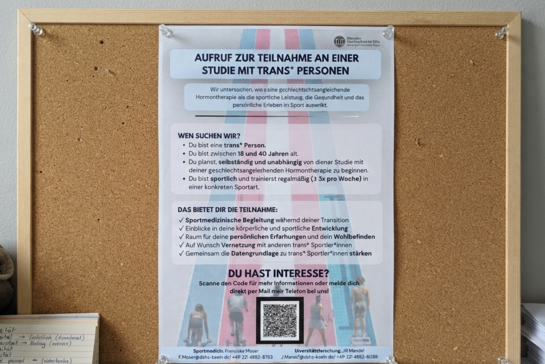
        • Teilnehmende für eine Studie mit trans* Personen gesucht

        • Teilnehmende für Long-COVID-Studie gesucht

        • Wissenschaftliche Studie zu Ecdysteron, Muskelaufbau und Kraftentwicklung

        • Wie beeinflussen deine Zyklussymptome deine sportliche Leistungsfähigkeit und Trainingsbeteiligung?

        • Exoskelett-Forschung an der Deutschen Sporthochschule Köln

        • LEAP-Studie

        • Vorhersage der Sauerstoffaufnahme

        • Mechanoprotektive Mechanismen im Skelettmuskel

        • VR-Bewegungstraining

        • Golfen trotz Rückenschmerzen?

        • Relatives Energiedefizit im Sport (REDs)

        • Bewegung, Omega-3 und Curcumin

  • Transfer

    • Transfer

    • Innovationen aus der Forschung

      • Innovationen aus der Forschung

      • Transferberatung & Coaching

      • Transferförderung & Programme

      • Erfindungen, Patente & Schutzrechte

      • Transferprojekte & Initiativen

        • Transferprojekte & Initiativen

        • Sport und Schwangerschaft

        • mentaltalent

        • MentalGestärkt

        • Kinderonko

        • Schulsportlandschaft

          • Schulsportlandschaft

          • Podcast der Schulsportlandschaft

          • Videos & Kurzfilme

          • Tipps für den Schulalltag

          • Forschung, Projekte & Buchtipps

          • Fortbildungen & Veranstaltungen

          • Gimmicks

    • Gründung & Start-ups

      • Gründung & Start-ups

      • Gründungsberatung

      • Angebote & Förderungen

        • Angebote & Förderungen

        • StarS-Kader

        • Gateway EM*power

        • DSHS-Ideathlon

      • Unsere Start-ups

    • Weiterbildungsangebote
Filtern nach
Seiten close Person close News close Event close

4221 Ergebnisse
  • Relevanz
  • Alphabetisch
  • Erstellungsdatum

  • wada_2016_list_modifications.pdf
    16 September 2015 2016 Prohibited List Summary of Major Modifications and Explanatory Notes SUBSTANCES AND METHODS PROHIBITED AT ALL TIMES (IN- AND OUT-OF- COMPETITION) PROHIBITED SUBSTANCES S2: Peptide hormones, Growth Factors, Related Substances and Mimetics Leuprorelin replaced triptorelin as a more universal example of a chorionic gonadotrophin and luteinizing hormone-releasing factor. S4. Hormone and Metabolic Modulators Insulin-mimetics were added to the List to include all insulin-receptor agonists. Meldonium (Mildronate) was added because of evidence of its use by athletes with the intention of enhancing performance. S5. Diuretics and Masking Agents It was clarified that the ophthalmic use of carbonic anhydrase inhibitors is permitted. SUBSTANCES AND METHODS PROHIBITED IN-COMPETITION S6. Stimulants: It was clarified that clonidine is permitted. SUBSTANCES PROHIBITED IN PARTICULAR SPORTS P1: Alcohol: After consideration of the Federation International de Motocyclisme (FIM)’s request, their Federation was removed from the list of sports prohibiting alcohol as a doping agent. WADA understands that FIM will address the use of alcohol using their own regulations. MONITORING PROGRAM Meldonium was removed from the Monitoring Program and added to the Prohibited List. Hydrocodone, morphine/codeine ratio and tapentadol were removed from the Monitoring Program.

  • wada_2015_prohibited_list.pdf
    The 2015 Prohibited List 20 September 2014 The World Anti-Doping Code THE 2015 PROHIBITED LIST INTERNATIONAL STANDARD The official text of the Prohibited List shall be maintained by WADA and shall be published in English and French. In the event of any conflict between the English and French versions, the English version shall prevail. This List shall come into effect on 1 January 2015 The 2015 Prohibited List 20 September 2014 2 THE 2015 PROHIBITED LIST WORLD ANTI-DOPING CODE Valid 1 January 2015 In accordance with Article 4.2.2 of the World Anti-Doping Code, all Prohibited Substances shall be considered as “Specified Substances” except Substances in classes S1, S2, S4.4, S4.5, S6.a, and Prohibited Methods M1, M2 and M3. SUBSTANCES AND METHODS PROHIBITED AT ALL TIMES (IN- AND OUT-OF-COMPETITION) PROHIBITED SUBSTANCES S0. NON-APPROVED SUBSTANCES Any pharmacological substance which is not addressed by any of the subsequent sections of the List and with no current approval by any governmental regulatory health authority for human therapeutic use (e.g drugs under pre-clinical or clinical development or discontinued, designer drugs, substances approved only for veterinary use) is prohibited at all times. S1. ANABOLIC AGENTS Anabolic agents are prohibited. 1. Anabolic Androgenic Steroids (AAS) a. Exogenous* AAS, including: 1-androstenediol (5α-androst-1-ene-3β,17β-diol ); 1-androstenedione (5α- androst-1-ene-3,17-dione); bolandiol (estr-4-ene-3β,17β-diol ); bolasterone; boldenone; boldione (androsta-1,4-diene-3,17-dione); calusterone; The 2015 Prohibited List 20 September 2014 3 clostebol; danazol ([1,2]oxazolo[4',5':2,3]pregna-4-en-20-yn-17α-ol); dehydrochlormethyltestosterone (4-chloro-17β-hydroxy-17α-methylandrosta- 1,4-dien-3-one); desoxymethyltestosterone (17α-methyl-5α-androst-2-en- 17β-ol); drostanolone; ethylestrenol (19-norpregna-4-en-17α-ol); fluoxymesterone; formebolone; furazabol (17α-methyl [1,2,5]oxadiazolo[3',4':2,3]-5α-androstan-17β-ol); gestrinone; 4- hydroxytestosterone (4,17β-dihydroxyandrost-4-en-3-one); mestanolone; mesterolone; metandienone (17β-hydroxy-17α-methylandrosta-1,4-dien-3- one); metenolone; methandriol; methasterone (17β-hydroxy-2α,17α- dimethyl-5α-androstan-3-one); methyldienolone (17β-hydroxy-17α- methylestra-4,9-dien-3-one); methyl-1-testosterone (17β-hydroxy-17α- methyl-5α-androst-1-en-3-one); methylnortestosterone (17β-hydroxy-17α- methylestr-4-en-3-one); methyltestosterone; metribolone (methyltrienolone, 17β-hydroxy-17α-methylestra-4,9,11-trien-3-one); mibolerone; nandrolone; 19-norandrostenedione (estr-4-ene-3,17-dione); norboletone; norclostebol; norethandrolone; oxabolone; oxandrolone; oxymesterone; oxymetholone; prostanozol (17β-[(tetrahydropyran-2-yl)oxy]-1'H- pyrazolo[3,4:2,3]-5α-androstane); quinbolone; stanozolol; stenbolone; 1- testosterone (17β-hydroxy-5α-androst-1-en-3-one); tetrahydrogestrinone (17-hydroxy-18a-homo-19-nor-17α-pregna-4,9,11-trien-3-one); trenbolone (17β-hydroxyestr-4,9,11-trien-3-one); and other substances with a similar chemical structure or similar biological effect(s). b. Endogenous** AAS when administered exogenously: Androstenediol (androst-5-ene-3β,17β-diol); androstenedione (androst-4- ene-3,17-dione); dihydrotestosterone (17β-hydroxy-5α-androstan-3-one); prasterone (dehydroepiandrosterone, DHEA, 3β-hydroxyandrost-5-en-17-one); testosterone; and their metabolites and isomers, including but not limited to: 5α-androstane-3α,17α-diol; 5α-androstane-3α,17β-diol; 5α-androstane- 3β,17α-diol; 5α-androstane-3β,17β-diol; 5β-androstane-3α,17β-diol; androst-4-ene-3α,17α-diol; androst-4-ene-3α,17β-diol; androst-4-ene- 3β,17α-diol; androst-5-ene-3α,17α-diol; androst-5-ene-3α,17β-diol; androst-5-ene-3β,17α-diol; 4-androstenediol (androst-4-ene-3β,17β-diol); 5-androstenedione (androst-5-ene-3,17-dione); androsterone (3β-hydroxy- 5α-androstan-17-one); epi-dihydrotestosterone; epitestosterone; etiocholanolone; 7α-hydroxy-DHEA; 7β-hydroxy-DHEA; 7-keto-DHEA; 19- norandrosterone; 19-noretiocholanolone. 2. Other Anabolic Agents Including, but not limited to: Clenbuterol, selective androgen receptor modulators (SARMs, e.g. andarine and ostarine), tibolone, zeranol and zilpaterol. The 2015 Prohibited List 20 September 2014 4 For purposes of this section: * “exogenous” refers to a substance which is not ordinarily produced by the body naturally. ** “endogenous” refers to a substance which is ordinarily produced by the body naturally. S2. PEPTIDE HORMONES, GROWTH FACTORS, RELATED SUBSTANCES AND MIMETICS The following substances, and other substances with similar chemical structure or similar biological effect(s), are prohibited: 1. Erythropoietin-Receptor agonists: 1.1 Erythropoiesis-Stimulating Agents (ESAs) including e.g. darbepoietin (dEPO); erythropoietins (EPO); EPO-Fc; EPO-mimetic peptides (EMP), e.g. CNTO 530 and peginesatide; and methoxy polyethylene glycol-epoetin beta (CERA); 1.2 Non-erythropoietic EPO-Receptor agonists, e.g. ARA-290, asialo EPO and carbamylated EPO; 2. Hypoxia-inducible factor (HIF) stabilizers, e.g. cobalt and FG-4592; and HIF activators, e.g. argon, xenon; 3. Chorionic Gonadotrophin (CG) and Luteinizing Hormone (LH) and their releasing factors, e.g. buserelin, gonadorelin and triptorelin, in males; 4. Corticotrophins and their releasing factors, e.g corticorelin; 5. Growth Hormone (GH) and its releasing factors including Growth Hormone Releasing Hormone (GHRH) and its analogues, e.g. CJC-1295, sermorelin and tesamorelin; Growth Hormone Secretagogues (GHS), e.g. ghrelin and ghrelin mimetics, e.g. anamorelin and ipamorelin; and GH-Releasing Peptides (GHRPs), e.g. alexamorelin, GHRP-6, hexarelin and pralmorelin (GHRP-2). Additional prohibited growth factors: Fibroblast Growth Factors (FGFs); Hepatocyte Growth Factor (HGF); Insulin-like Growth Factor-1 (IGF-1) and its analogues; Mechano Growth Factors (MGFs); Platelet-Derived Growth Factor (PDGF); Vascular-Endothelial Growth Factor (VEGF) and any other growth factor The 2015 Prohibited List 20 September 2014 5 affecting muscle, tendon or ligament protein synthesis/degradation, vascularisation, energy utilization, regenerative capacity or fibre type switching. S3. BETA-2 AGONISTS All beta-2 agonists, including all optical isomers, e.g. d- and l- where relevant, are prohibited. Except: Inhaled salbutamol (maximum 1600 micrograms over 24 hours); Inhaled formoterol (maximum delivered dose 54 micrograms over 24 hours); and Inhaled salmeterol in accordance with the manufacturers’ recommended therapeutic regimen. The presence in urine of salbutamol in excess of 1000 ng/mL or formoterol in excess of 40 ng/mL is presumed not to be an intended therapeutic use of the substance and will be considered as an Adverse Analytical Finding (AAF) unless the Athlete proves, through a controlled pharmacokinetic study, that the abnormal result was the consequence of the use of the therapeutic inhaled dose up to the maximum indicated above. S4. HORMONE AND METABOLIC MODULATORS The following hormones and metabolic modulators are prohibited: 1. Aromatase inhibitors including, but not limited to: aminoglutethimide; anastrozole; androsta-1,4,6-triene-3,17-dione (androstatrienedione); 4-androstene-3,6,17 trione (6-oxo); exemestane; formestane; letrozole and testolactone. 2. Selective estrogen receptor modulators (SERMs) including, but not limited to: raloxifene; tamoxifen and toremifene. 3. Other anti-estrogenic substances including, but not limited to: clomiphene; cyclofenil and fulvestrant. 4. Agents modifying myostatin function(s) including, but not limited, to: myostatin inhibitors. The 2015 Prohibited List 20 September 2014 6 5. Metabolic modulators: 5.1 Activators of the AMP-activated protein kinase (AMPK), e.g. AICAR; and Peroxisome Proliferator Activated Receptor δ (PPARδ) agonists, e.g. GW 1516; 5.2 Insulins; 5.3 Trimetazidine. S5. DIURETICS AND MASKING AGENTS The following diuretics and masking agents are prohibited, as are other substances with a similar chemical structure or similar biological effect(s). Including, but not limited to: Desmopressin; probenecid; plasma expanders, e.g. glycerol and intravenous administration of albumin, dextran, hydroxyethyl starch and mannitol. Acetazolamide; amiloride; bumetanide; canrenone; chlortalidone; etacrynic acid; furosemide; indapamide; metolazone; spironolactone; thiazides, e.g. bendroflumethiazide, chlorothiazide and hydrochlorothiazide; triamterene and vaptans, e.g. tolvaptan. Except: Drospirenone; pamabrom; and topical dorzolamide and brinzolamide. Local administration of felypressin in dental anaesthesia. The detection in an Athlete’s Sample at all times or In-Competition, as applicable, of any quantity of the following substances subject to threshold limits: formoterol, salbutamol, cathine, ephedrine, methylephedrine and pseudoephedrine, in conjunction with a diuretic or masking agent, will be considered as an Adverse Analytical Finding unless the Athlete has an approved TUE for that substance in addition to the one granted for the diuretic or masking agent. The 2015 Prohibited List 20 September 2014 7 PROHIBITED METHODS M1. MANIPULATION OF BLOOD AND BLOOD COMPONENTS The following are prohibited: 1. The Administration or reintroduction of any quantity of autologous, allogenic (homologous) or heterologous blood, or red blood cell products of any origin into the circulatory system. 2. Artificially enhancing the uptake, transport or delivery of oxygen. Including, but not limited to: Perfluorochemicals; efaproxiral (RSR13) and modified haemoglobin products, e.g. haemoglobin-based blood substitutes and microencapsulated haemoglobin products, excluding supplemental oxygen. 3. Any form of intravascular manipulation of the blood or blood components by physical or chemical means. M2. CHEMICAL AND PHYSICAL MANIPULATION The following are prohibited: 1. Tampering, or Attempting to Tamper, to alter the integrity and validity of Samples collected during Doping Control. Including, but not limited to: Urine substitution and/or adulteration, e.g. proteases. 2. Intravenous infusions and/or injections of more than 50 mL per 6 hour period except for those legitimately received in the course of hospital admissions, surgical procedures or clinical investigations. M3. GENE DOPING The following, with the potential to enhance sport performance, are prohibited: 1. The transfer of polymers of nucleic acids or nucleic acid analogues; 2. The use of normal or genetically modified cells. The 2015 Prohibited List 20 September 2014 8 SUBSTANCES AND METHODS PROHIBITED IN-COMPETITION In addition to the categories S0 to S5 and M1 to M3 defined above, the following categories are prohibited In-Competition: PROHIBITED SUBSTANCES S6. STIMULANTS All stimulants, including all optical isomers, e.g. d- and l- where relevant, are prohibited. Stimulants include: a: Non-Specified Stimulants: Adrafinil; amfepramone; amfetamine; amfetaminil; amiphenazole; benfluorex; benzylpiperazine; bromantan; clobenzorex; cocaine; cropropamide; crotetamide; fencamine; fenetylline; fenfluramine; fenproporex; fonturacetam [4-phenylpiracetam (carphedon)]; furfenorex; mefenorex; mephentermine; mesocarb; metamfetamine(d-); p- methylamphetamine; modafinil; norfenfluramine; phendimetrazine; phentermine; prenylamine and prolintane. A stimulant not expressly listed in this section is a Specified Substance. b: Specified Stimulants. Including, but not limited to: Benzfetamine; cathine**; cathinone and its analogues, e.g. mephedrone, methedrone, and α- pyrrolidinovalerophenone; dimethylamphetamine; ephedrine***; epinephrine**** (adrenaline); etamivan; etilamfetamine; etilefrine; famprofazone; fenbutrazate; fencamfamin; heptaminol; hydroxyamfetamine (parahydroxyamphetamine); isometheptene; levmetamfetamine; meclofenoxate; methylenedioxymethamphetamine; methylephedrine***; methylhexaneamine (dimethylpentylamine); methylphenidate; nikethamide; norfenefrine; octopamine; oxilofrine (methylsynephrine); pemoline; pentetrazol; phenethylamine and its derivatives; phenmetrazine; phenpromethamine; propylhexedrine; pseudoephedrine*****; selegiline; sibutramine; strychnine; tenamfetamine (methylenedioxyamphetamine), tuaminoheptane; The 2015 Prohibited List 20 September 2014 9 and other substances with a similar chemical structure or similar biological effect(s). Except: Imidazole derivatives for topical/ophthalmic use and those stimulants included in the 2015 Monitoring Program*. * Bupropion, caffeine, nicotine, phenylephrine, phenylpropanolamine, pipradrol, and synephrine: These substances are included in the 2015 Monitoring Program, and are not considered Prohibited Substances. ** Cathine: Prohibited when its concentration in urine is greater than 5 micrograms per milliliter. *** Ephedrine and methylephedrine: Prohibited when the concentration of either in urine is greater than 10 micrograms per milliliter. **** Epinephrine (adrenaline): Not prohibited in local administration, e.g. nasal, ophthalmologic, or co-administration with local anaesthetic agents. ***** Pseudoephedrine: Prohibited when its concentration in urine is greater than 150 micrograms per milliliter. S7. NARCOTICS Prohibited: Buprenorphine; dextromoramide; diamorphine (heroin); fentanyl and its derivatives; hydromorphone; methadone; morphine; oxycodone; oxymorphone; pentazocine and pethidine. S8. CANNABINOIDS Prohibited: Natural, e.g. cannabis, hashish and marijuana, or synthetic 9-tetrahydrocannabinol (THC). Cannabimimetics, e.g. “Spice”, JWH-018, JWH-073, HU-210. S9. GLUCOCORTICOIDS All glucocorticoids are prohibited when administered by oral, intravenous, intramuscular or rectal routes. The 2015 Prohibited List 20 September 2014 10 SUBSTANCES PROHIBITED IN PARTICULAR SPORTS P1. ALCOHOL Alcohol (ethanol) is prohibited In-Competition only, in the following sports. Detection will be conducted by analysis of breath and/or blood. The doping violation threshold is equivalent to a blood alcohol concentration of 0.10 g/L. Air Sports (FAI) Archery (WA) Automobile (FIA) Motorcycling (FIM) Powerboating (UIM) P2. BETA-BLOCKERS Beta-blockers are prohibited In-Competition only, in the following sports, and also prohibited Out-of-Competition where indicated. Archery (WA)* Automobile (FIA) Billiards (all disciplines) (WCBS) Darts (WDF) Golf (IGF) Shooting (ISSF, IPC)* Skiing/Snowboarding (FIS) in ski jumping, freestyle aerials/halfpipe and snowboard halfpipe/big air Underwater sports (CMAS) in constant-weight apnoea with or without fins, dynamic apnoea with and without fins, free immersion apnoea, Jump Blue apnoea, spearfishing, static apnoea, target shooting and variable weight apnoea. *Also prohibited Out-of-Competition Including, but not limited to: Acebutolol; alprenolol; atenolol; betaxolol; bisoprolol; bunolol; carteolol; carvedilol; celiprolol; esmolol; labetalol; levobunolol; metipranolol; metoprolol; nadolol; oxprenolol; pindolol; propranolol; sotalol and timolol.

  • wada_2015_prohibited_list.pdf
    The 2015 Prohibited List 20 September 2014 The World Anti-Doping Code THE 2015 PROHIBITED LIST INTERNATIONAL STANDARD The official text of the Prohibited List shall be maintained by WADA and shall be published in English and French. In the event of any conflict between the English and French versions, the English version shall prevail. This List shall come into effect on 1 January 2015 The 2015 Prohibited List 20 September 2014 2 THE 2015 PROHIBITED LIST WORLD ANTI-DOPING CODE Valid 1 January 2015 In accordance with Article 4.2.2 of the World Anti-Doping Code, all Prohibited Substances shall be considered as “Specified Substances” except Substances in classes S1, S2, S4.4, S4.5, S6.a, and Prohibited Methods M1, M2 and M3. SUBSTANCES AND METHODS PROHIBITED AT ALL TIMES (IN- AND OUT-OF-COMPETITION) PROHIBITED SUBSTANCES S0. NON-APPROVED SUBSTANCES Any pharmacological substance which is not addressed by any of the subsequent sections of the List and with no current approval by any governmental regulatory health authority for human therapeutic use (e.g drugs under pre-clinical or clinical development or discontinued, designer drugs, substances approved only for veterinary use) is prohibited at all times. S1. ANABOLIC AGENTS Anabolic agents are prohibited. 1. Anabolic Androgenic Steroids (AAS) a. Exogenous* AAS, including: 1-androstenediol (5α-androst-1-ene-3β,17β-diol ); 1-androstenedione (5α- androst-1-ene-3,17-dione); bolandiol (estr-4-ene-3β,17β-diol ); bolasterone; boldenone; boldione (androsta-1,4-diene-3,17-dione); calusterone; The 2015 Prohibited List 20 September 2014 3 clostebol; danazol ([1,2]oxazolo[4',5':2,3]pregna-4-en-20-yn-17α-ol); dehydrochlormethyltestosterone (4-chloro-17β-hydroxy-17α-methylandrosta- 1,4-dien-3-one); desoxymethyltestosterone (17α-methyl-5α-androst-2-en- 17β-ol); drostanolone; ethylestrenol (19-norpregna-4-en-17α-ol); fluoxymesterone; formebolone; furazabol (17α-methyl [1,2,5]oxadiazolo[3',4':2,3]-5α-androstan-17β-ol); gestrinone; 4- hydroxytestosterone (4,17β-dihydroxyandrost-4-en-3-one); mestanolone; mesterolone; metandienone (17β-hydroxy-17α-methylandrosta-1,4-dien-3- one); metenolone; methandriol; methasterone (17β-hydroxy-2α,17α- dimethyl-5α-androstan-3-one); methyldienolone (17β-hydroxy-17α- methylestra-4,9-dien-3-one); methyl-1-testosterone (17β-hydroxy-17α- methyl-5α-androst-1-en-3-one); methylnortestosterone (17β-hydroxy-17α- methylestr-4-en-3-one); methyltestosterone; metribolone (methyltrienolone, 17β-hydroxy-17α-methylestra-4,9,11-trien-3-one); mibolerone; nandrolone; 19-norandrostenedione (estr-4-ene-3,17-dione); norboletone; norclostebol; norethandrolone; oxabolone; oxandrolone; oxymesterone; oxymetholone; prostanozol (17β-[(tetrahydropyran-2-yl)oxy]-1'H- pyrazolo[3,4:2,3]-5α-androstane); quinbolone; stanozolol; stenbolone; 1- testosterone (17β-hydroxy-5α-androst-1-en-3-one); tetrahydrogestrinone (17-hydroxy-18a-homo-19-nor-17α-pregna-4,9,11-trien-3-one); trenbolone (17β-hydroxyestr-4,9,11-trien-3-one); and other substances with a similar chemical structure or similar biological effect(s). b. Endogenous** AAS when administered exogenously: Androstenediol (androst-5-ene-3β,17β-diol); androstenedione (androst-4- ene-3,17-dione); dihydrotestosterone (17β-hydroxy-5α-androstan-3-one); prasterone (dehydroepiandrosterone, DHEA, 3β-hydroxyandrost-5-en-17-one); testosterone; and their metabolites and isomers, including but not limited to: 5α-androstane-3α,17α-diol; 5α-androstane-3α,17β-diol; 5α-androstane- 3β,17α-diol; 5α-androstane-3β,17β-diol; 5β-androstane-3α,17β-diol; androst-4-ene-3α,17α-diol; androst-4-ene-3α,17β-diol; androst-4-ene- 3β,17α-diol; androst-5-ene-3α,17α-diol; androst-5-ene-3α,17β-diol; androst-5-ene-3β,17α-diol; 4-androstenediol (androst-4-ene-3β,17β-diol); 5-androstenedione (androst-5-ene-3,17-dione); androsterone (3β-hydroxy- 5α-androstan-17-one); epi-dihydrotestosterone; epitestosterone; etiocholanolone; 7α-hydroxy-DHEA; 7β-hydroxy-DHEA; 7-keto-DHEA; 19- norandrosterone; 19-noretiocholanolone. 2. Other Anabolic Agents Including, but not limited to: Clenbuterol, selective androgen receptor modulators (SARMs, e.g. andarine and ostarine), tibolone, zeranol and zilpaterol. The 2015 Prohibited List 20 September 2014 4 For purposes of this section: * “exogenous” refers to a substance which is not ordinarily produced by the body naturally. ** “endogenous” refers to a substance which is ordinarily produced by the body naturally. S2. PEPTIDE HORMONES, GROWTH FACTORS, RELATED SUBSTANCES AND MIMETICS The following substances, and other substances with similar chemical structure or similar biological effect(s), are prohibited: 1. Erythropoietin-Receptor agonists: 1.1 Erythropoiesis-Stimulating Agents (ESAs) including e.g. darbepoietin (dEPO); erythropoietins (EPO); EPO-Fc; EPO-mimetic peptides (EMP), e.g. CNTO 530 and peginesatide; and methoxy polyethylene glycol-epoetin beta (CERA); 1.2 Non-erythropoietic EPO-Receptor agonists, e.g. ARA-290, asialo EPO and carbamylated EPO; 2. Hypoxia-inducible factor (HIF) stabilizers, e.g. cobalt and FG-4592; and HIF activators, e.g. argon, xenon; 3. Chorionic Gonadotrophin (CG) and Luteinizing Hormone (LH) and their releasing factors, e.g. buserelin, gonadorelin and triptorelin, in males; 4. Corticotrophins and their releasing factors, e.g corticorelin; 5. Growth Hormone (GH) and its releasing factors including Growth Hormone Releasing Hormone (GHRH) and its analogues, e.g. CJC-1295, sermorelin and tesamorelin; Growth Hormone Secretagogues (GHS), e.g. ghrelin and ghrelin mimetics, e.g. anamorelin and ipamorelin; and GH-Releasing Peptides (GHRPs), e.g. alexamorelin, GHRP-6, hexarelin and pralmorelin (GHRP-2). Additional prohibited growth factors: Fibroblast Growth Factors (FGFs); Hepatocyte Growth Factor (HGF); Insulin-like Growth Factor-1 (IGF-1) and its analogues; Mechano Growth Factors (MGFs); Platelet-Derived Growth Factor (PDGF); Vascular-Endothelial Growth Factor (VEGF) and any other growth factor The 2015 Prohibited List 20 September 2014 5 affecting muscle, tendon or ligament protein synthesis/degradation, vascularisation, energy utilization, regenerative capacity or fibre type switching. S3. BETA-2 AGONISTS All beta-2 agonists, including all optical isomers, e.g. d- and l- where relevant, are prohibited. Except: Inhaled salbutamol (maximum 1600 micrograms over 24 hours); Inhaled formoterol (maximum delivered dose 54 micrograms over 24 hours); and Inhaled salmeterol in accordance with the manufacturers’ recommended therapeutic regimen. The presence in urine of salbutamol in excess of 1000 ng/mL or formoterol in excess of 40 ng/mL is presumed not to be an intended therapeutic use of the substance and will be considered as an Adverse Analytical Finding (AAF) unless the Athlete proves, through a controlled pharmacokinetic study, that the abnormal result was the consequence of the use of the therapeutic inhaled dose up to the maximum indicated above. S4. HORMONE AND METABOLIC MODULATORS The following hormones and metabolic modulators are prohibited: 1. Aromatase inhibitors including, but not limited to: aminoglutethimide; anastrozole; androsta-1,4,6-triene-3,17-dione (androstatrienedione); 4-androstene-3,6,17 trione (6-oxo); exemestane; formestane; letrozole and testolactone. 2. Selective estrogen receptor modulators (SERMs) including, but not limited to: raloxifene; tamoxifen and toremifene. 3. Other anti-estrogenic substances including, but not limited to: clomiphene; cyclofenil and fulvestrant. 4. Agents modifying myostatin function(s) including, but not limited, to: myostatin inhibitors. The 2015 Prohibited List 20 September 2014 6 5. Metabolic modulators: 5.1 Activators of the AMP-activated protein kinase (AMPK), e.g. AICAR; and Peroxisome Proliferator Activated Receptor δ (PPARδ) agonists, e.g. GW 1516; 5.2 Insulins; 5.3 Trimetazidine. S5. DIURETICS AND MASKING AGENTS The following diuretics and masking agents are prohibited, as are other substances with a similar chemical structure or similar biological effect(s). Including, but not limited to: Desmopressin; probenecid; plasma expanders, e.g. glycerol and intravenous administration of albumin, dextran, hydroxyethyl starch and mannitol. Acetazolamide; amiloride; bumetanide; canrenone; chlortalidone; etacrynic acid; furosemide; indapamide; metolazone; spironolactone; thiazides, e.g. bendroflumethiazide, chlorothiazide and hydrochlorothiazide; triamterene and vaptans, e.g. tolvaptan. Except: Drospirenone; pamabrom; and topical dorzolamide and brinzolamide. Local administration of felypressin in dental anaesthesia. The detection in an Athlete’s Sample at all times or In-Competition, as applicable, of any quantity of the following substances subject to threshold limits: formoterol, salbutamol, cathine, ephedrine, methylephedrine and pseudoephedrine, in conjunction with a diuretic or masking agent, will be considered as an Adverse Analytical Finding unless the Athlete has an approved TUE for that substance in addition to the one granted for the diuretic or masking agent. The 2015 Prohibited List 20 September 2014 7 PROHIBITED METHODS M1. MANIPULATION OF BLOOD AND BLOOD COMPONENTS The following are prohibited: 1. The Administration or reintroduction of any quantity of autologous, allogenic (homologous) or heterologous blood, or red blood cell products of any origin into the circulatory system. 2. Artificially enhancing the uptake, transport or delivery of oxygen. Including, but not limited to: Perfluorochemicals; efaproxiral (RSR13) and modified haemoglobin products, e.g. haemoglobin-based blood substitutes and microencapsulated haemoglobin products, excluding supplemental oxygen. 3. Any form of intravascular manipulation of the blood or blood components by physical or chemical means. M2. CHEMICAL AND PHYSICAL MANIPULATION The following are prohibited: 1. Tampering, or Attempting to Tamper, to alter the integrity and validity of Samples collected during Doping Control. Including, but not limited to: Urine substitution and/or adulteration, e.g. proteases. 2. Intravenous infusions and/or injections of more than 50 mL per 6 hour period except for those legitimately received in the course of hospital admissions, surgical procedures or clinical investigations. M3. GENE DOPING The following, with the potential to enhance sport performance, are prohibited: 1. The transfer of polymers of nucleic acids or nucleic acid analogues; 2. The use of normal or genetically modified cells. The 2015 Prohibited List 20 September 2014 8 SUBSTANCES AND METHODS PROHIBITED IN-COMPETITION In addition to the categories S0 to S5 and M1 to M3 defined above, the following categories are prohibited In-Competition: PROHIBITED SUBSTANCES S6. STIMULANTS All stimulants, including all optical isomers, e.g. d- and l- where relevant, are prohibited. Stimulants include: a: Non-Specified Stimulants: Adrafinil; amfepramone; amfetamine; amfetaminil; amiphenazole; benfluorex; benzylpiperazine; bromantan; clobenzorex; cocaine; cropropamide; crotetamide; fencamine; fenetylline; fenfluramine; fenproporex; fonturacetam [4-phenylpiracetam (carphedon)]; furfenorex; mefenorex; mephentermine; mesocarb; metamfetamine(d-); p- methylamphetamine; modafinil; norfenfluramine; phendimetrazine; phentermine; prenylamine and prolintane. A stimulant not expressly listed in this section is a Specified Substance. b: Specified Stimulants. Including, but not limited to: Benzfetamine; cathine**; cathinone and its analogues, e.g. mephedrone, methedrone, and α- pyrrolidinovalerophenone; dimethylamphetamine; ephedrine***; epinephrine**** (adrenaline); etamivan; etilamfetamine; etilefrine; famprofazone; fenbutrazate; fencamfamin; heptaminol; hydroxyamfetamine (parahydroxyamphetamine); isometheptene; levmetamfetamine; meclofenoxate; methylenedioxymethamphetamine; methylephedrine***; methylhexaneamine (dimethylpentylamine); methylphenidate; nikethamide; norfenefrine; octopamine; oxilofrine (methylsynephrine); pemoline; pentetrazol; phenethylamine and its derivatives; phenmetrazine; phenpromethamine; propylhexedrine; pseudoephedrine*****; selegiline; sibutramine; strychnine; tenamfetamine (methylenedioxyamphetamine), tuaminoheptane; The 2015 Prohibited List 20 September 2014 9 and other substances with a similar chemical structure or similar biological effect(s). Except: Imidazole derivatives for topical/ophthalmic use and those stimulants included in the 2015 Monitoring Program*. * Bupropion, caffeine, nicotine, phenylephrine, phenylpropanolamine, pipradrol, and synephrine: These substances are included in the 2015 Monitoring Program, and are not considered Prohibited Substances. ** Cathine: Prohibited when its concentration in urine is greater than 5 micrograms per milliliter. *** Ephedrine and methylephedrine: Prohibited when the concentration of either in urine is greater than 10 micrograms per milliliter. **** Epinephrine (adrenaline): Not prohibited in local administration, e.g. nasal, ophthalmologic, or co-administration with local anaesthetic agents. ***** Pseudoephedrine: Prohibited when its concentration in urine is greater than 150 micrograms per milliliter. S7. NARCOTICS Prohibited: Buprenorphine; dextromoramide; diamorphine (heroin); fentanyl and its derivatives; hydromorphone; methadone; morphine; oxycodone; oxymorphone; pentazocine and pethidine. S8. CANNABINOIDS Prohibited: Natural, e.g. cannabis, hashish and marijuana, or synthetic 9-tetrahydrocannabinol (THC). Cannabimimetics, e.g. “Spice”, JWH-018, JWH-073, HU-210. S9. GLUCOCORTICOIDS All glucocorticoids are prohibited when administered by oral, intravenous, intramuscular or rectal routes. The 2015 Prohibited List 20 September 2014 10 SUBSTANCES PROHIBITED IN PARTICULAR SPORTS P1. ALCOHOL Alcohol (ethanol) is prohibited In-Competition only, in the following sports. Detection will be conducted by analysis of breath and/or blood. The doping violation threshold is equivalent to a blood alcohol concentration of 0.10 g/L. Air Sports (FAI) Archery (WA) Automobile (FIA) Motorcycling (FIM) Powerboating (UIM) P2. BETA-BLOCKERS Beta-blockers are prohibited In-Competition only, in the following sports, and also prohibited Out-of-Competition where indicated. Archery (WA)* Automobile (FIA) Billiards (all disciplines) (WCBS) Darts (WDF) Golf (IGF) Shooting (ISSF, IPC)* Skiing/Snowboarding (FIS) in ski jumping, freestyle aerials/halfpipe and snowboard halfpipe/big air Underwater sports (CMAS) in constant-weight apnoea with or without fins, dynamic apnoea with and without fins, free immersion apnoea, Jump Blue apnoea, spearfishing, static apnoea, target shooting and variable weight apnoea. *Also prohibited Out-of-Competition Including, but not limited to: Acebutolol; alprenolol; atenolol; betaxolol; bisoprolol; bunolol; carteolol; carvedilol; celiprolol; esmolol; labetalol; levobunolol; metipranolol; metoprolol; nadolol; oxprenolol; pindolol; propranolol; sotalol and timolol.

  • wada_2017_list_modifications.pdf
    1 Prohibited Substances ANABOLIC AGENTS • Compounds boldenone, boldione, 19-norandrostenedione, and nandrolone have been transferred and 19-norandrostenediol added to the S1.b section because they can be produced endogenously at low concentrations. This change does not affect the prohibited status of these substances. The interpretation and reporting of findings for these substances is addressed in specific Technical Documents (TD2016IRMS and/or TD2016NA). • 5α-androst-2-ene-17-one, commonly known as “Delta-2” or 2-androstenone, was added as an example of metabolite of DHEA, more recently found in dietary supplements. PEPTIDE HORMONES, GROWTH FACTORS, RELATED SUBSTANCES AND MIMETICS • To extend the scope of Erythropoietic Stimulating Agents, GATA inhibitors (e.g. K-11706) and Transforming Growth Factor- β (TGF-β) inhibitors (e.g. sotatercept, luspatercept) were added. • The International Nonproprietary Name (INN) of FG-4592, roxadustat, was added. • Molidustat was added as another example of HIF stabilizer. • Cobalt: It is re-iterated that vitamin B12, which contains cobalt, is not prohibited. S1 S2 BETA-2-AGONISTS • The reference to isomers was simplified. • Examples of selective and non-selective beta-2-agonists were added (fenoterol, formoterol, higenamine, indacaterol, olodaterol, procaterol, reproterol, salbutamol, salmeterol, terbutaline, vilanterol). • Higenamine is documented to be a constituent of the plant Tinospora crispa, which can be found in some dietary supplements and is a non-selective beta-2-agonist. • Dosing parameters of salbutamol were refined to make it clear that the full 24 hour dose should not be administered at one time. • The maximum dosage for salmeterol was stated according to the manufacturers’ recommendations. • Studies are ongoing to establish an appropriate urinary threshold concentration for inhaled salmeterol. At present, the Technical Document TD2015MRPL recommends not to report salmeterol below 10 ng/mL. HORMONE AND METABOLIC MODULATORS • Androsta-3,5-diene-7,17-dione (arimistane) was added as a new example of aromatase inhibitor. Prohibited Methods MANIPULATION OF BLOOD AND BLOOD COMPONENTS • Supplemental oxygen administered by inhalation, but not intravenously, is permitted. To clarify this, M1.2 now reads “excluding supplemental oxygen by inhalation”. S3 S4 M1 SUMMARY OF MAJOR MODIFICATIONS AND EXPLANATORY NOTES 2017 PROHIBITED LIST Substances and methods prohibited at all times (In- and Out-of-Competition) 2 Substances and Methods Prohibited In-Competition STIMULANTS • Lisdexamfetamine was added to S6.a; it is an inactive pro-drug of amfetamine. • In the absence of an INN for methylhexaneamine, its International Union of Pure and Applied Chemistry (IUPAC) name, 4-methylhexan-2-amine, was added. A number of other synonyms exist for methylhexaneamine including: 1,3-dimethylamylamine, dimethylpentylamine; methylhexamine; methylhexanamine; 1,3-dimethylpentylamine. • Regular food consumption will not yield sufficient levels of phenylethylamine to result in an Adverse Analytical Finding. NARCOTICS • Nicomorphine was added. It is an opioid analgesic drug, which is converted to morphine following administration. GLUCOCORTICOIDS • After consideration of stakeholders’ comments, no changes were made in this section for 2017. S6 S7 S9 MONITORING PROGRAM The following were added to establish patterns of use: • Codeine; • Concurrent use of multiple beta-2-agonists.

  • wada_2017_list_modifications.pdf
    1 Prohibited Substances ANABOLIC AGENTS • Compounds boldenone, boldione, 19-norandrostenedione, and nandrolone have been transferred and 19-norandrostenediol added to the S1.b section because they can be produced endogenously at low concentrations. This change does not affect the prohibited status of these substances. The interpretation and reporting of findings for these substances is addressed in specific Technical Documents (TD2016IRMS and/or TD2016NA). • 5α-androst-2-ene-17-one, commonly known as “Delta-2” or 2-androstenone, was added as an example of metabolite of DHEA, more recently found in dietary supplements. PEPTIDE HORMONES, GROWTH FACTORS, RELATED SUBSTANCES AND MIMETICS • To extend the scope of Erythropoietic Stimulating Agents, GATA inhibitors (e.g. K-11706) and Transforming Growth Factor- β (TGF-β) inhibitors (e.g. sotatercept, luspatercept) were added. • The International Nonproprietary Name (INN) of FG-4592, roxadustat, was added. • Molidustat was added as another example of HIF stabilizer. • Cobalt: It is re-iterated that vitamin B12, which contains cobalt, is not prohibited. S1 S2 BETA-2-AGONISTS • The reference to isomers was simplified. • Examples of selective and non-selective beta-2-agonists were added (fenoterol, formoterol, higenamine, indacaterol, olodaterol, procaterol, reproterol, salbutamol, salmeterol, terbutaline, vilanterol). • Higenamine is documented to be a constituent of the plant Tinospora crispa, which can be found in some dietary supplements and is a non-selective beta-2-agonist. • Dosing parameters of salbutamol were refined to make it clear that the full 24 hour dose should not be administered at one time. • The maximum dosage for salmeterol was stated according to the manufacturers’ recommendations. • Studies are ongoing to establish an appropriate urinary threshold concentration for inhaled salmeterol. At present, the Technical Document TD2015MRPL recommends not to report salmeterol below 10 ng/mL. HORMONE AND METABOLIC MODULATORS • Androsta-3,5-diene-7,17-dione (arimistane) was added as a new example of aromatase inhibitor. Prohibited Methods MANIPULATION OF BLOOD AND BLOOD COMPONENTS • Supplemental oxygen administered by inhalation, but not intravenously, is permitted. To clarify this, M1.2 now reads “excluding supplemental oxygen by inhalation”. S3 S4 M1 SUMMARY OF MAJOR MODIFICATIONS AND EXPLANATORY NOTES 2017 PROHIBITED LIST Substances and methods prohibited at all times (In- and Out-of-Competition) 2 Substances and Methods Prohibited In-Competition STIMULANTS • Lisdexamfetamine was added to S6.a; it is an inactive pro-drug of amfetamine. • In the absence of an INN for methylhexaneamine, its International Union of Pure and Applied Chemistry (IUPAC) name, 4-methylhexan-2-amine, was added. A number of other synonyms exist for methylhexaneamine including: 1,3-dimethylamylamine, dimethylpentylamine; methylhexamine; methylhexanamine; 1,3-dimethylpentylamine. • Regular food consumption will not yield sufficient levels of phenylethylamine to result in an Adverse Analytical Finding. NARCOTICS • Nicomorphine was added. It is an opioid analgesic drug, which is converted to morphine following administration. GLUCOCORTICOIDS • After consideration of stakeholders’ comments, no changes were made in this section for 2017. S6 S7 S9 MONITORING PROGRAM The following were added to establish patterns of use: • Codeine; • Concurrent use of multiple beta-2-agonists.

  • wada_2016_list_modifications.pdf
    16 September 2015 2016 Prohibited List Summary of Major Modifications and Explanatory Notes SUBSTANCES AND METHODS PROHIBITED AT ALL TIMES (IN- AND OUT-OF- COMPETITION) PROHIBITED SUBSTANCES S2: Peptide hormones, Growth Factors, Related Substances and Mimetics Leuprorelin replaced triptorelin as a more universal example of a chorionic gonadotrophin and luteinizing hormone-releasing factor. S4. Hormone and Metabolic Modulators Insulin-mimetics were added to the List to include all insulin-receptor agonists. Meldonium (Mildronate) was added because of evidence of its use by athletes with the intention of enhancing performance. S5. Diuretics and Masking Agents It was clarified that the ophthalmic use of carbonic anhydrase inhibitors is permitted. SUBSTANCES AND METHODS PROHIBITED IN-COMPETITION S6. Stimulants: It was clarified that clonidine is permitted. SUBSTANCES PROHIBITED IN PARTICULAR SPORTS P1: Alcohol: After consideration of the Federation International de Motocyclisme (FIM)’s request, their Federation was removed from the list of sports prohibiting alcohol as a doping agent. WADA understands that FIM will address the use of alcohol using their own regulations. MONITORING PROGRAM Meldonium was removed from the Monitoring Program and added to the Prohibited List. Hydrocodone, morphine/codeine ratio and tapentadol were removed from the Monitoring Program.

  • wada_2019_list_modifications.pdf
    1 Prohibited Substances ANABOLIC AGENTS 1a Exogenous Anabolic Androgenic Steroids • 4-hydroxytestosterone was transferred to class S1.1b, “Endogenous Anabolic Androgenic Steroids (AAS)”, since this substance can be formed endogenously at low concentrations. • Bolandiol was removed, since it constitutes one of the isomers of 19-norandrostenediol, which is already included under class S1.1b. 1b Endogenous AAS and their Metabolites and isomers, when administered exogenously • The title of S1.1b “Endogenous Anabolic Androgenic Steroids when administered exogenously” was changed to: “Endogenous AAS and their Metabolites and isomers when administered exogenously” to clarify that ALL endogenous AAS and their Metabolites and isomers are prohibited when administered exogenously. Therefore, the listed examples now include the endogenous AAS and some of their Metabolites/isomers. • The examples of Metabolites and isomers of endogenous AAS were simplified, leaving only those endogenous substances that are currently known to be available in nutritional supplements or that may be used as masking agents (e.g. to affect the “steroid profile”). The currently named examples are: 7α-hydroxy-DHEA; 7β-hydroxy-DHEA; 4-androstenediol (androst-4-ene-3β,17β-diol); 5-androstenedione (androst-5-ene-3,17-dione); 7-keto-DHEA; epiandrosterone (3β-hydroxy-5α-androstan-17-one); epi-dihydrotestosterone (17β-hydroxy-5β-androstan- 3-one); epitestosterone. • All other substances previously listed as examples of Metabolites/isomers of endogenous AAS were removed S1 as specific examples of this class; however, such substances remain prohibited if administered exogenously. The Prohibited List usually does not list Metabolites, unless it provides useful information to either Athletes or stakeholders. The removed Metabolites may have multiple names and are not known to be available in nutritional supplements or to have biological activity. • The analysis of several of these Metabolites, as Markers of the exogenous administration of endogenous AAS is already covered in specific WADA Technical Documents: 19-Norandrosterone and 19-Noretiocholanolone are Metabolites of the 19-norsteroids, Nandrolone, 19-Norandrostenediol and 19-Norandrostenedione, and are covered in the TD19NA; Androsterone, Etiocholanolone, 5α-androstane- 3α,17β-diol (5αAdiol) and 5β-androstane-3α,17β-diol (5βAdiol), which are Metabolites of Testosterone and its precursors, are defined as Markers of the “steroid profile”, and are covered in the TDEAAS and TDIRMS; All the other substances previously listed (androstane- and androstenediols), if administered exogenously, are also monitored through GC/C/IRMS analysis of the Markers of the “steroid profile” (TDIRMS). • 2-Androstenone (5α-androst-2-ene-17-one) was transferred to class S4.1 Aromatase Inhibitors, which better reflects its biological activity. Analogues and isomers of this substance were also included in S4.1, namely 2-Androstenol (5α-androst-2-en-17-ol), 3-Androstenol (5α-androst-3-en-17-ol) and 3-Androstenone (5α-androst-3-en-17-one); • Epiandrosterone (3β-hydroxy-5α-androstan-17-one) was added as an example, since this substance is available in nutritional supplements. 2 Other Anabolic Agents: • Ostarine is now also listed by its International Non- proprietary Name (INN), enobosarm. SUMMARY OF MAJOR MODIFICATIONS AND EXPLANATORY NOTES 2019 PROHIBITED LIST Substances and methods prohibited at all times (In- and Out-of-Competition) 2 PEPTIDE HORMONES, GROWTH FACTORS, RELATED SUBSTANCES, AND MIMETICS • More examples of Hypoxia-inducible factor (HIF) activating agents were added. These are daprodustat (GSK1278863) and vadadustat (AKB-6548), while the reference name of molidustat, BAY 85-3934, has been included. • The title of S2.2 was changed to “Peptide Hormones and their Releasing Factors”, more accurately reflecting the substances in this class. • Ghrelin and hexarelin are now listed by their INNs, lenomorelin and examorelin, respectively. • Macimorelin was added as an example of a growth hormone secretagogue. BETA-2-AGONISTS • Tretoquinol (trimetoquinol) is a beta-2 agonist and was added as an example to S3. It is an ingredient in oral cold and flu medications, particularly in some countries in Asia. HORMONE AND METABOLIC MODULATORS • 2-Androstenone (5α-androst-2-ene-17-one) was transferred from S1.1b to this class, which better reflects its biological activity. Analogues and isomers of this substance were also included in S4.1, namely 2-Androstenol (5α-androst-2-en-17-ol), 3-Androstenol (5α-androst-3-en-17-ol) and 3-Androstenone (5α-androst-3-en-17-one). • The title of S4.4 was changed to: “Agents preventing Activin receptor IIB activation”, and several examples are listed. These include myostatin inhibitors such as myostatin-neutralizing antibodies (e.g. domagrozumab, landogrozumab, stamulumab), myostatin-binding proteins (e.g. follistatin, myostatin propeptide), agents reducing or ablating myostatin expression, activin receptor IIB competitors such as e.g. decoy activin receptors (e.g. ACE-031), anti-activin receptor IIB antibodies (e.g. bimagrumab), and activin A-neutralizing antibodies. This change was made to reflect the multiple ways in which this receptor can be affected. S2 S3 S4 Prohibited Methods GENE AND CELL DOPING • The title of this class was changed to: “Gene and Cell Doping”, in order to reflect that cells were already included in M3.3. Stem cells are not prohibited for treating injuries as long as their use restores normal function of the affected area and does not enhance function. The term “post-transcriptional” was added to the list of examples to more completely define the processes that can be modified by gene editing. Substances and Methods Prohibited In-Competition • The wording of the opening sentence was modified to harmonize with Article 4.2.2 of the Code as well as other sections of the List. In this regard, the word “categories” was replaced by “classes”. STIMULANTS • For consistency in chemical nomenclature, 1,3-dimethylbutylamine is also represented as 4-methylpentan-2-amine. Two additional analogues of methylhexaneamine were added as examples: 5-methylhexan-2-amine (1,4-dimethylpentylamine) and 3-methylhexan-2-amine (1,2-dimethylpentylamine). • Dimethylamphetamine is now listed by its INN dimetamfetamine. Other amphetamine compounds were standardized to align with the INN. M3 S6 3 Substances Prohibited in Particular Sports BETA-BLOCKERS • Bunolol is a racemic mixture of levobunolol and bunolol, so levobunolol was removed as an example in P1. * For further information on previous modifications and clarifications please consult the Prohibited List Q & A on www.wada-ama.org/en/questions-answers/prohibited-list- qa P1

  • wada_2019_list_modifications.pdf
    1 Prohibited Substances ANABOLIC AGENTS 1a Exogenous Anabolic Androgenic Steroids • 4-hydroxytestosterone was transferred to class S1.1b, “Endogenous Anabolic Androgenic Steroids (AAS)”, since this substance can be formed endogenously at low concentrations. • Bolandiol was removed, since it constitutes one of the isomers of 19-norandrostenediol, which is already included under class S1.1b. 1b Endogenous AAS and their Metabolites and isomers, when administered exogenously • The title of S1.1b “Endogenous Anabolic Androgenic Steroids when administered exogenously” was changed to: “Endogenous AAS and their Metabolites and isomers when administered exogenously” to clarify that ALL endogenous AAS and their Metabolites and isomers are prohibited when administered exogenously. Therefore, the listed examples now include the endogenous AAS and some of their Metabolites/isomers. • The examples of Metabolites and isomers of endogenous AAS were simplified, leaving only those endogenous substances that are currently known to be available in nutritional supplements or that may be used as masking agents (e.g. to affect the “steroid profile”). The currently named examples are: 7α-hydroxy-DHEA; 7β-hydroxy-DHEA; 4-androstenediol (androst-4-ene-3β,17β-diol); 5-androstenedione (androst-5-ene-3,17-dione); 7-keto-DHEA; epiandrosterone (3β-hydroxy-5α-androstan-17-one); epi-dihydrotestosterone (17β-hydroxy-5β-androstan- 3-one); epitestosterone. • All other substances previously listed as examples of Metabolites/isomers of endogenous AAS were removed S1 as specific examples of this class; however, such substances remain prohibited if administered exogenously. The Prohibited List usually does not list Metabolites, unless it provides useful information to either Athletes or stakeholders. The removed Metabolites may have multiple names and are not known to be available in nutritional supplements or to have biological activity. • The analysis of several of these Metabolites, as Markers of the exogenous administration of endogenous AAS is already covered in specific WADA Technical Documents: 19-Norandrosterone and 19-Noretiocholanolone are Metabolites of the 19-norsteroids, Nandrolone, 19-Norandrostenediol and 19-Norandrostenedione, and are covered in the TD19NA; Androsterone, Etiocholanolone, 5α-androstane- 3α,17β-diol (5αAdiol) and 5β-androstane-3α,17β-diol (5βAdiol), which are Metabolites of Testosterone and its precursors, are defined as Markers of the “steroid profile”, and are covered in the TDEAAS and TDIRMS; All the other substances previously listed (androstane- and androstenediols), if administered exogenously, are also monitored through GC/C/IRMS analysis of the Markers of the “steroid profile” (TDIRMS). • 2-Androstenone (5α-androst-2-ene-17-one) was transferred to class S4.1 Aromatase Inhibitors, which better reflects its biological activity. Analogues and isomers of this substance were also included in S4.1, namely 2-Androstenol (5α-androst-2-en-17-ol), 3-Androstenol (5α-androst-3-en-17-ol) and 3-Androstenone (5α-androst-3-en-17-one); • Epiandrosterone (3β-hydroxy-5α-androstan-17-one) was added as an example, since this substance is available in nutritional supplements. 2 Other Anabolic Agents: • Ostarine is now also listed by its International Non- proprietary Name (INN), enobosarm. SUMMARY OF MAJOR MODIFICATIONS AND EXPLANATORY NOTES 2019 PROHIBITED LIST Substances and methods prohibited at all times (In- and Out-of-Competition) 2 PEPTIDE HORMONES, GROWTH FACTORS, RELATED SUBSTANCES, AND MIMETICS • More examples of Hypoxia-inducible factor (HIF) activating agents were added. These are daprodustat (GSK1278863) and vadadustat (AKB-6548), while the reference name of molidustat, BAY 85-3934, has been included. • The title of S2.2 was changed to “Peptide Hormones and their Releasing Factors”, more accurately reflecting the substances in this class. • Ghrelin and hexarelin are now listed by their INNs, lenomorelin and examorelin, respectively. • Macimorelin was added as an example of a growth hormone secretagogue. BETA-2-AGONISTS • Tretoquinol (trimetoquinol) is a beta-2 agonist and was added as an example to S3. It is an ingredient in oral cold and flu medications, particularly in some countries in Asia. HORMONE AND METABOLIC MODULATORS • 2-Androstenone (5α-androst-2-ene-17-one) was transferred from S1.1b to this class, which better reflects its biological activity. Analogues and isomers of this substance were also included in S4.1, namely 2-Androstenol (5α-androst-2-en-17-ol), 3-Androstenol (5α-androst-3-en-17-ol) and 3-Androstenone (5α-androst-3-en-17-one). • The title of S4.4 was changed to: “Agents preventing Activin receptor IIB activation”, and several examples are listed. These include myostatin inhibitors such as myostatin-neutralizing antibodies (e.g. domagrozumab, landogrozumab, stamulumab), myostatin-binding proteins (e.g. follistatin, myostatin propeptide), agents reducing or ablating myostatin expression, activin receptor IIB competitors such as e.g. decoy activin receptors (e.g. ACE-031), anti-activin receptor IIB antibodies (e.g. bimagrumab), and activin A-neutralizing antibodies. This change was made to reflect the multiple ways in which this receptor can be affected. S2 S3 S4 Prohibited Methods GENE AND CELL DOPING • The title of this class was changed to: “Gene and Cell Doping”, in order to reflect that cells were already included in M3.3. Stem cells are not prohibited for treating injuries as long as their use restores normal function of the affected area and does not enhance function. The term “post-transcriptional” was added to the list of examples to more completely define the processes that can be modified by gene editing. Substances and Methods Prohibited In-Competition • The wording of the opening sentence was modified to harmonize with Article 4.2.2 of the Code as well as other sections of the List. In this regard, the word “categories” was replaced by “classes”. STIMULANTS • For consistency in chemical nomenclature, 1,3-dimethylbutylamine is also represented as 4-methylpentan-2-amine. Two additional analogues of methylhexaneamine were added as examples: 5-methylhexan-2-amine (1,4-dimethylpentylamine) and 3-methylhexan-2-amine (1,2-dimethylpentylamine). • Dimethylamphetamine is now listed by its INN dimetamfetamine. Other amphetamine compounds were standardized to align with the INN. M3 S6 3 Substances Prohibited in Particular Sports BETA-BLOCKERS • Bunolol is a racemic mixture of levobunolol and bunolol, so levobunolol was removed as an example in P1. * For further information on previous modifications and clarifications please consult the Prohibited List Q & A on www.wada-ama.org/en/questions-answers/prohibited-list- qa P1

  • wada_2020_list_modifications.pdf
    1 Prohibited Substances ANABOLIC AGENTS 1 Anabolic Androgenic Steroids (AAS) • The sub-division of anabolic androgenic steroids (AAS) into ‘a. exogenous’ and ‘b. endogenous’ was removed and all AAS were joined into one class. The prohibited substances in S1 have not changed but two additional examples (methylclostebol and 1-epiandrosterone) were included. This change was made to reflect the fact that all anabolic agents when administered exogenously are prohibited and harmonizes the presentation of S1 with other classes of the List which do not distinguish endogenous from exogenous. The determination of the substances’ origin (i.e. whether they are of endogenous or exogenous nature) is, as before, regulated in the corresponding technical document TD2019IRMS or any other applicable technical document (e.g. TD2019NA) or Technical Letter. 2 Other Anabolic Agents • LGD-4033 is now also listed by another commonly used name, ligandrol. PEPTIDE HORMONES, GROWTH FACTORS, RELATED SUBSTANCES, AND MIMETICS • After re-evaluation, argon was removed from the Prohibited List because it is considered to no longer meet the criteria for inclusion. • TGF-ß inhibitors: The word “signalling” was added to better reflect the predominant mechanism of action of the listed substances. It now reads “TGF-ß signalling inhibitors”. S1 S2 HORMONE AND METABOLIC MODULATORS • Bazedoxifene and ospemifene were added as additional examples of selective estrogen receptor modulators. Prohibited Methods CHEMICAL AND PHYSICAL MANIPULATION • The wording was changed to clarify that the context of protease prohibition refers only to the tampering of samples. Topical and systemic therapeutic use of proteases are not prohibited. GENE AND CELL DOPING • Classes M3.1 and M3.2 were combined, since the effects of gene doping on gene expression can be produced by technologies other than gene editing. • “Transcriptional, post-transcriptional or epigenetic regulation of gene expression” were changed to “gene expression by any mechanism” to encompass a wide range of mechanisms without exhaustively listing all steps at which gene expression may be altered. • “Gene silencing” and “gene transfer” were added as further examples of gene doping methods. • “Polymers of” was removed to reflect standard scientific terminology for nucleic acids. • Regarding stem cells, reiterating the statement in the Prohibited List Q & A, non-transformed stem cells, used alone (with no growth factors or other hormones added) for healing injuries are not prohibited, as long as they return the function of the affected area to normal and do not enhance it. S4 M2 M3 SUMMARY OF MAJOR MODIFICATIONS AND EXPLANATORY NOTES 2020 PROHIBITED LIST Substances and methods prohibited at all times (In- and Out-of-Competition) 2 Substances and Methods Prohibited In-Competition STIMULANTS • Octodrine (1,5-dimethylhexylamine) was added as an example of Specified Stimulants. This substance was recently found in some dietary supplements. • It is clarified that administration of imidazole derivatives is not prohibited when used by dermatological, nasal and ophthalmological routes. NARCOTICS • For clarity it was stated that all optical isomers are prohibited. This clarifies the prohibited status of optical isomers such as levomethadone. CANNABINOIDS • The wording of S8 Cannabinoids was updated for greater clarity. The substances that are prohibited were not changed. All natural and synthetic cannabinoids are prohibited including any preparation from cannabis or any synthetic cannabinoid. Natural ∆9-tetrahydrocannabinol (THC) and synthetic THC (e.g. dronabinol) are prohibited. All synthetic cannabinoids that mimic the effects of THC are prohibited. • Cannabidiol (CBD) is not prohibited. However, athletes should be aware that some CBD products extracted from cannabis plants may also contain THC that could result in a positive test for a prohibited cannabinoid. S6 S7 S6 Monitoring Program • Ecdysterone was included in the Monitoring Program to assess patterns and prevalence of misuse. While other ecdysteroids exist, most data (especially concerning effects on athletic performance) and stakeholder comments centre around ecdysterone, and consequently it was added to the Monitoring Program of 2020. * For further information on previous modifications and clarifications please consult the Prohibited List Q & A at www.wada-ama.org/en/questions-answers/prohibited-list- qa

  • wada_2020_list_modifications.pdf
    1 Prohibited Substances ANABOLIC AGENTS 1 Anabolic Androgenic Steroids (AAS) • The sub-division of anabolic androgenic steroids (AAS) into ‘a. exogenous’ and ‘b. endogenous’ was removed and all AAS were joined into one class. The prohibited substances in S1 have not changed but two additional examples (methylclostebol and 1-epiandrosterone) were included. This change was made to reflect the fact that all anabolic agents when administered exogenously are prohibited and harmonizes the presentation of S1 with other classes of the List which do not distinguish endogenous from exogenous. The determination of the substances’ origin (i.e. whether they are of endogenous or exogenous nature) is, as before, regulated in the corresponding technical document TD2019IRMS or any other applicable technical document (e.g. TD2019NA) or Technical Letter. 2 Other Anabolic Agents • LGD-4033 is now also listed by another commonly used name, ligandrol. PEPTIDE HORMONES, GROWTH FACTORS, RELATED SUBSTANCES, AND MIMETICS • After re-evaluation, argon was removed from the Prohibited List because it is considered to no longer meet the criteria for inclusion. • TGF-ß inhibitors: The word “signalling” was added to better reflect the predominant mechanism of action of the listed substances. It now reads “TGF-ß signalling inhibitors”. S1 S2 HORMONE AND METABOLIC MODULATORS • Bazedoxifene and ospemifene were added as additional examples of selective estrogen receptor modulators. Prohibited Methods CHEMICAL AND PHYSICAL MANIPULATION • The wording was changed to clarify that the context of protease prohibition refers only to the tampering of samples. Topical and systemic therapeutic use of proteases are not prohibited. GENE AND CELL DOPING • Classes M3.1 and M3.2 were combined, since the effects of gene doping on gene expression can be produced by technologies other than gene editing. • “Transcriptional, post-transcriptional or epigenetic regulation of gene expression” were changed to “gene expression by any mechanism” to encompass a wide range of mechanisms without exhaustively listing all steps at which gene expression may be altered. • “Gene silencing” and “gene transfer” were added as further examples of gene doping methods. • “Polymers of” was removed to reflect standard scientific terminology for nucleic acids. • Regarding stem cells, reiterating the statement in the Prohibited List Q & A, non-transformed stem cells, used alone (with no growth factors or other hormones added) for healing injuries are not prohibited, as long as they return the function of the affected area to normal and do not enhance it. S4 M2 M3 SUMMARY OF MAJOR MODIFICATIONS AND EXPLANATORY NOTES 2020 PROHIBITED LIST Substances and methods prohibited at all times (In- and Out-of-Competition) 2 Substances and Methods Prohibited In-Competition STIMULANTS • Octodrine (1,5-dimethylhexylamine) was added as an example of Specified Stimulants. This substance was recently found in some dietary supplements. • It is clarified that administration of imidazole derivatives is not prohibited when used by dermatological, nasal and ophthalmological routes. NARCOTICS • For clarity it was stated that all optical isomers are prohibited. This clarifies the prohibited status of optical isomers such as levomethadone. CANNABINOIDS • The wording of S8 Cannabinoids was updated for greater clarity. The substances that are prohibited were not changed. All natural and synthetic cannabinoids are prohibited including any preparation from cannabis or any synthetic cannabinoid. Natural ∆9-tetrahydrocannabinol (THC) and synthetic THC (e.g. dronabinol) are prohibited. All synthetic cannabinoids that mimic the effects of THC are prohibited. • Cannabidiol (CBD) is not prohibited. However, athletes should be aware that some CBD products extracted from cannabis plants may also contain THC that could result in a positive test for a prohibited cannabinoid. S6 S7 S6 Monitoring Program • Ecdysterone was included in the Monitoring Program to assess patterns and prevalence of misuse. While other ecdysteroids exist, most data (especially concerning effects on athletic performance) and stakeholder comments centre around ecdysterone, and consequently it was added to the Monitoring Program of 2020. * For further information on previous modifications and clarifications please consult the Prohibited List Q & A at www.wada-ama.org/en/questions-answers/prohibited-list- qa
  • keyboard_double_arrow_left
  • keyboard_arrow_left
  • …
  • 402
  • 403
  • 404
  • 405
  • 406
  • …
  • keyboard_arrow_right
  • keyboard_double_arrow_right
  • email
Zuletzt aktualisiert: 23.07.2026
  • Kontakt & Anfahrt
Soziale Medien
  • Impressum
  • Datenschutz
  • Barrierefreiheit
  • north_east Hinweis geben
Partneruniversität für Spitzensport Akkreditierungsrat Weltoffene Hochschulen gegen Fremdenfeindlichkeit Familie in der Hochschule Global Sport University Network Kölner Wissenschaftsrunde HR Excellence in Research