Sustainability and environmental protection
How should we live, learn, conduct research and take part in sport today, so that future generations also have good prospects? We are addressing this question in many areas of university life.
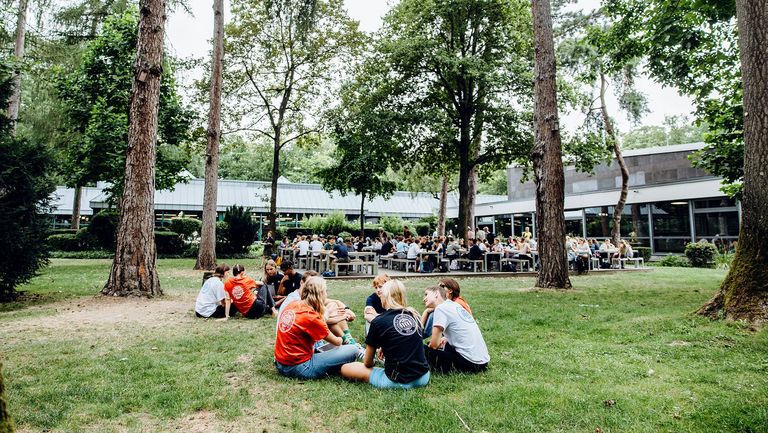
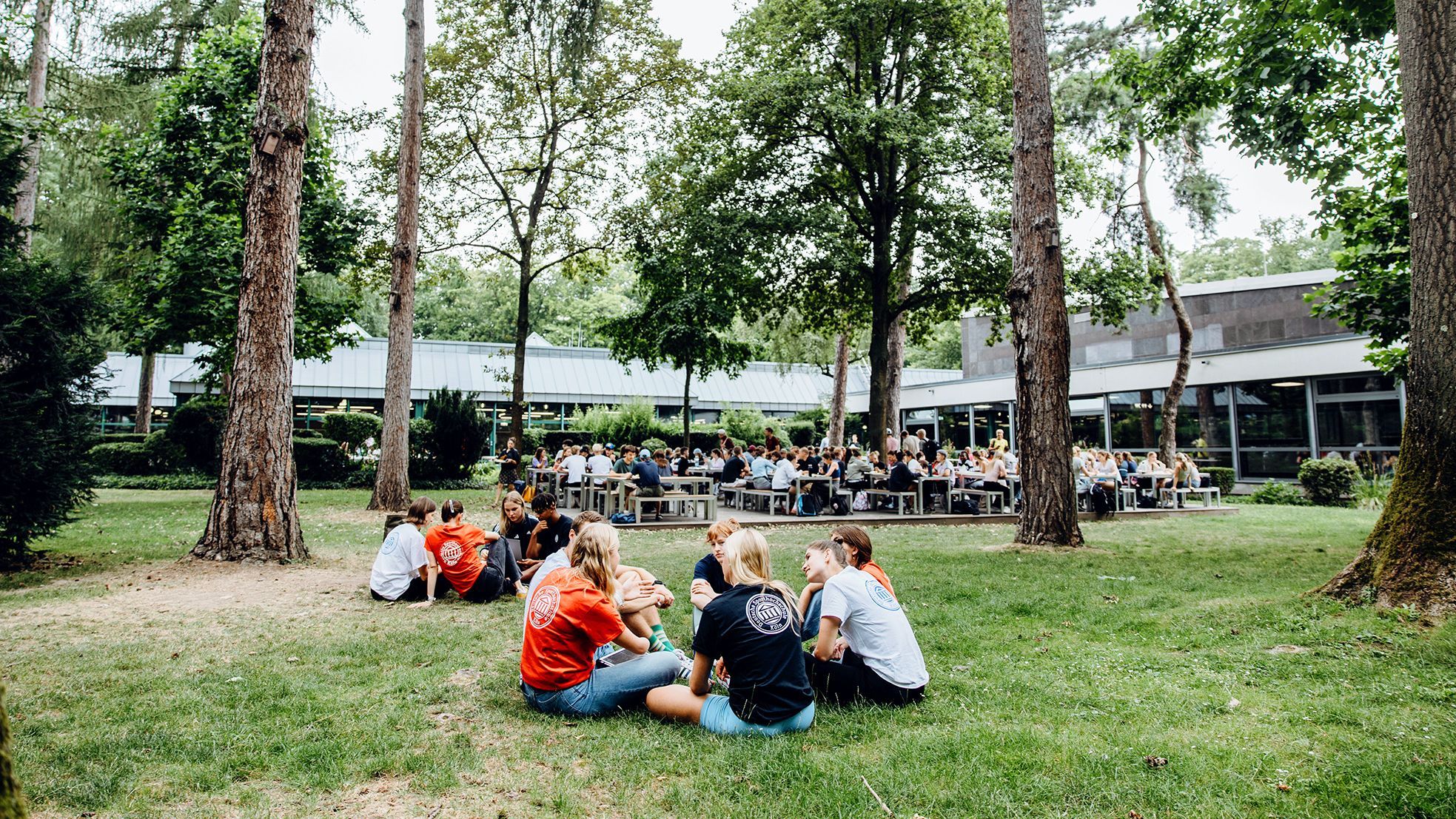
Shaping responsibility together

For us at the German Sport University Cologne, sustainability is more than just a goal – it is a central part of our identity.
Through our research, teaching, knowledge transfer and campus development, we take responsibility for a sustainable society and play an active role in shaping sustainable developments in sport. In doing so, we take a holistic view of sustainability – encompassing environmental, social and economic aspects – and are guided by the United Nations’ Sustainable Development Goals.
Our areas of focus
At the German Sport University Cologne, numerous institutes and research centres are engaged in work on sustainability. Through our research, we aim to contribute to solving current and future environmental and social challenges. Our research activities are publicly available via the Research Information System (FIS).
The German Sport University Cologne promotes education for sustainable development by integrating sustainability issues into its teaching. Currently, 62 courses focus on ‘sustainability in and through sport’. Through these, we equip our students with the skills to identify and address the challenges of sustainable development from interdisciplinary and transdisciplinary perspectives.
On our campus, we are implementing a wide range of measures to promote sustainability – from drinking water dispensers and heat recovery to the promotion of sustainable mobility and family-friendly working conditions. In doing so, we aim to continuously improve our social, environmental and economic performance.
The University of Sport promotes sustainability in society and in sporting practice – through partnerships, networks and the transfer of knowledge with sports federations, institutions and the wider community.
Sustainable Development Goals
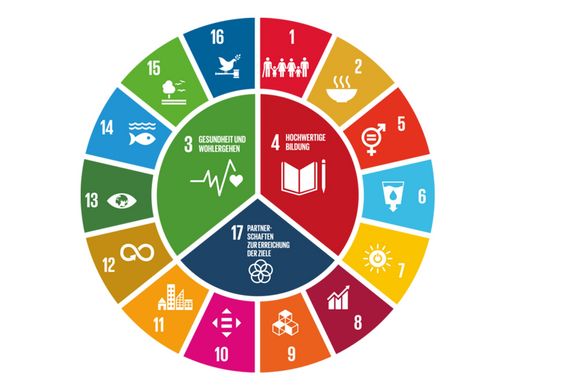
We see sustainability as a shared responsibility for our campus, our community life and the mindful use of resources. In this regard, we are guided by the United Nations’ 17 Sustainable Development Goals (SDGs), which combine environmental, social and economic sustainability.
Our aim is to make sustainable thinking and action visible and accessible in everyday university life. This includes projects and initiatives that promote the conservation of resources, social participation, mutual respect and a sustainable sporting culture.
We aim to create spaces where collective action is possible: through exchange schemes, self-organised projects, the sustainable use of materials and a thoughtful approach to consumption. At the same time, we view sustainability not merely as an environmental challenge, but also as a cultural process that strengthens solidarity, active participation and responsibility.
Together, we aim to develop our campus into a place where a healthy, active and sustainable university life is fostered.
Projects and initiatives
In 2021, the 16 universities in the state of North Rhine-Westphalia joined forces to form ‘Humboldtn’ – the sustainability initiative of North Rhine-Westphalia’s universities – in order to
- actively promote sustainability within higher education institutions and
- develop a state-wide sustainability strategy.
As a driving force, Humboldtn will thus embed a sense of intergenerational responsibility for the societal issues of sustainability and sustainable action in research, teaching, administration and infrastructure. The universities will set joint sustainability targets with measurable indicators for these areas of action. A corresponding framework declaration was signed by all the state’s universities in late 2021 in the run-up to the launch event. In it, all universities in North Rhine-Westphalia have set themselves common, cross-campus goals and, together with Humboldtn, have launched a platform that pools expertise and skills in order to make them available to science and society in the long term.
Professor Dr Ralf Roth emphasises the relevance of sustainability for the German Sport University Cologne as well: “Through this powerful alliance, the German Sport University Cologne is helping, together with the other Humboldtn partners, to pool and intensify its sustainability activities based on their shared expertise and skills in sustainabilityand to embed them more firmly in the university’s overall development. In particular, this lays the foundations for new perspectives in research and in the support of early-career researchers.”
Further information: www.humboldt-n.nrw
Our Green Campus Guide is a resource for students and staff, offering practical tips for sustainable everyday living at the German Sport University Cologne and beyond.
A student-organised clothes swap takes place regularly on our campus. Every last Tuesday of the month, items of clothing can be dropped off, swapped or taken away in the lecture theatre corridor. The initiative thrives on the openness and participation of everyone who passes on well-preserved but unused clothing, thereby sharing resources rather than wasting them.
The clothes swap encourages people to consciously question their own consumption habits: What do I really need? How can we use and value the things we already have for longer?
In this way, a more sustainable culture of sport and everyday life can be promoted on campus, reducing energy and material consumption as well as the associated emissions.
The German Sport University Cologne is a partner university in the NEIS (Sustainable Eating in Everyday Student Life) project run by the North Rhine-Westphalia Consumer Advice Centre. The project aims to equip students with the skills needed to adopt a low-waste and climate-friendly diet as part of their everyday student life, and to empower them to play an active role in shaping their environment in line with the principles of sustainable nutrition.
The ‘Sustainable Major Sporting Events’ project, funded by the Federal Ministry for the Environment and the Federal Ministry of the Interior (BMUV, BMI), supports sports organisers in making their events more sustainable. The online platform, developed jointly by the German Sport University Cologne, the German Olympic Sports Confederation (DOSB) and the Öko-Institut e.V., offers not only a wealth of information and best-practice examples but also planning tools, checklists and an impact calculator that measures and visualises regional economic effects. “Our aim was to create a tool that helps organisers of all sizes to integrate sustainability into their events in a simple and practical way. By working together with athletes, organisers, NGOs and numerous other institutions, we have been able to develop a platform that is truly practical and can be adapted to individual needs,” explains Professor Ralf Roth, the project’s technical director.
Visit the portal at www.nachhaltige-sportveranstaltungen.de
The Sustainability Code developed as part of the joint project ‘Sustainability at Universities: Develop – Network – Report (HOCHN)’ presents the project’s findings across various areas of action, setting out measures, methods and recommendations for sustainable university development.
The concept of sustainability developed for this purpose serves as a guide for the German Sport University Cologne in implementing university-specific measures in the areas of sustainability reporting, governance, teaching, research and operations. The project’s findings, including numerous guidelines and publications, are freely available and accessible via a wiki, amongst other sources.
Our university is a partner of RENN.west. The Regional Network for Sustainability Strategies West promotes communication on sustainability concepts and uses the outcomes of these discussions to help shape sustainability processes in North Rhine-Westphalia, Hesse, Rhineland-Palatinate, the Saarland and at federal level. The aim is to turn sustainable development into a living reality in our region through active networking and information-sharing.
Campus Noster!
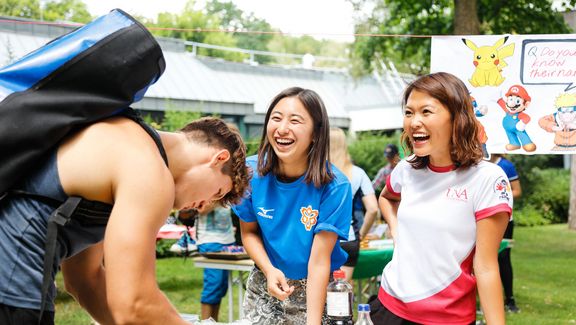
The ‘Campus Noster!’ (Our Campus!) project, coordinated by the AStA, aims to work together to shape and improve everyday university life. The focus is on physical and cultural structures that enable active, supportive and healthy community life on campus.
University life at the German Sport University Cologne is undergoing constant change as a result of a wide range of social and institutional developments. At present, far-reaching changes are shaping our campus and our shared university life. ‘Campus Noster!’ aims to support these processes in a critical, constructive and collaborative manner. We see ourselves as a cross-status, multi-perspective initiative that examines developments from various angles, sparks discussions and provides fresh impetus for a vibrant campus life.
We view the university community at ‘Spoho’ as a vibrant social space, the shaping of which is the responsibility of us all. Our approach is guided by five areas of focus: critical & sustainable, active & relaxed, social & cultural, diverse & inclusive, and appreciative & mindful. These areas of focus help us to conceive of and further develop the campus not only as a place of learning and work, but also as a shared living space.
Dr Helge Knioge
Institute for Movement and Neuroscience
+49 221 4982-6114
h.knigge@dshs-koeln.de
Sustainability Commission
-
location_on
Sportpark Müngersdorf 6
50933 Cologne - mail nachhaltigkeit(at)dshs-koeln.de
- link Nachhaltigkeitskommission
