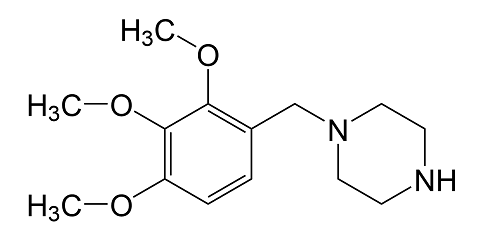
Trimetazidine and Doping

Doping control analysis of trimetazidine and characterization of major metabolites using mass spectrometric approaches.
Literature:
Sigmund G, Koch A, Orlovius AK, Guddat S, Thomas A, Schänzer W, Thevis M. Doping control analysis of trimetazidine and characterization of major metabolites using mass spectrometric approaches. Drug Test Anal. 2014 Nov-Dec;6(11-12):1197-205.
see Abstract
Abstract
Since January 2014, the anti-anginal drug trimetazidine [1-(2,3,4-trimethoxybenzyl)-piperazine] has been classified as prohibited substance by the World Anti-Doping Agency (WADA), necessitating specific and robust detection methods in sports drug testing laboratories. In the present study, the implementation of the intact therapeutic agent into two different initial testing procedures based on gas chromatography-mass spectrometry (GC-MS) and liquid chromatography-tandem mass spectrometry (LC-MS/MS) is reported, along with the characterization of urinary metabolites by electrospray ionization-high resolution/high accuracy (tandem) mass spectrometry. For GC-MS analyses, urine samples were subjected to liquid-liquid extraction sample preparation, while LC-MS/MS analyses were conducted by established ‘dilute-and-inject’ approaches. Both screening methods were validated for trimetazidine concerning specificity, limits of detection (0.5–50 ng/mL), intra-day and inter-day imprecision (<20%), and recovery (41%) in case of the GC-MS-based method. In addition, major metabolites such as the desmethylated trimetazidine and the corresponding sulfoconjugate, oxo-trimetazidine, and trimetazidine-N-oxide as identified in doping control samples were used to complement the LC-MS/MS-based assay, although intact trimetazidine was found at highest abundance of the relevant trimetazidine-related analytes in all tested sports drug testing samples. Retrospective data mining regarding doping control analyses conducted between 1999 and 2013 at the Cologne Doping Control Laboratory concerning trimetazidine revealed a considerable prevalence of the drug particularly in endurance and strength sports accounting for up to 39 findings per year.
Pharmacological Effects
"Following its patent application in 1962, the therapeutic agent trimetazidine [1-(2,3,4-trimethoxybenzyl)-piperazine] (Figure 1) was introduced in 1963 under the trade name Vastarel in France for the treatment of (stable) angina pectoris. Ever since, the coronary vasodilator trimetazidine underwent numerous studies concerning its mechanism(s) of action and potential additional fields of medical application, demonstrating among other findings a decrease in coronary vascular resistance, an increased coronary blood flow, the inhibition of 3-ketoacyl coenzyme A thiolase (being a key enzyme in the β-oxidative metabolic pathway of the myocardium), and cytoprotective/anti-ischemic effects in other organs. As a consequence of the 3-ketoacyl coenzyme A thiolase inhibition, improvements in left ventricle dysfunction patients were observed when being treated with trimetazidine due to the lowered demand for oxygen when glucose is utilized instead of free fatty acids. Although being considered a well-tolerated drug, an increasing number of case reports concerning drug-induced parkinsonism, gait disorder, and tremor caused by trimetazidine have been published, resulting in a recommendation for a careful cost-benefit assessment of the drug."