Tetrahydrogestrinone (THG)

Tetrahydrogestrinone (THG)
History
In mid-October 2003, Terry Madden, director of the newly founded United States Anti-Doping Agency (USADA), announced that a new steroid (anabolic agent) had been detected in an A sample. This steroid is tetrahydrogestrinone (THG), which was previously unknown.
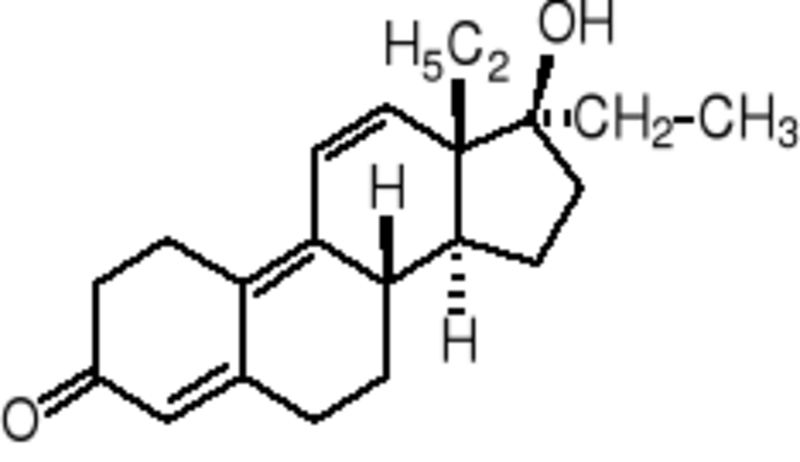
The substance was provided to the USADA by a coach, and its identification was made possible through the collaboration of the IOC/WADA-accredited laboratory in Los Angeles (Fig. 1).
THG is not a medical product, and there are no data available on animal testing, clinical trials, or the substance’s potential side effects.
Significance as a Doping Agent
Fig. 1 Structural formula of THG
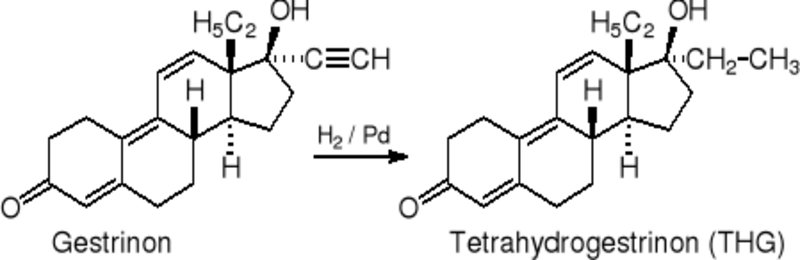
THG is classified as a designer steroid. It was modified from gestrinone by adding four hydrogen atoms to the ethinyl group at position C-17 of the steroid—likely using a suitable catalyst—(Fig. 2)
Fig. 2 Synthesis of THG
Although THG was not specifically listed on the IOC and WADA doping lists in 2003, the compound is related to substances in the group of anabolic-androgenic steroid hormones. According to the regulations, approximately 50 different anabolic agents are specifically listed under the group of anabolic-androgenic steroid hormones; however, this is followed by the addition “and related compounds.” The phrase “and related compounds” encompasses all substances that have a similar chemical structure or similar pharmacological effects to the anabolic-androgenic steroid hormones listed as examples.
In the WADA Prohibited List effective January 1, 2005, tetrahydrogestrinone is specifically listed as a prohibited substance under S1 (anabolic-androgenic steroid hormones).