24 results
-
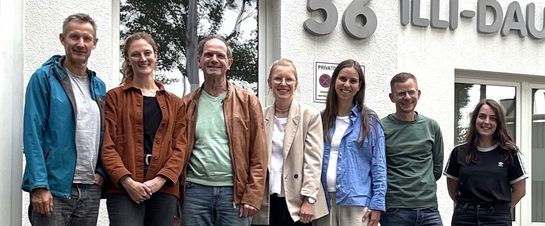 2025-07-04The research project “Motivation-Image Fit in Handball” (MIPHa) analyzes the motivations and image of handball from the perspective of children and adolescents in order to develop concrete recommendations for action on how to rekindle long-term enthusiasm for handball among more children and adolescents. Following the completion of the first project phase (qualitative study), a project meeting took place on May 26–27 at the headquarters of the German Handball Federation (DHB) in Dortmund. Representatives of the DHB met with Jens Kleinert, Martin Boss, Ulrike Hartmann, and Theresa Wiesen from the DSHS, as well as Stefan König, Elke Uhl, and Alisa Braun from the PH Weingarten. Together, they discussed initial findings from interviews with children and adolescents and outlined the organizational steps for the second project phase (quantitative study). Further information on the MIPHa project can be found on the Department of Health and Social Psychology’s website: https://www.dshs-koeln.de/psychologisches-institut/abt-gesundheit-sozialpsychologie/forschung/
 -
 2025-02-13The Department of Performance Psychology at the German Sport University Cologne has secured funding from the German Research Foundation (DFG). The project focuses on a theory designed to help explain performance in high-pressure situations. In law enforcement, emergency medicine, and sports, people often have to make quick decisions with far-reaching consequences. They find themselves in situations where high pressure to perform can arise. However, people sometimes perform worse than usual when under pressure. This failure to perform in high-pressure situations can have far-reaching consequences for those involved—for example, when a patient’s physical well-being or health is at stake. Or in sports: when winning a medal depends on it. Therefore, it is crucial to understand the underlying mechanisms in order to develop effective interventions that maintain performance and success under pressure. A research project by the Department of Performance Psychology is dedicated to this topic; it has now been approved and will begin in October. “To improve our understanding of adaptive behavior, we believe it is important not to consider movement selection and execution separately,” explains project leader Dr. Laura Voigt. In a previous DFG project aimed at fostering international collaboration, the researchers integrated two concepts—motor heuristics and movement analogies—into a theory known as the “Theory of Simplified Information Processing in Action.” While motor heuristics simplify movement selection, movement analogies simplify movement execution. Motor heuristics refer to simplified, efficient rules or strategies that the human body uses to select movements quickly and without complex calculations. The amount of information to be used is reduced with the help of “rules of thumb,” meaning the person draws on the information that has proven to be most valuable in the past. Movement analogies take advantage of the fact that new movements do not have to be planned from scratch, but can instead be compared to a movement that is already familiar. The movements share similarities, and prior experience helps the individual master the new task more easily. Movement analogies facilitate information processing during the execution of movements by grouping information into larger units (chunks). The central hypothesis of the “Theory of Simplified Information Processing in Action” is that motor heuristics and movement analogies can be regarded as functionally equivalent rules—that is, they achieve the same effect but through different cognitive mechanisms. Both aim to simplify information processing during an action, reduce cognitive effort, and thus maintain performance under pressure. “The main goal of our project is to empirically test the predictions of the ‘Theory of Simplified Information Processing in Action’ to explain performance in high-pressure situations. In eight experiments, we will investigate whether, how, and when motor heuristics and movement analogies prevent performance declines under pressure,” says project leader Laura Voigt. The project uses dynamic tasks in table tennis that require complex movements to be selected and executed simultaneously. This allows for testing explanations of how people maintain their performance in everyday activities. In this project, Dr. Laura Voigt and Prof. Dr. Dr. Markus Raab from the German Sport University Cologne are collaborating with two universities in New Zealand: Prof. Dr. Rich Masters (University of Waikato) and Dr. Arne Nieuwenhuys (University of Auckland). The project will run for three years, beginning on October 1, 2025.
 -
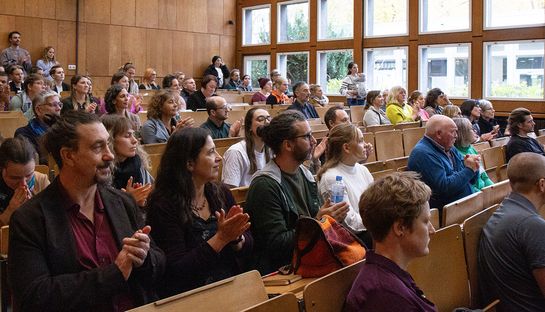 2024-11-20In cooperation with the German Sport University Cologne and the “SafeClubs” project, the German Sports Youth (dsj) hosted the “Safe Sport in Safe Clubs” forum, providing valuable insights over two days on how to create safe club structures in sports. At the “Safe Sport in Safe Clubs” forum last weekend, contact persons from sports organizations, experts in sports psychology, and interested club representatives came together to discuss current developments, preventive measures, and ways to strengthen protection processes. At the same time, the event served as the ceremonial conclusion of the “SafeClubs” project, which over the past three years has developed materials and tools for the areas of analysis, prevention, and intervention regarding sexual violence, specifically for sports clubs. On both days, the event offered participants practical workshops and keynote presentations specifically tailored to the challenges and demands of day-to-day work in the field. Day 1: Focus on Self-Care and Coping with Stress for Point Persons The first day of the event was aimed at experts from member organizations of the dsj and the DOSB. Following a welcome address by Stefan Raid, the First Chairperson of the dsj, the welcoming remarks by Parliamentary State Secretaries Mahmut Özdemir (Federal Ministry of the Interior) and Sven Lehmann (Federal Ministry for Family Affairs, Senior Citizens, Women, and Youth) sent a strong political signal: Protection against physical, psychological, and sexual violence in sports is a top priority on the political agenda. Prof. Dr. med. Marc Allroggen opened the substantive part of the event with a presentation in which he outlined the current state of scientific knowledge and key research findings on the prevention of interpersonal violence in sports clubs. He highlighted that people who experience interpersonal violence outside of sports are at increased risk of also experiencing interpersonal violence in sports. He emphasized the urgent need to continuously improve and adapt protective measures both within the sports environment and beyond. In the afternoon, the focus was on the topic of self-care and resilience among support personnel who are confronted with cases—some of which are highly stressful—in sports clubs and associations. Two keynote presentations shed light on key challenges: Dima Zito, a systemic therapist and trauma therapist, provided insights into self-care strategies and explained how point of contact personnel can recognize stress early on and actively manage it. A speaker from N.I.N.A. e.V. addressed the challenge of mediating between the needs of those affected, potential perpetrators, and the interests of the organization. This was followed by a live interview with Hannes Günther, child protection liaison for Sportjugend Sachsen. He provided insights into his daily work and also described the challenges and stress associated with the role of child protection liaison. His remarks underscored how important it is to have support structures and a stable network in order to meet these demands. The interview was followed by an interactive panel discussion with the three speakers. The discussion highlighted practical approaches for how coordinators can strengthen their mental health and effectively manage stress as well as its potential effects. The evening ended in a relaxed atmosphere with a get-together and a buffet in the DSHS foyer, which provided an opportunity for networking and sharing experiences. A special highlight of the get-together was an acrobatic performance by “SafeClubs” staff member Sina Kiekbusch, who demonstrated her skills on her Cyr wheel. Day 2: Closing Event of the “SafeClubs” Project: Presentation of the Transfer Products for Practical Application The second day of the event began with opening remarks by Prof. Dr. Bettina Rulofs of the German Sport University Cologne, who is involved in the “SafeClubs” project as the lead researcher for two subprojects. Dr. Jeannine Ohlert, the project’s consortium leader, then presented the key aspects of “SafeClubs.” She explained the original context and motivation that led to the project’s launch 2.5 years ago and walked the audience through the development process. The goal of the project is to support sports clubs in the areas of analysis, prevention, and intervention regarding sexualized violence and to provide practical materials. These materials were developed in close collaboration with academia and sports practitioners and provided participants with important insights for establishing safe club structures. The day centered on two workshop sessions that addressed the specific transfer products developed. Participants were able to engage interactively with topics such as risk analysis, the design of protection strategies, preventive workshops for adults in the club setting, coaches and athletes, as well as self-care. The practice-oriented content was very well received and provided valuable insights for practical work. Following the workshop phase, the final item on the forum’s agenda was the “Club Marketplace” in the afternoon. Here, two club representatives and a sports psychologist shared their experiences and challenges in implementing child protection measures—and, in particular, the “SafeClubs” products—in sports settings. Clubs presented their approaches, measures, and experiences, providing participants with valuable inspiration for their own work. Conclusion: A Strong Commitment to Safety in Sports According to the organizers, the “Safe Sport in Safe Clubs” forum was a resounding success, offering a platform for exchange, professional development, and the integration of research and practice. Participants particularly appreciated the combination of theoretical insights, practical workshops, and opportunities for dialogue. The forum also served to honor the “SafeClubs” project. The materials developed as part of the project will play a crucial role in strengthening sports clubs in their efforts to prevent violence and in establishing sustainable protection structures. All materials will be permanently available free of charge on the website www.safe-clubs.de by the end of the year at the latest. With the annual Safe Sport Forum, the dsj is also sending a clear message: safety in sports is not an option, but an obligation.
 -
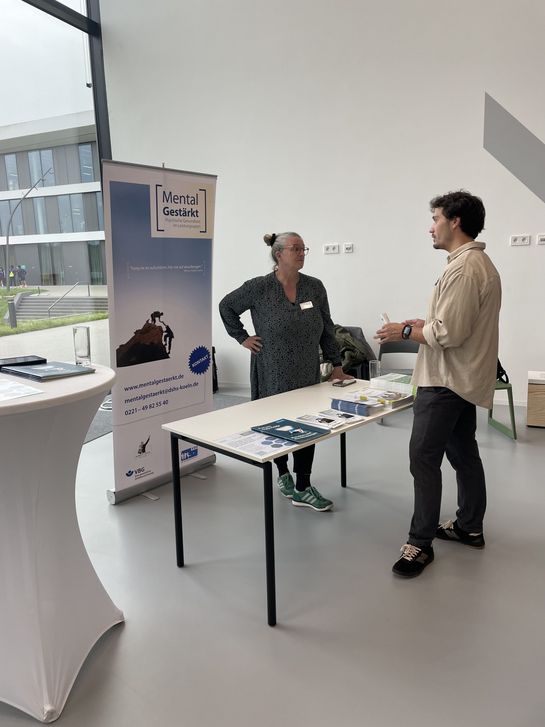 2024-11-05This symposium was organized by the Professional Association of German Psychologists (bdp) in collaboration with the German Soccer Academy (DFB Academy) and focused on the crucial role of mental well-being in soccer. The event, tailored for psychologists and sports psychologists, highlighted the importance of the well-being of all those involved in high-performance soccer. MentalGestärkt was presented as part of a marketplace for organizations dedicated to mental health in German competitive sports. The VDV and the Robert Enke Foundation were also able to present themselves within this same framework, ensuring that participants took note of the nationwide range of services available and leading to fruitful discussions and further important networking opportunities.
 -
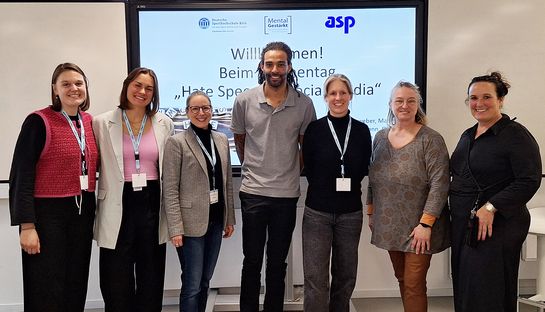 2025-02-11On February 10, 2025, the second theme day organized by the MentalGestärkt initiative and the Working Group for Sports Psychology (asp) took place at the German Sport University. Participants were treated to an engaging program centered on the topic of “Hate Speech and Social Media.” The event was aimed at professionals and interested individuals from the fields of sports psychology, psychotherapy, psychiatry, and sports science, and provided a comprehensive insight into the effects of hateful comments in the digital space, particularly in the context of sports. In the first presentation, Assistant Professor Helga Leineweber and Dr. Marion Golenia from the University of Münster discussed the effects of social media use on adolescents’ body image and presented findings from their ComeSport project. In an interview with Marion Sulprizio and the participants, former professional tennis player Dustin Brown shared his compelling experiences with hateful comments on social media platforms and offered the group valuable insights on how to cope with such stressors. Wiebke Dierkes and Juliane Coßmann presented a workshop concept on how young athletes can best navigate social media. The interested participants were very satisfied with the content and the atmosphere of the entire theme day. The participants identified a key take-home message: not only the athletes themselves, but also their parents, coaches, and teachers must be made aware of the importance of using social media responsibly in order to strengthen their resilience. And the positive effects that the sensible use of social media can bring should not be overlooked.
 -
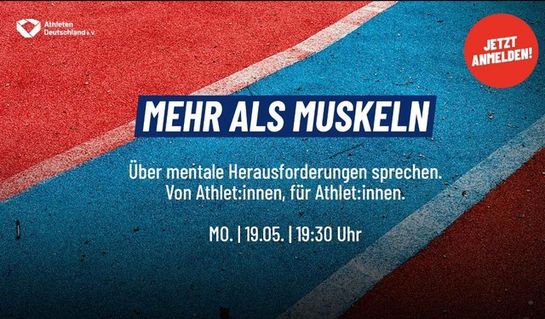 2025-05-06Organized by Athleten Deutschland e.V., a digital discussion on mental health will be held on May 19, 2025. Under the title “More Than Muscles—Talking About Mental Challenges,” you’ll have the opportunity to share your experiences, doubts, shame, or fears. The virtual space is provided by Athleten Deutschland—you don’t need to be a member to participate. Your registration will remain confidential and is used solely to keep track of the number of participants. This event is open to all national team athletes—regardless of whether they compete in summer or winter sports. When: May 19, 2025, 7:30 p.m. Where: Zoom call Registration: Email info@athleten-deutschland.org by May 15 For more information, visit the Athleten Deutschland e. V. website.
 -
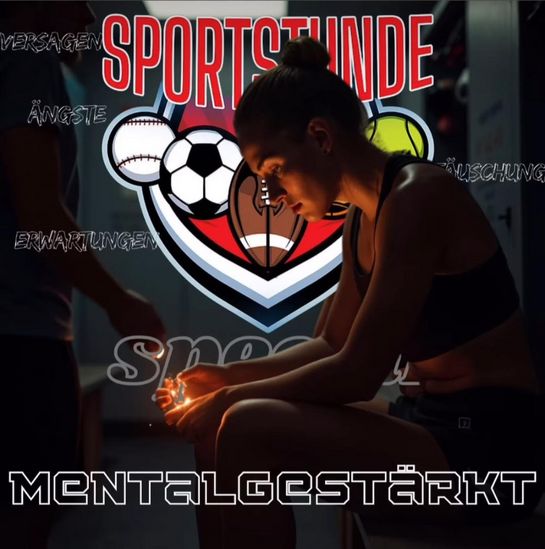 2025-04-01“YOU FIRST”—a campaign that addresses mental health in competitive sports and raises awareness about mental health issues! The new “YOU FIRST” awareness campaign, launched by Daniel Müller, director of the Rhineland Olympic Sports Center (OSP), takes an in-depth look at mental health in competitive sports. Featuring prominent testimonials from athletes who openly share their own experiences with mental challenges, the campaign aims to raise awareness of the often invisible pressures faced by elite athletes and, above all, to emphasize the importance of taking care of oneself—especially in the context of pressure to succeed and perform. Two of these athletes, sabre fencer Léa Krüger and Nike Rühr, former captain of the national field hockey team, speak authentically and honestly about their experiences with this taboo topic in the “Sportstunde Special – Mental Health” episode. Marion Sulprizio, a licensed psychologist and executive director of MentalGestärkt at the German Sport University Cologne, rounds out the discussion with her expertise and contextualizes the athletes’ experiences from a psychological perspective. The podcast is hosted by Oliver Dütschke and Patric Hoch. Click here for the podcast episode Visit the “Sportstunde” website: www.sportstunde-magazin.de Visit the “DU ZUERST” campaign: https://www.sportland.nrw/du-zuerst-awareness-kampagne-im-sportlandnrw
 -
2025-10-29Professional Ethics in Sports Psychology: Dilemmas and Legal Classification The Sports Psychology Section of the BDP e. V. cordially invites you to a practical online continuing education course. In the day-to-day practice of sports psychology, experts regularly face ethical and legal challenges. This continuing education course offers the opportunity to reflect on such dilemmas together and to navigate the tension between ethics and the law with even greater confidence. What to Expect: Fascinating insights into the work of experienced experts Discussions and professional exchange with colleagues Interactive group work Collaborative analysis of your own practical examples Take advantage of this safe space to share your own practical dilemmas and reflect on possible solutions together with experts and colleagues. Date: November 7, 2025 Time: 8:30 a.m. – 6:00 p.m. (12 instructional units; 6 continuing education credits recognized for the asp expert list) Location: Online (access details provided after registration) Registration and further information: HERE -
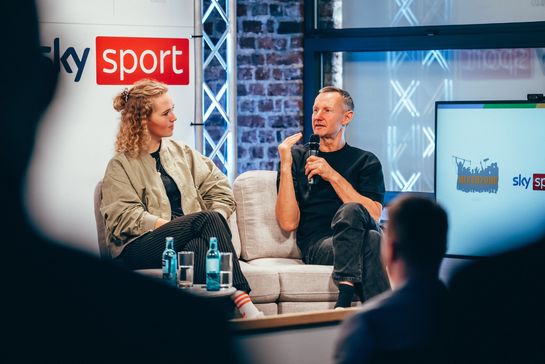 2025-10-13On October 8, 2025, at the MixedZone event hosted by SID and Sky Deutschland in Cologne, Jens Kleinert shared with participants that mental strength is a very complex topic that affects our abilities, our mindset, and our resilience. A key message was that mental strength and mental health issues are ubiquitous and influence one another. Especially given the growing pressures of modern life, developing mental strength and addressing mental health issues require openness, support, and supportive structures. MentalGestärkt is an initiative designed to support athletes and coaches in this regard.
 -
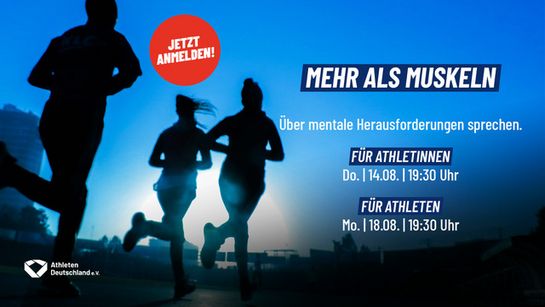 2025-07-30Organized by Athleten Deutschland e.V., a digital discussion on mental health will be held on two dates in August. Under the title “More Than Muscles—Talking About Mental Challenges,” you can share your experiences, doubts, feelings of shame, or fears. The virtual space is provided by Athleten Deutschland—you don’t need to be a member to participate. Your registration will remain confidential and is used solely to keep track of the number of participants. This event is open to German Olympic, Paralympic, non-Olympic, and Deaflympic national team athletes—regardless of discipline or season (summer and winter sports). When: for female athletes on August 14, 2025, at 7:30 p.m. for male athletes on August 18, 2025, at 7:30 p.m. Where: Zoom call Registration: Email info@athleten-deutschland.org by August 8 For more information, visit the Athleten Deutschland e. V. website.