Summer School
Academic Summer School Program
The Institute of European Sport Development and Leisure Studies (IESF) annually organizes academic Summer Schools for researchers, lecturers, and students from Chinese (sport) universities who have a particular interest in comparative studies and transnational research questions.
This intensive academic program introduces participants to several academic approaches from a European perspective, with a particular focus on sport systems, education systems, and sport governance. In addition, topics such as recreational sport, sport management, and the cultural and social dimensions of sport development are addressed. All content is delivered within a clearly structured didactic framework that combines theoretical foundations with practice-oriented learning and fosters critical reflection by the participants.
Furthermore, the summer school also offers a framework for further orientation on study requirements at German Sport University Cologne in Germany.
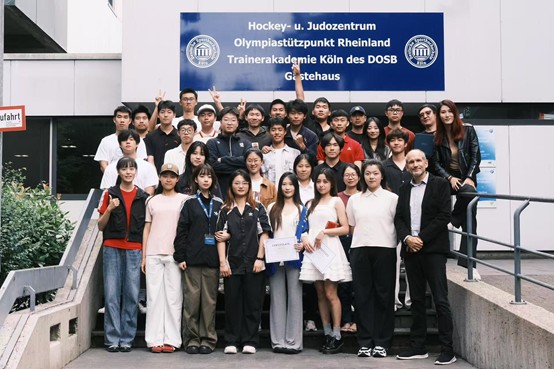
9th Summer School 2026
Join us for this unique experience for students from the People’s Republic of China at the German Sport University Cologne!
Next Summer School Dates: July 13–31, 2026
Come to the German Sport University Cologne and embark on a 3-week adventure at the sports university.
I would like to receive more information about the application requirements.
We look forward to welcoming you this summer!
8th Summer School 2025
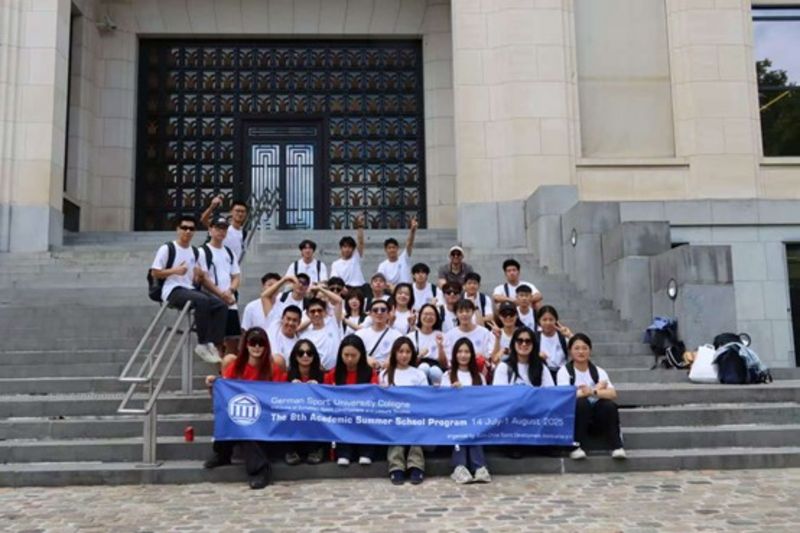
From July 14 to August 1, 2025, the Institute for European Sports Development and Leisure Research at the German Sport University Cologne, in collaboration with seven Chinese partner universities, hosted the 8th Academic Summer School (ASSP). Twenty-nine students and early-career researchers participated, including representatives from the sports universities in Beijing, Guangzhou, Wuhan, Hebei (China Shooting College), Shenyang, and Shenzhen University.
The three-week program covered key topics in sports and social sciences through six academic modules. Topics included the fundamentals of social science research, European sports systems and good governance, historical and sociological aspects of sports, sports media, sports and education in Germany, and European developments in sports. The modules combined lectures, seminars, tutorials, and practice-oriented exercises, providing opportunities for intensive interdisciplinary exchange.
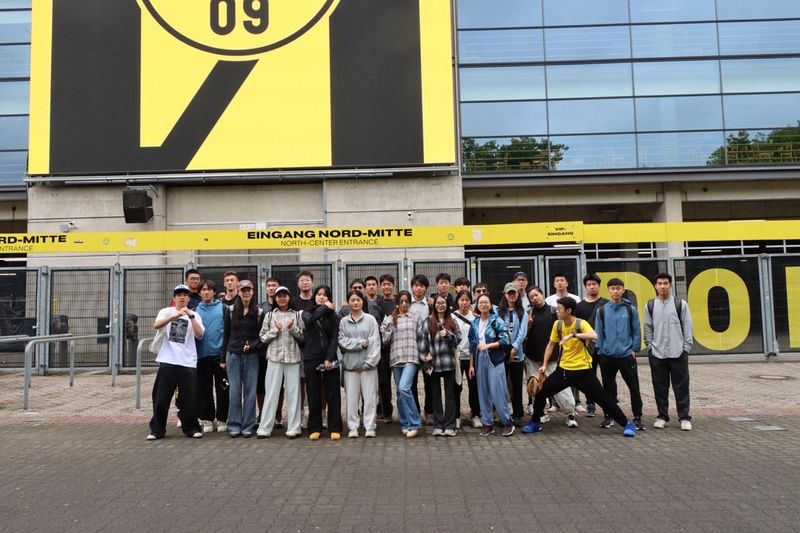
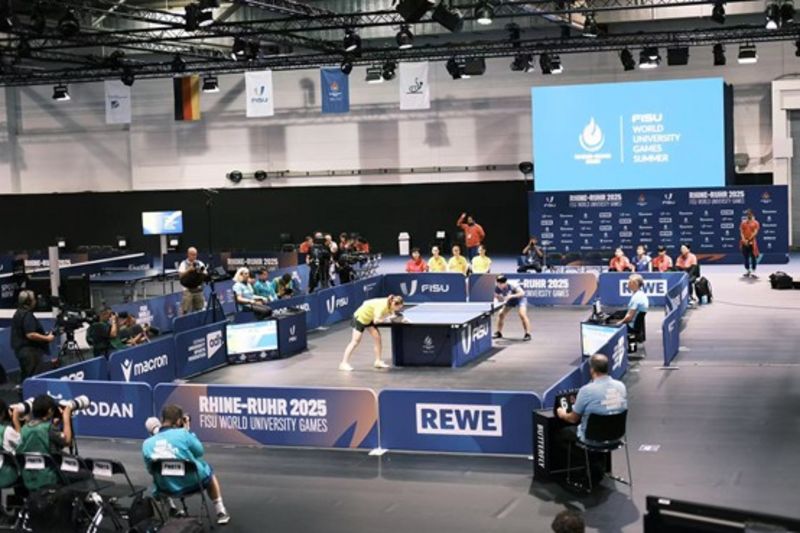
To deepen the learning experience, several field trips were organized during the program; these were pedagogically prepared and academically guided by the institute’s faculty and closely integrated with the content of the modules. In Brussels, participants gained insights into how the European Union functions; visits to the European Quarter, the Parlamentarium, and other institutions highlighted the role of European policy in sports, society, and governance, complementing the module “European Sports Development.” Participation in the Ruhr Games 2025 in Essen was integrated into the “Sports Organization and Major Events” module. There, the students analyzed the organizational and societal dimensions of an international multisport event and discussed its significance for sports development. As part of the “Historical and Sociological Aspects of Sport” module, students visited the Olympic Museum in Cologne. The excursion provided an opportunity to trace the development of the Olympic Movement from an academic perspective and to reflect on it critically. Practical sports exercises at Bleibtreusee served to apply theoretical concepts from the “Recreational Sports and Sports Practice” module. These exercises provided hands-on experience with the role of physical activity in everyday life as well as the design and organization of recreational sports programs. A city tour of Cologne guided by a cultural studies expert exemplified how sports, culture, and society are intertwined in urban spaces and highlighted the relevance of interdisciplinary approaches in sports science. Finally, the students visited the BVB Stadium, the Borusseum, and the German Soccer Museum in Dortmund. This excursion was part of the “History and Culture of Sport” module and served to analyze the historical and social significance of soccer in Germany within the context of European sports culture.
The language of instruction was English. At the end of the program, the students took a written exam. Attendance, active participation, and academic performance were taken into account. The institute issued an official certificate of participation listing the course content and hours.
To ensure consistent participation, students received organizational support throughout the entire duration of the program; accommodations, meals, and transportation provided the necessary framework for their participation.
In line with the summer school programs of recent years, the 2025 Summer School once again provided participants with valuable international and interdisciplinary perspectives on sports, society, and education in Europe. It thus made a lasting contribution to strengthening academic exchange between China and Germany and provided students with concrete insights into research methods, institutional frameworks, and developments in sports culture.
Past Summer Schools
7th Academic Summer School 2024 – Review
From July 8 to 26, 2024, the 7th Academic Summer School (ASSP) of the Institute of European Sport Development and Leisure Studies at the German Sport University Cologne was successfully held.
A total of 32 students and early career researchers from six Chinese partner universities participated: Beijing Sport University, Capital University of Physical Education and Sports, Wuhan Sport University, Wuhan Business University, Huazhong University of Science and Technology, and Hunan Normal University. The group comprised bachelor’s, master’s, and doctoral students with diverse academic backgrounds in both the social sciences and sport sciences.
Over the course of 19 days, participants followed a structured curriculum of six modules: Foundations of Social Science Research, European Sports Systems and Good Governance, Olympic Studies, Sport Media, Sport and Education in Germany, and Mega Sporting Events in Europe. Each module combined lectures, seminars, and tutorials. The didactic concept was designed to systematically connect theoretical knowledge with practice-oriented learning while encouraging critical reflection.
To complement the modules, sport-practical activities were conducted, including Taiji, team sports, bouldering, and mini golf. These sessions were not leisure-oriented but were designed as methodical applications of theoretical concepts and to strengthen teamwork and pedagogical skills.
Another integral part of the program were academically prepared and scientifically supervised excursions, which provided participants with insights into European sport culture, political institutions, and urban development processes. Closely linked to the modules, these excursions helped contextualize and deepen the knowledge gained in class.
All participants were required to attend lectures, tutorials, activities, and excursions on a regular basis. At the end of the program, a written examination was held. The Institute of European Sport Development and Leisure Studies issued a certificate of participation documenting the academic content covered, the workload, and the achievements.
Accommodation on the GSU campus, catering, and the provision of public transportation ensured reliable conditions that enabled continuous and uninterrupted participation in the academic program.
Conclusion
The Academic Summer School 2024 was a well-structured and didactically grounded educational program. By combining modules, tutorials, sport-practical activities, and academically supervised excursions, it offered an integrated learning experience that provided not only subject-specific knowledge but also intercultural competence.
A Journey about “Responsibility, Courage and Curiosity”
From August 7th to 25th, the 6th Academic Summer School Program (hereafter the ASSP) of the Institute of European Sport Development and Leisure Studies at German Sport University Cologne was again successfully held onsite after two years’ farewell due to the travel restriction all over the global.
This year was quite unusual. On the one hand, we had welcomed the largest group till now with 47 students and early career researcher from five different universities, including Beijing Sport University, Capital University of Physical Education and Sports, Wuhan Sport University, Chengdu Sport University, and Shanxi Normal University. On the others, we had also welcomed the first time with the group of such diversity. There are 30 bachelors, 14 masters, and 3 Ph.D with the background of both social science and sport science. We are so surprised by their outstanding in professional sports, including golf, badminton, aerobics dance, swimming, and free sparring. In the meanwhile, they also pursuit their academic career in both management, international sport organization, tourism, public affairs administration, journalism, rehabilitation, and kinesiology.
During these unforgettable 19 days, they studied six theoretical modules that covers topics including Foundation of Social Science Research, European Sports Systems and Good Governance, Olympic Studies, Sport Media, Tourism and Outdoor Sport, and Leisure and School Sport, which were accompanied by six lively and more practically oriented tutorials. In order to enrich the extracurricular life in addition to theoretical studies, we have also organized several sport practices, including boxing, mini golf, and outdoor yogalates, as well as 5 field trips not only inside Germany but also around the Europe.
Field trips are the highlights. During the field trips, the students experienced the atmosphere of European sports and culture. The first stop was Dortmund. By visiting the BVB Stadion, Borusseum, and German Football Museum in Dortmund, they got a glimpse of the German football culture and marveled at culture, history and exhibits displayed in the museum. Later on, a city-walk in the city center of Cologne gave the students a sense of history. They stopped near the Rhine River, Hohenzollernbrücke and the Kölner Dom to fell the charm of Cologne and measured the city with their feel and felt with their eyes with the different flavors of those old and new buildings under the changing history. Afterwards, the third stop was to the political center --- Brussels. Located in the heart of Belgium, Brussels is the country's capital and home to the headquarters of the European Union. A city steeped in history, Brussels boasts many beautiful old buildings and cultural sites, as well as being a modern city with advanced transportation and cultural facilities. The students walked all the way along those important building of the European Union, including the European Quater and Arcade du Cinquantenair to reach the Parlamentarium Exihibition, getting a hands-on feel for the importance of Brussels. In order give them a sense of the diversity of Europe, our last field trip was to the Netherlands. Over there, the students were able to experience not only the Giethoorn Village, which is known for its natural beauty, but also Roermond, which has a modern flavor.
Like all good things must to an end, the nineteen-day journey always comes to an end. At the closing ceremony, Univ.-Prof. Dr. Mittag, the head of the Institute of European Sport Development and Leisure Studies, and the mentor of the ASSP, gave a farewell speech to all students with the theme of “Responsibility, Courage and Curiosity”. In a few words, he sent his most sincere wishes and hopes to all students. As he mentioned, all generations have their own responsibility, we should combine knowledge and responsibility, as well as courage and curiosity to meet the challenges of the times. We should also have our own compass of values, using the power of courage to support ourselves to think what you think, and to speak what you want, and using the power of curiosity to support ourselves to pursue our hearts on a larger scale.
It is also like the two lines of a Chinese poem left by a student on the evaluation form: 短短数日,不胜感激。今虽离别,情谊不绝。(Even though it was only few days, I cannot express how much I am grateful to this experience. Even though we are parting now, our friendship will not end.). This is the meaning of our ASSP, to connect people from different countries and cultures.
Let’s look forward to the ASSP 2024!
From June 28th to July 30th, the 4th Academic Summer School Program (ASSP) of the Institute of European Sport Development and Leisure Studies (IESF) was successfully held with 22 Chinese students from seven different universities, including Beijing Sport University, Wuhan Sports University, Chengdu Sport University, China Three Gorges University, Hangzhou Normal University, Tianjin University of Sport, and Capital University of Physical Education and Sports. Due to the current pandemic situation, the 4th ASSP was held completely online with a special focus on the development of sport and leisure studies from a German and European perspective. The ASSP 2021 aims to enhance the understanding of sport to students through six modules, including Foundation of Social Science Research, Olympic Studies, Leisure Sport, Mega Sporting Events, European sport, and Sport Management. Each online module contains two 3-hours lectures and one 2-hours tutorial, in order to give students an overall impression to both theoretical development of the knowledge and practical applications.
During this 5-weeks program, topics such as social science research, historical aspects and the latest development of Olympic Games, development of leisure sport and mega sporting events, sport systems in European countries and good governance, as well as sport management were covered by professors and senior lecturers form the IESF. In addition, the 22 students approached the practical application in six subject-related tutorials with the help of research assistants from the IESF regarding those topics. In the end, all 22 students successfully passed the written exam and completed their final essay.
From the perspective of students, the ASSP 2021 not only raised the awareness of the GSU and the IESF among Chinese students and universities but also laid the foundation for further academic cooperation. Some of them expressed their interest in GSU and hope to further their master or PhD studies in the future at GSU. Some students shared their experience in the 4th ASSP at GSU:
It was joyful to attend this summer school but unfortunately it can only finish online. Definitely a pity that I can't have a taste of German life. Anyway, the lectures and professors and teachers were amazing.
------ JIANG, Songyi from Beijing Sport University
The project and lessons are perfect. As for the online mode, I felt it is better than on site, so that I can review through the record if I forget something or have no time for class. And I hope I can study at GSU next year for Master program.
------ JING, Yutong from Beijing Sport University
It is a great experience of taking the foreign study style and studying lots of knowledge related to Olympics. And I would like to study in GSU for Master in the future.
------ LIANG, Dongyue from Wuhan Sports University
It was a great study trip and I learnt a lot of knowledge that I had not been exposed to before. It allowed me to learn about the culture and education of different countries and gave me a different learning atmosphere and a better understanding of sport. Through this study not only did I improve my English-speaking skills, but I also learnt about essay writing methods, Olympic studies, major sporting events, leisure sports, sports management, European sports systems and European sports clubs, which was very beneficial. Through understanding and learning this knowledge, it will also help me a lot in my future study life. It was really a great learning experience and I thank all professors for imparting so much knowledge to us, which has made me aspire to the GSU.
------ YUAN, yujie from Chengdu Sport University