"There are three different conceptions of the Olympic Games competing with one another."
Berlin – the international metropolis; Cologne-Rhine-Ruhr – the polycentric sports region; Munich – the compact Olympic city... Who will come out on top?
Who will host the national qualifying race for the bid to host the Summer Olympic and Paralympic Games? Berlin, Cologne-Rhine-Ruhr, or Munich? The decision will be made on September 26 at the DOSB General Assembly in Baden-Baden. The focus is on international competitiveness and national acceptance, as well as sporting and operational suitability. Added to this are questions of vision and legacy, as well as costs and financing.
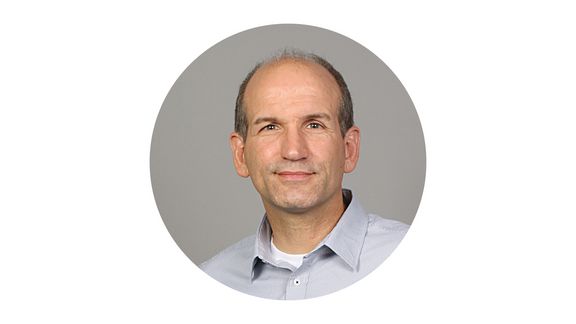
In this interview, sports policy expert Prof. Dr. Jürgen Mittag explains the criteria the DOSB uses to make its decision, how the three proposals differ from one another, and which one has the best chances.
Five key facts to keep in mind:
- Referendums are an advantage: In the past, Olympic bids have repeatedly failed due to a lack of public support. The positive referendum results in Cologne-Rhine-Ruhr and Munich are therefore a decisive factor, but overall say little about the viability of the proposals.
- The actual decision remains a matter of sports policy: The DOSB aims to make the decision-making process more systematic. The focus is on international competitiveness, national acceptance, sports-related and operational suitability, vision, legacy, costs, and financing. Ultimately, it should be clear why the DOSB chose a particular candidate and which criteria were decisive in that decision.
- The federations carry the most weight: At the DOSB’s General Assembly, the 42 top Olympic federations each hold three votes, giving them the greatest influence. This grants the sports federations an exceptionally strong position. They, too, have their own interests, contacts, and possibly preferences for certain host cities.
The differences between the concepts lie in the spatial model and the narrative: All three candidates emphasize existing infrastructure, sustainability, and legacy. In addition, there are distinct unique selling points: Munich represents the classic model of compact Games, while Cologne-Rhine-Ruhr proposes the opposite model and focuses on a sports region. Berlin, in turn, has the strongest international brand.
The argument that “it’s Germany’s turn again” doesn’t hold water: that’s not how the IOC works. In the current bidding cycle, in addition to the quality of the bid, geopolitical dynamics, the strength of potential rival candidates, economic interests, and the IOC’s strategic considerations regarding narratives and “legacy” will all play a role.
Interview
With a two-thirds majority each, the people of Munich and Cologne-Rhine-Ruhr voted in favor of an Olympic bid. In Berlin, the House of Representatives has passed a resolution – also with a two-thirds majority. The fourth candidate, Hamburg, withdrew its bid following the negative outcome of the referendum. In your opinion, what role does the fact that Munich and Cologne-Rhine-Ruhr have secured their bids through referendums play in the DOSB’s decision?
In my view, the referendums are a decisive factor. We must not forget that German (and numerous other) Olympic bids have repeatedly failed in the past due to a lack of public support. In this respect, Munich and Cologne-Rhine-Ruhr can point out that their bids are not only supported by politicians and the sports community but also have direct democratic legitimacy. This directly documented approval is likely to be significant to the IOC as well.
However, I wouldn’t overestimate this factor either. A referendum initially says only so much about the acceptance of a bid at this point in time. It says little about whether a concept is convincing from a sporting perspective, financially viable, and internationally competitive. And there is still a very long time ahead of us before any potential Games take place.
For Berlin, the absence of a referendum is a disadvantage, but not a disqualifying factor. The broad resolution passed by the House of Representatives also demonstrates political support, but it has a different quality than a direct vote by the population.
The DOSB has had the final proposals on hand since early June. Over the summer, the DOSB and the leading Olympic federations reviewed them in detail, using an evaluation system as a basis. Could you explain to us the criteria the DOSB uses to select a candidate?
The DOSB aims to make the decision-making process more systematic than in previous selection procedures. The focus is on international competitiveness and national acceptance, as well as sporting and operational suitability. Added to this are considerations of vision and legacy, as well as costs and financing.
These criteria reflect developments in sports policy and debates surrounding major sporting events, and they are transparent. The challenge lies in weighting them. Some criteria are relatively easy to quantify—such as existing sports facilities, distances, or accommodation capacities. With others, it becomes much more difficult. How do you measure international appeal? How do you evaluate a legacy that may not become apparent until 15 or 20 years later? And how heavily should societal approval be weighted against greater compactness or lower costs?
That is why those responsible should not give the impression that, in the end, the best candidate can be determined – as it were – mathematically from the list of criteria. The evaluation provides an important foundation. Ultimately, however, the actual decision remains a sports policy decision.
How do you assess the transparency and openness of the decision-making process?
Compared to earlier procedures, I definitely see progress. The criteria are known, the candidates know what they’re being judged on, and there’s an evaluation committee. That makes the decision more transparent than, say, in the case of Leipzig in 2003. The decision back then was heavily influenced by politics: Leipzig stood for the reconstruction of the East, for transformation, and for sending a signal to all of Germany, but it was by no means the strongest international candidate in every area. This became apparent shortly thereafter, when Leipzig didn’t even achieve the status of a Candidate City. The lesson learned from this remains relevant to this day: The candidate that garners the most support nationally does not necessarily have the best chances internationally.
For me, the crucial question begins where the evaluation ends. We do not yet know to what extent the results of the evaluation will actually influence the voting behavior of the General Assembly. If, for example, one candidate leads in the technical evaluation and the General Assembly subsequently selects another, an explanation would be needed as to what additional factors played a role in that decision.
At this point, there is certainly room for greater transparency. Not every deliberation needs to be public, nor does every individual vote need to be justified. Ultimately, however, it should be clear why the DOSB chose a particular candidate and which criteria were decisive in that decision. Otherwise, there is a risk that an evaluation process developed at great expense will ultimately have only limited significance.
In your opinion, which candidate has the best chance of winning the DOSB vote, and why?
It’s difficult to make a reliable prediction at this time. I see Munich and Cologne-Rhine-Ruhr slightly ahead of Berlin, but the race between those two bids is likely to be relatively close. Munich has the advantage that its concept is easy to communicate. The Olympic Park, the legacy of 1972, short distances, and a relatively compact concept paint a picture that is quickly understood even on an international level. That is not insignificant in an IOC selection process.
Cologne-Rhine-Ruhr has other strengths. It boasts an exceptionally dense network of sports facilities, large stadiums and arenas, a wealth of experience hosting international sporting events, and significant spectator potential. In addition, hardly any new sports venues would need to be built. This actually aligns very well with what the IOC has been expecting from bidders for several years. At the same time, the weakness is obvious: a region stretching from Aachen through Cologne and Düsseldorf to the Ruhr region is quite different from a compact host city. Cologne-Rhine-Ruhr must therefore convincingly demonstrate that a polycentric concept works not only on the map but also for athletes, spectators, and the media.
If I go by current opinions in sports policy, I’d say Munich has a slight edge. However, I by no means consider it a foregone conclusion that the DOSB will ultimately decide the same way.
To what extent do the concepts differ from one another, and what do you consider to be their respective unique selling points?
First of all, the similarities are greater than the public presentations would suggest. All bids rely on existing infrastructure, sustainability, and legacy, and all have learned from Paris 2024 that the city and the Games must be more closely integrated. The Games are intended to be visible throughout the city or region and to incorporate public spaces. It is precisely this connection between the sporting event, urban space, and social participation that serves as a key focal point of the new DOSB concept. The actual differences lie in the spatial model and the narrative: Munich most strongly embodies the classic model of relatively compact Games. Moreover, with the Olympic Park, Munich has a venue that is globally associated with the Olympic Games. This ties into the idea of, in a sense, reimagining the 1972 Games under changed social and environmental conditions.
Cologne-Rhine-Ruhr pursues an alternative model: not a single Olympic city, but an entire sports region. Its strength lies in the multitude of existing stadiums and arenas, the great enthusiasm for sports, and the opportunity to embed the Olympic Games very deeply within existing structures. This, in particular, could give rise to an interesting model for the future: very large Games that are close to the public, not tied to a major new construction program, but largely built upon the existing infrastructure of an entire sports region. However, it also carries organizational risks.
Berlin, on the other hand, has the strongest international brand. Hardly any other German city is as instantly recognizable worldwide. Berlin can also draw on its existing infrastructure and a unique political and historical narrative. However, the “Berlin+” concept loses some of the advantage of a metropolitan bid if numerous venues are spread far beyond the city limits.
What’s interesting, therefore, is that three distinct visions of the Olympic Games are actually competing here – the compact Olympic city, the polycentric sports region, and the international metropolis.
How exactly does the DOSB make its decision? Is the voting process transparent?
The key point is that, in the end, it is not the evaluation commission that makes the decision. On September 26, the DOSB’s extraordinary general assembly in Baden-Baden will vote. The 42 national Olympic federations carry the most weight, with three votes each. In addition, individual members and the DOSB Executive Board will vote.
This gives the sports federations an exceptionally strong position. There is certainly a rationale for this after all, they are the ones who must be able to assess whether the conditions for their respective sports are suitable. Nevertheless, the federations are not neutral evaluators. They have their own interests, connections, and possibly even preferences for certain locations.
That is why I consider the question of the specific voting procedure to be important. It is not only crucial that a result be published in the end. It is also important to understand how this result was reached and what significance the prior evaluation actually had in the process.
How do you assess the chances that the selected candidate will then make it into the IOC’s Strategic Dialogue in March 2027?
I would make a clear distinction here between the bids for the upcoming Olympic Games. For 2036, I view Germany’s chances with great caution. With Paris 2024, Los Angeles 2028, and Brisbane 2032, three Summer Games in a row have taken place or will take place in Western OECD countries. It therefore seems unlikely to me that the IOC would award the Games to Western Europe again immediately afterward. In addition, there are likely to be candidates from Asia, the Middle East, and possibly Africa as well, which would give the IOC the opportunity to involve new markets and regions more strongly. Even with a very strong bid, Germany could therefore fail to secure the 2036 Games due to a geopolitical situation over which it has little control.
The situation is different when it comes to the chances of a bid for 2040. Here, the argument could even be reversed. If the 2036 Games were indeed awarded to a location outside of Western Europe, Europe would be in a significantly better position again by 2040. Germany would also have sufficient time to secure broad public support for a bid and to further develop it in collaboration with the IOC. Against this backdrop, I believe it makes sense not to make 2036 the sole yardstick for the success or failure of the current bid. The strategically more interesting perspective is likely to be 2040.
However, we must also consider which concept the IOC deems to be of particular strategic relevance at that time. This was very clearly evident in the case of Brisbane 2032. There, the decision was largely predetermined by the early focus on a reliable “Preferred Host” in the wake of the pandemic crisis, before other interested parties even had a comparable chance. For Germany, this means that a good concept is necessary, but it is not sufficient on its own.
In your opinion, are there signs that Germany has better prospects than it did with the seven previous Olympic bids?
In my view, the starting conditions are at least better – especially for 2040 – but that doesn’t necessarily mean the chances of success are better. Germany has learned, at least in part, from past failures. Social acceptance was assessed earlier in the process; bids now rely much more heavily on existing sports facilities, and sustainability and post-event use are not just tacked on at the end. And unlike with the bid for 2032, support from the DOSB and policymakers can clearly be taken for granted. Today, Germany would no longer need to justify an Olympic bid primarily with new sports facilities and large-scale infrastructure projects. In fact, the argument could be turned on its head: a highly developed sports nation could demonstrate how the Olympic Games can function largely with existing infrastructure.
Added to this is the question of narratives and “legacies.” The German bid requires not only a technically compelling concept but also a “story” that can be communicated internationally. Here, Cologne-Rhine-Ruhr could certainly offer a unique approach: not a return to traditional Games centered on a single metropolis, but Olympic Games in a densely populated European region with largely existing infrastructure.
Paris 2024 has also shown the impact that can result when the city and the Games are closely intertwined and well-known urban spaces themselves become the Olympic stage. This is precisely where an opportunity for North Rhine-Westphalia might lie: incorporating existing stadiums and arenas, as well as public spaces, in such a way that the Games become truly visible and tangible throughout the region. The idea of the “biggest Games ever”—understood primarily as Games with an exceptionally large number of spectators and broad regional roots—could be a powerful narrative. It would be crucial, however, not to market this as a quest for grandeur. The true legacy would have to lie in demonstrating that very large, audience-friendly Olympic Games are possible precisely without a corresponding boom in new construction and infrastructure. In this regard, North Rhine-Westphalia could also offer the IOC a thoroughly unique model for the future.
Nevertheless, I would be cautious about the idea that it is now “Germany’s turn.” That is not how the IOC works. Past German bids have failed for a variety of reasons. In the current bidding cycle, in addition to the actual quality of the bid, geopolitical dynamics, the strength of potential rivals, economic interests, and the IOC’s strategic considerations regarding narratives and “legacy” will all play a role.
About the Person
Prof. Dr. Jürgen Mittag has been a professor of sports and politics at the German Sport University Cologne since 2011 and is the director of the Institute of European Sport Development and Leisure Studies. He also holds a Jean Monnet Chair at the institute. His main areas of research include local, regional, national, European, and international sports policy, as well as social movements, associations, political parties, and labor unions. He is a member of various foundations and research institutions, including the Friedrich Ebert Foundation, the Johannes Rau Society, and the UEFA Scientific Advisory Board.
