News
13 results
-
 2026-07-07Please make an appointment by email: s.pawlowski(at)dshs-koeln.de Appointments can be held in person (institute building II, room 313) or via WebEx on one of the following days: 28.07. 14:00-16:00 pm, as of 16:00 pm online 05.08. 08:30-10:00 am, as of 10:00 am online 02.09. 09:00-10:30 am 06.10.…
 -
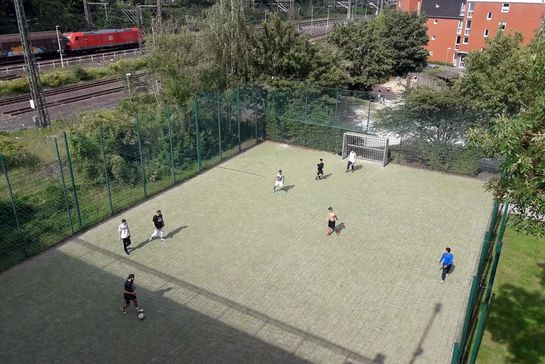 2026-07-14Whether on grass, gravel, or artificial turf, with sturdy metal goals or simply jumpers and bags laid down as goalposts—public neighbourhood football pitches (known in German as Bolzplätze ) are as diverse as the people who use them. Often located near playgrounds, they offer older children and…
 -
 2026-04-22Is taking part all that matters? – Does sports bring Europe together? Do recreational and competitive sports promote European integration and mutual understanding? In the wake of the Winter Olympics in Italy, ahead of the FIFA World Cup in the U.S., Canada, and Mexico, and the World Equestrian Games…
 -
 2026-07-13During the semester break, Prof. Petry will be available on 28 July, 18 August, 1 September, 15 September and 29 September, from 3.30 pm to 5.00 pm on each occasion, either in person or via WebEx. Please register in advance by email . Appointments can be held in person (Institute Building II, Room…
 -
 2026-06-29Read more about this year's GSU Young Talent Award…
 -
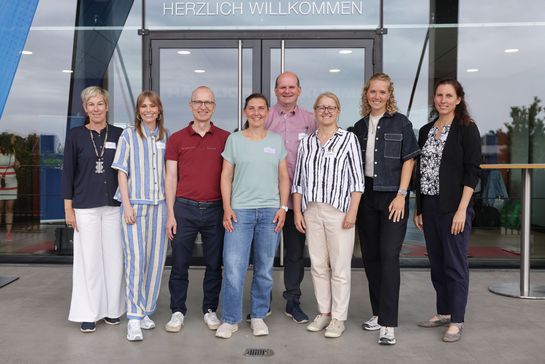 2026-07-09Successful Symposium on Female Coaches at the Rhein Energie Stadium in Cologne On Thursday, July 2, 2026, there was an intensive exchange between academia, sports, and politics regarding the situation of female coaches in German elite sports. As part of the Women Coaches Symposium at the…
 -
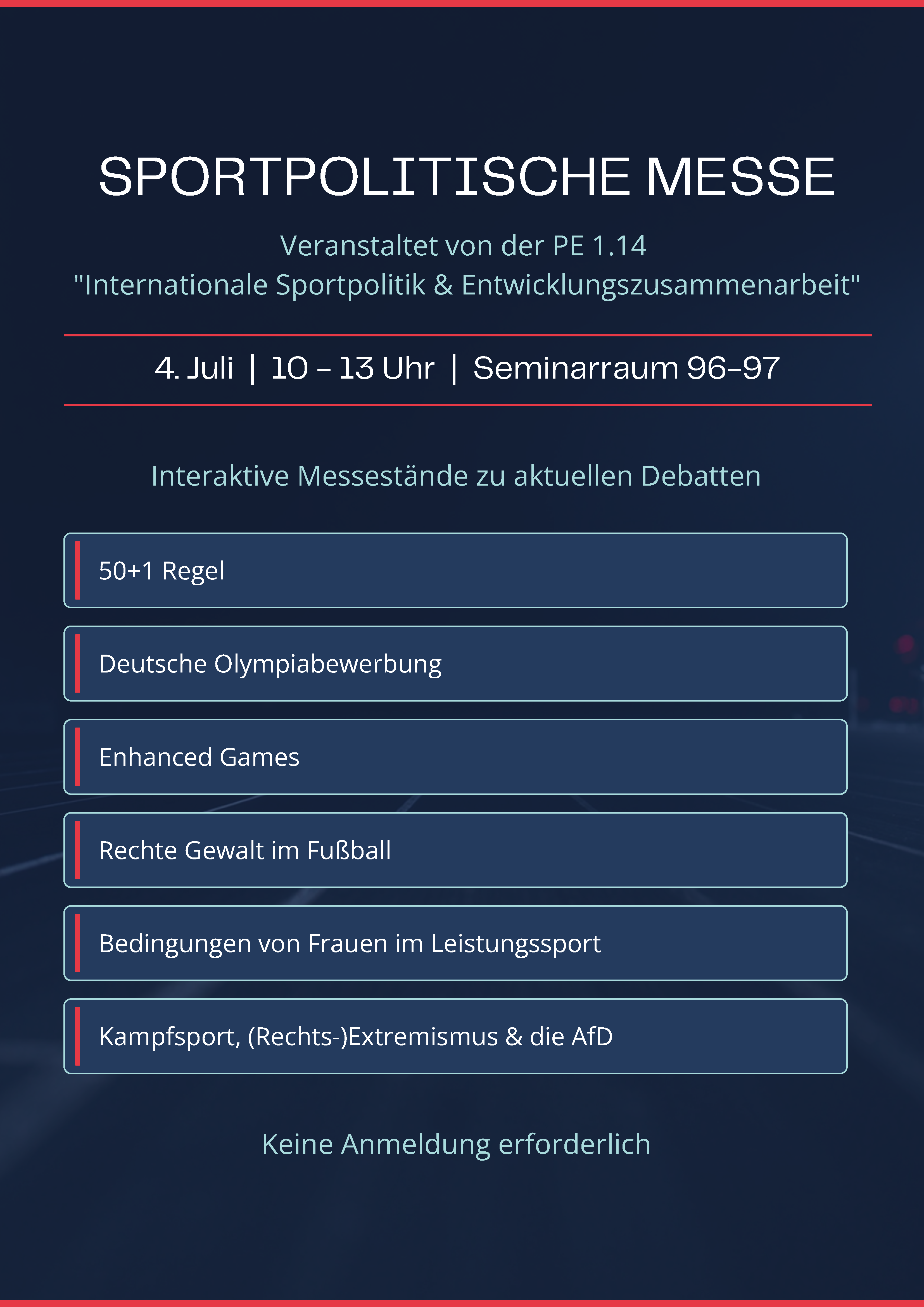
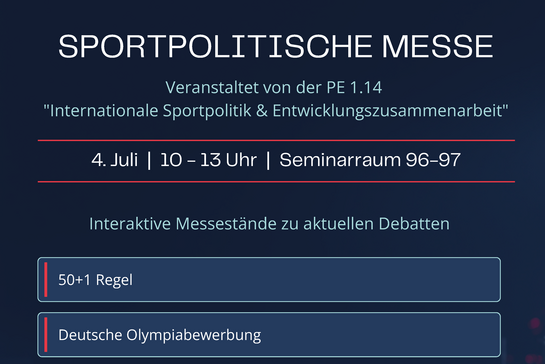 2026-06-30As part of PE1.14 “International Sports Policy and Development Cooperation,” a “sports policy fair” covering various exciting topics will take place this coming Saturday, July 4, 2026. The topics will be prepared, presented, and discussed by students at interactive booths. Anyone interested is…
 -
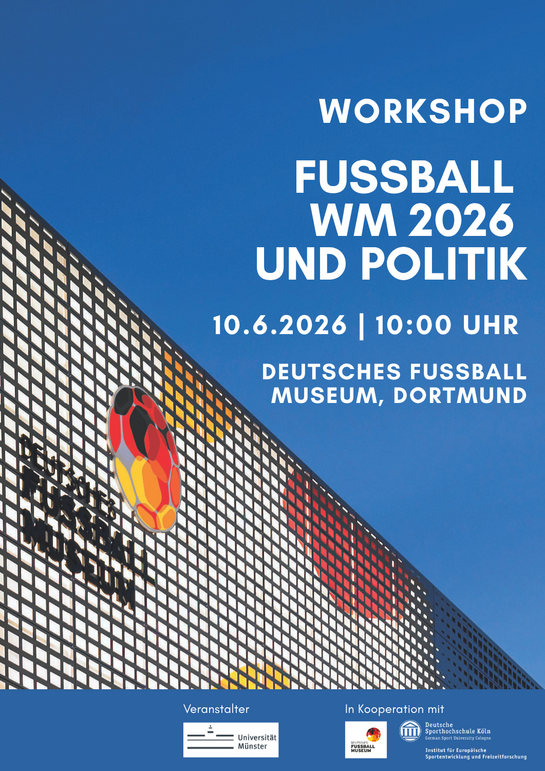 2026-06-11How has media coverage changed? How has the politicization of the World Cup and the national soccer team evolved? The “quadriennial” event organized by Prof. Dr. Norbert Kersting of the Institute of Political Science at the University of Münster was held in 2026 in cooperation with Prof. Dr. Jürgen…
 -
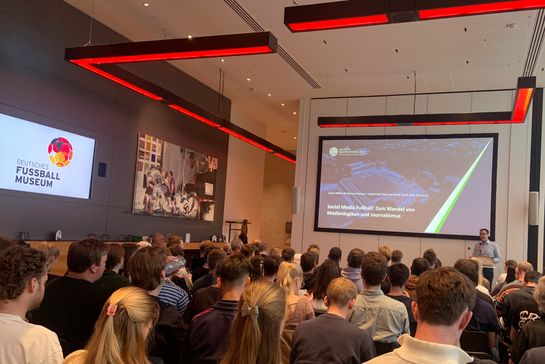 2026-06-11Conference at the German Football Museum highlights the sport’s global challenges How political is football? This question was the focus of the conference ‘The 2026 FIFA World Cup and Politics’, which took place on 10 June 2026 at the German Football Museum in Dortmund. The conference was organised…
 -
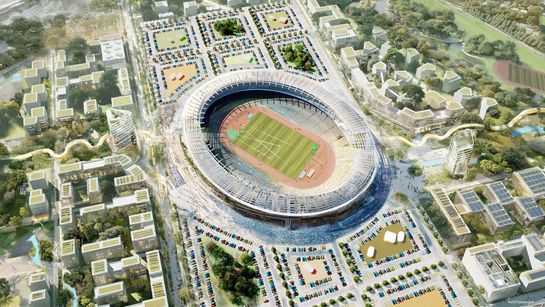 2026-09-07Experts from the German Sport University Cologne discuss the DOSB election, the IOC’s ‘Fit for the Future’ reform process and Germany’s chances of hosting the Olympic and Paralympic Games Berlin, Cologne-Rhine-Ruhr or Munich: on 26 September, the German Olympic Sports Confederation (DOSB) will…