SafeClubs
A warm welcome to the ‘Safe Clubs’ research project
NEWS: We’ve moved: https://safe-clubs.de/
On our new website, you’ll find all the latest information, as well as the resources developed as part of the project!
This website is no longer being updated.
We welcome you to the website of our ‘Safe Clubs’ research project and are delighted that you are interested in the prevention of interpersonal violence in sport!
We would like to invite you to explore our website to gain a more detailed insight into the project. To do so, please follow the tab structure above, which will guide you through the individual sections and provide you with detailed information.
If you have any further questions, please feel free to contact our academic partners
Your “Safe Clubs” research team
Link to the video: https://www.youtube.com/watch?v=oKTadmwy2qU
The project
Project duration: January 2022 – December 2024
This project is a continuation of the ‘Safe Sport’ project and aims to establish the recommended measures for the prevention of sexualised violence identified in that project within sports clubs, using a variety of approaches. The three key areas of action in tackling sexualised violence – analysis, prevention and intervention – are covered in the project through various sub-projects.
The project focuses on the following key areas:
- Identification of risk and protective factors for sexualised and interpersonal violence
- Club analysis and the development of organisation-specific protection processes
- A climate of empowerment as a protective factor against interpersonal violence
- Development and evaluation of workshops and materials to empower athletes
- Delivering training sessions on the prevention of sexualised and interpersonal violence
- Development of practical knowledge on intervention for child protection contact persons
- Integration of project findings and the development and implementation of transfer products
Contact us if you have any requests
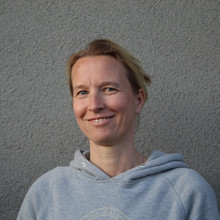
Dr Jeannine Ohlert
Tel.: +49 221 4982-8728
j.ohlert(at)dshs-koeln.de
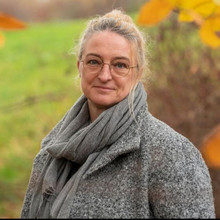
Marion Sulprizio
Tel.: +49 221 4982-5540
sulprizio(at)dshs-koeln.de
Project description
Starting point
Sexualised and interpersonal violence in sport has been a recurring topic in the media in recent years. Athletes have spoken out against abuses within their training groups and, in some cases, within their sport in general. Studies have shown that athletes frequently experience sexualised violence within the context of a sports club, yet there is a lack of implementation of protection policies in these settings. Many clubs and federations are particularly unsure about how to deal with suspected cases.
Project objectives
The ‘Safe Clubs’ project builds on the ‘Safe Sport’ project and aims to establish the recommended measures for preventing sexualised violence – as identified in the latter – within sports clubs through a variety of approaches. Five sub-projects cover three key areas of action in tackling sexualised violence: analysis, prevention and intervention. Upon completion of the project, all materials and concepts developed will be made available to all sports clubs in Germany via the participating partner organisations, Deutsche Sportjugend and various regional sports federations. The aim is to support clubs in Germany in developing sustainable strategies to protect children and young people from sexual violence in sport. In this way, the planned project will make a direct contribution to the prevention of sexual violence in organised sport in Germany.
Sub-projects
The collaborative project is divided into five sub-projects (see Figure 1), which cover the three areas of action – analysis, prevention and intervention – in dealing with sexualised violence. All three consortium partners are leading different sub-projects: Dr Jeannine Ohlert at the Institute of Psychology at the German Sport University Cologne is responsible for the overall management of the consortium and leads sub-projects 2 and 5, whilst Prof. Dr Bettina Rulofs at the Institute for Sociology and Gender Studies at the German Sport University Cologne, whilst PD Dr Marc Allroggen at the Department of Child and Adolescent Psychiatry / Psychotherapy at Ulm University Hospital is in charge of sub-project 3.

The various sub-projects complement one another and all contribute to the joint research objective of the collaborative project. As part of a comprehensive approach to transforming club culture, various key stakeholders within a sports club are involved across the different areas of action. What all sub-projects have in common is that sports clubs in Germany – which are predominantly run by volunteers – are the central focus as educational institutions. These clubs are intended to benefit from all the measures developed within the project. Within the clubs, the focus is on the protection of children and young athletes in both elite and grassroots sport.
Sub-project 1 focuses on the ‘analysis’ area of action by conducting risk assessments on sexualised violence in collaboration with selected clubs and developing protection processes based on these findings. Sub-projects 2 and 3 are situated within the field of prevention and involve the development, delivery and evaluation of workshops for athletes, coaches, parents and officials/club staff on the topic of athlete empowerment. Furthermore, Sub-project 4, within the intervention area, will develop specific guidance for child protection officers within the state sports federations/youth organisations and clubs. This guidance is intended to enable clubs to provide better support in cases of suspected incidents or actual incidents. In the fifth and final sub-project, practical resources for sports clubs will be developed based on the findings from all the preceding sub-projects. Upon completion of the project, these will be made available to all sports clubs in Germany via the participating practice partners. In addition, these resources will be disseminated to the sports community through a closing symposium.
The implementation of all sub-projects is supported by our partner organisations.

Practice partners
German Sports Youth
The Deutsche Sportjugend is the youth organisation within the German Olympic Sports Confederation (Deutscher Olympischer Sportbund e.V.). It coordinates the work of its member organisations on joint initiatives. Furthermore, the dsj promotes education, care and upbringing through children’s and youth work in sport, thereby making an important contribution to addressing social and youth policy challenges. Together with its member organisations and their sub-divisions, the German Sports Youth organises sport-based activities across the whole of Germany, with the aim of supporting young people in their personal development. In an international and European context, it designs, organises and supports youth exchange programmes and training initiatives for youth workers and specialists, as well as the development and refinement of exchange programmes.
North Rhine-Westphalia State Sports Federation
The North Rhine-Westphalia State Sports Federation acts as the umbrella organisation for non-profit sport and represents the interests of sport in North Rhine-Westphalia. One of its key tasks is to support the various sports federations and associations. Working in partnership with the specialist federations and associations within a collaborative network, the State Sports Federation has defined the following objectives: To provide support services for clubs; to maintain and expand the independence of non-profit sport as the largest provider of sporting activities; to secure and improve the financial, material and organisational framework for non-profit sport; and to provide assistance and act as a partner for all people participating in sport in North Rhine-Westphalia.
Hesse Youth Sports Organisation
Sportjugend Hessen is Hesse’s largest youth organisation, with 800,000 sports-loving young people in around 7,500 clubs. The work of the clubs is governed by the Youth Regulations. The club attaches particular importance to Section 3, ‘Purpose and Principles’, through which it makes a clear commitment to human rights and democracy.
Brandenburg State Sports Federation
The Brandenburg State Sports Federation (Landessportbund Brandenburg e.V.) is the umbrella organisation for sports clubs and federations in the state of Brandenburg; it is based in Potsdam and is a member of the German Olympic Sports Confederation. The Brandenburg State Sports Federation currently comprises 3,022 sports clubs with a total of 351,030 members. The LSB Brandenburg promotes recreational, competitive and elite sport.
Athletes Germany
Athleten Deutschland was founded in 2017 to give athletes competing for Germany a say for the first time. The organisation campaigns for fundamental changes to the German and international sports systems. Its focus is on the protection of athletes, their prospects and their equal participation in decision-making. The fight for favourable conditions that enable athletes to realise their sporting and personal potential is a key priority. Furthermore, Athleten Deutschland advocates for fair and clean sport, free from abuse and violence, manipulation and mismanagement. To fulfil this mission, they collaborate with various stakeholders from politics, business, academia and civil society, as well as with like-minded partners in Europe and around the world. Athleten Deutschland is funded by the Federal Ministry of the Interior, Building and Community.
Hesse State Sports Federation
The Hessian State Sports Federation (lsb h) is the umbrella organisation for Hessian sports clubs and federations and their members. As an umbrella organisation, it represents the sports clubs and the interests of sport in Hesse. The lsb h is characterised by its expertise in sport, social and educational policy, its innovative spirit, high standards and the commitment of its volunteers. The Federation’s primary aim is to support, strengthen and further develop sports clubs. At the same time, it provides an important forum for learning about social and community engagement. The lsb h stands for freedom, solidarity, tolerance, respect, mutual appreciation, equal opportunities and fair play.
Thuringia State Sports Federation
The Thuringian State Sports Federation (LSB) is the voluntary association of gymnastics and sports clubs, as well as other sports organisations, in the Free State of Thuringia. Under its umbrella, some 348,000 members are currently organised across around 3,300 sports clubs within 23 district and city sports associations. A total of 48 state sports federations and 20 affiliated organisations organise grassroots and recreational sport as well as competitive sport within their respective disciplines and ensure specialist sports training. In its collaboration with the political sphere and society, the LSB is committed to autonomy and political neutrality. Its mission statement sets out a shared understanding and principles for the development of sport within a constantly changing social environment.