Department of Health and Social Psychology
Who we are
The research group within the Department of Health & Social Psychology currently comprises staff with backgrounds in psychology, sports science and therapy. Our research group comprises lecturers, PhD students, postdoctoral researchers and project staff. We are supported by student research assistants. Professor Jens Kleinert has been head of the research group since 2006.
What we stand for
Sports science comprises the integration of research, application and teaching. For us, therefore, good research has practical and educational relevance – good application is based on scientific research, and good teaching addresses both research and its practical application in equal measure. It is with this philosophy that we conduct our research. In particular, this involves phenomena relating to motivation, stress and emotion, as well as interpersonal relationships within groups and in coaching or mentoring contexts.
What we are researching
The research group within the Department of Health & Social Psychology focuses in particular on the topics of motivation, stress/mental health and groups/teams, drawing on interpersonal theories and models. The aim of the work is to improve counselling and support processes (coaching) to promote mental health, performance and personal development. The theories include, in particular, the approaches of Self-Determination Theory, Balance Theory and Field Theory. The work is applied in the fields of health and rehabilitation sport, competitive sport and school sport.
What we teach
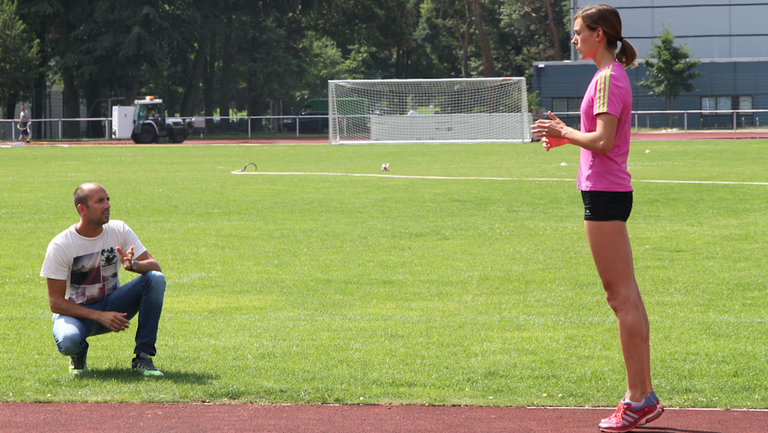
Sharing knowledge and other skills derived from our research findings is a key priority for us. In addition to students, this knowledge is aimed at athletes, coaches and other support staff. We support elite athletes both in one-to-one sessions and through workshops (the MentalTalent initiative). During particularly challenging periods, we provide further support to athletes and their social networks through the MentalGestärkt programme. Symposia and online events for coaches are held at the German Research Centre for Elite Sport in Cologne (momentum).
Working fields
Relevance
Sports psychology support and counseling for athletes, coaches, and teams are becoming increasingly important in both competitive and recreational sports. In elite sports in particular, sports psychology coaching has now proven to be just as relevant as physical training in promoting and maintaining performance, personal development, and mental health. But even in recreational, leisure, and health-oriented sports, more and more people are turning to sports psychology coaching tools to optimally manage athletic situations and improve their own well-being.
Content, Theories & Methods
The working field “Coaching and Psychological Support” focuses on the scientifically grounded design and further development of sports psychology coaching and support processes. The focus is on topics such as motivation, stress, emotions, social processes, performance, personality development, and mental health. Self-determination theory can provide a solid foundational model for coaching processes. Particular emphasis is placed on the review, development, and evaluation of theory-based sports psychology methods and strategies, as well as their application tailored to specific target groups. In doing so, the diverse needs of athletes, coaches, and teams are taken into account, as are sport-specific, age-related, and gender-related characteristics.A central concern is the transfer of scientific findings into practice. Through publications, workshops, lectures, and practice-oriented initiatives such as MentalGestärkt and mentaltalent, scientific findings are made applicable to competitive and recreational sports, and the quality of sports psychology support is further developed. A special service is offered through online coaching on the topic of “Sports and Pregnancy,” in which women receive email advice on exercising safely during and after pregnancy.
Publications
Contact
Relevance
Although the health benefits of regular physical activity are widely recognised, these are often not enough to sustain exercise and sporting habits in the long term. A wide variety of often contradictory and complex reasons motivate people to take up sport, cause them to stop abruptly, or spur them on to start again after a relapse. Gaining an insight into these reasons and the associated motivational dynamics is useful, for example, in designing sport-related intervention programmes and motivating people to engage in physical activity and sport in the long term.
Content, Theories & Methods
The working field "motivation and behavioural change” focuses on current research questions and practical challenges relating to the (re)take-up, maintenance and modification of physical activity and sport in the contexts of health, leisure and competitive sport, work and school.
The research is based on established theoretical models. In the context of physical activity and sport behaviour, for example, the satisfaction of basic psychological needs or behavioural regulation in accordance with Deci and Ryan’s self-determination theory is examined. Cognitive evaluation processes, such as self-efficacy expectations as described by Bandura and perceived control, are also examined in relation to physical activity within the contexts mentioned above. Furthermore, the distinction between motivational and volitional processes of behavioural change plays a role in the field of motivation and behavioural change. Methodologically, predominantly quantitative research designs are employed in the form of cross-sectional, longitudinal and intervention studies.
Overall, the working “field motivation and behavioural change” yields practical applications across all physical activity and sport contexts. The research findings are transferred from academia into practice and made accessible to the various target groups. In the context of school sport, for example, teaching materials have been (further) developed on the basis of current findings to support (prospective) PE teachers in designing lessons that promote motivation.
Publications
ContactContact:
Relevance
Social processes that occur in and through sports shape people’s experiences and behaviors. Among other things, they influence motivation, performance, and well-being. Research into social processes and the development of practical measures derived from them enable health promotion and support performance through and in sports.
Content, Theories & Methods
This working field focuses primarily on processes within groups (e.g., teams, health-oriented sports groups) and between individuals (e.g., coach-athlete relationships) in the areas of competitive sports, health-oriented sports, school sports, as well as recreational and mass sports. Particular emphasis is placed on group flow (e.g., Pels et al., 2018), interpersonal violence (e.g., Ohlert et al., 2025), intrateam conflicts (e.g., Lüdemann & Kleinert, 2025), increases in motivation (e.g., Boss et al., 2023) and decreases in motivation (e.g., Ohlert & Kleinert, 2013) in group performance, as well as the therapeutic effects of sports groups (e.g., Chermette et al., 2026). All research is theory-based, drawing on both established theories (e.g., Balance Theory, Collective Effort Model) and new theories developed in-house (e.g., Integrative Group Flow Theory; Pels & Kleinert). The research serves to test theories and develop methods, employing various empirical approaches. In addition to cross-sectional and longitudinal studies, experimental studies are also conducted in the research laboratory (e.g., Lüdemann et al., 2025). The practice-oriented work includes the (further) development of diagnostic methods (e.g., the Relationship Work Toolbox (Kleinert, 2014); team diagnostics (Ohlert & Zepp, 2016 )) or the development and evaluation of interventions in the field.
Publications
Contact:
Relevance
In everyday life, as well as in exercise and sport contexts, people are exposed to a wide range of physical, psychological and social demands. If these are perceived as burdensome and the perceived coping strategies are insufficient, stress arises. Inadequate stress management over the long term can lead to impairments in performance, well-being and mental health. Against this backdrop, the prevention of stress-related impairments, as well as the identification and promotion of resources and protective factors, are increasingly becoming the focus of research and practice.
Content, Theories & Methods
The working field Stress and Mental Health addresses current research questions and practice-relevant challenges relating to stress and mental health in various physical activity and sport contexts. Current research priorities include, amongst others, self-compassion, psychological safety, body image and self-concept, as well as the influence of digital media on mental health.
The research is guided by established models in stress and health psychology, in particular the transactional stress model developed by Lazarus and Folkman, the salutogenic approach developed by Antonovsky, and the self-compassion theory developed by Neff. Methodologically, quantitative research designs are predominantly used in the form of cross-sectional, longitudinal and intervention studies. The research and the resulting transfer and intervention programmes are aimed at young people and adults, as well as athletes, coaches and other stakeholders in various physical activity and sport contexts.
A particular focus of this working field is transferring scientific findings into practice. This includes, in particular, the MentalGestärkt and mentaltalent initiatives. MentalGestärkt aims to promote mental health in elite sport through prevention, health promotion, early detection and the provision of support in the fields of sports psychology, sports psychotherapy and sports psychiatry. mentaltalent supports, in particular, young elite athletes through scientifically grounded workshops and one-to-one support, with the aim of optimising performance, fostering personal development and maintaining mental health.
Publications
Contact