NRW Athletes for the Future
The idea behind our project is this: athletes should thrive. They should feel supported and have the opportunity to develop positively through and within sport. Personal growth and healthy development – that is our area of expertise, and that is what we want for athletes.
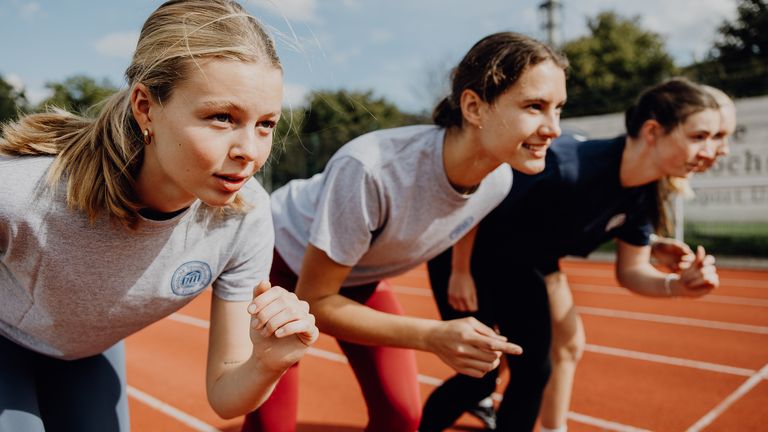
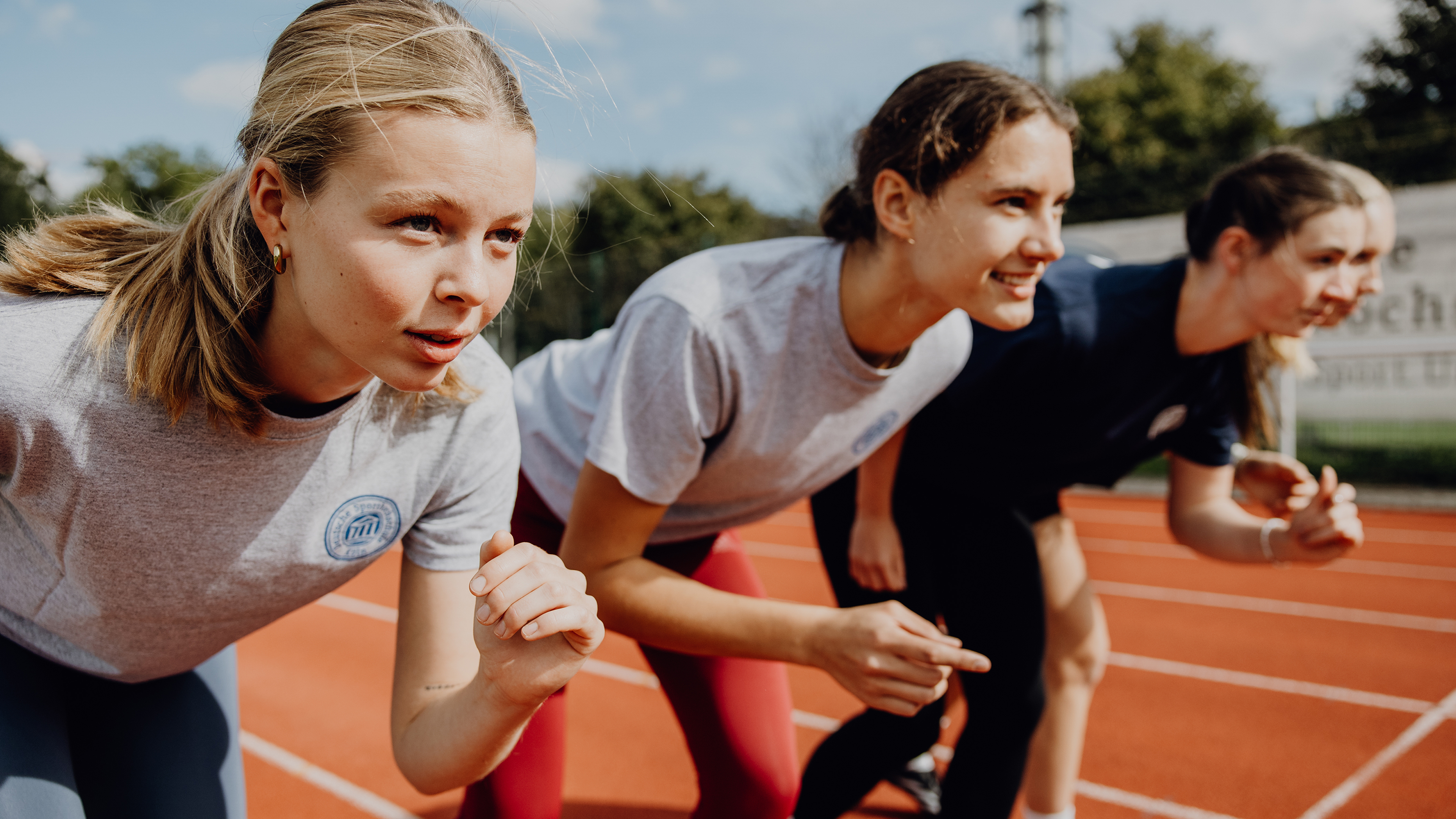
The idea
Why are we undertaking this project?
The idea behind our project is this: athletes should thrive. They should feel supported and have the opportunity to develop positively through and within sport. Personal growth and healthy development – that is our area of expertise, and that is what we want for athletes.
There are many obstacles to this, as the world in which athletes live has changed significantly in recent years. The reasons for this are not limited to the coronavirus pandemic or the war in Ukraine. Changes to the sports and education systems also sometimes make it difficult, particularly for younger athletes, to pursue their sport with focus and energy. We therefore want to find out how these changes are affecting elite sport and the lives of athletes.
We want to help improve the future for athletes
Ultimately, we want athletes in North Rhine-Westphalia to receive better support in training and competition, including by improving conditions within sport. But we still know far too little about athletes in North Rhine-Westphalia. How do they live? How do they feel? What do they want? How would they like to be supported? These are the questions we need to answer. On this basis, we can help to optimise the services and support on offer – particularly in the areas of mental health and personal growth.
Who is our survey aimed at?
To answer the questions mentioned above, we are surveying athletes and gathering information that we will make available to everyone: the federations, the clubs, the coaches and support staff, and, of course, the athletes themselves.
We are primarily targeting squad athletes who live or train in North Rhine-Westphalia. Why North Rhine-Westphalia? Because here in this state, we are best placed to further develop or design measures. We are interested in all sports, including Olympic, Paralympic, Deaflympic and World Games sports. For data protection reasons, participants must be at least 14 years old.
How can you take part?
The 2022/23 survey has now closed. We are currently analysing the data. The results, along with a link to the next survey, will be published on this page.
2022/23 Survey
How we ask the questions
We have developed a questionnaire that has, for the most part, been scientifically tested (validated). In addition, further questions have been specifically designed. It takes approximately 15–20 minutes to complete. We also ask open-ended questions to allow for personal responses.
Structure of the questionnaire
The questionnaire covers six areas:
- Personal circumstances (e.g. questions about yourself, school or education, and living arrangements)
- Sporting situation (e.g. sport, team, training workload, travel times, performance level)
- Personal perspectives (e.g. sporting goals, career goals, life plans)
- Well-being (e.g. mental health, stress, how you feel during training and competition)
- Personality (e.g. characteristics, self-esteem)
- Support (e.g. support services within sport, social/financial support, support needs)
Suggestions and improvements
We’d be delighted to receive feedback and suggestions regarding the survey and our project. You can get in touch here: forfuture@dshs-koeln.de
Who is it for?
For people involved in elite sport
We collect data for people involved in elite sport. The results of our work are intended to help improve the situation for athletes on the North Rhine-Westphalia squad – both in training and competition, as well as in their everyday lives. So, above all, we want to help the athletes, but also the coaches and support staff, the clubs and the federations.
For better support
We want to help ensure that services for athletes are optimised or created from scratch. Our findings are therefore intended to provide federations and organisations with the right arguments or show them the best ways to support athletes effectively.
For greater knowledge
We survey athletes to understand them better and learn more about them. We make this knowledge available to everyone involved in the sport: the federations, the clubs, the coaches and support staff, and, of course, the athletes themselves.
Who we are
We are a project team at the Institute of Psychology at the German Sport University Cologne. Our area of expertise is personal development and mental health, including – and particularly – within sport. Our project team consists of four people who have planned and are implementing the “NRW-Ahtlet:innen for future” project:
Jana Beckmann and Wiebke Dierkes are conducting the survey. Jana Beckmann is coordinating data collection and processing. Wiebke Dierkes is responsible for media relations and communication. Johanna Belz and Jens Kleinert are supporting the research work within the project. Jens Kleinert is the project manager.
Various organisations are supporting us in carrying out the survey:
- North Rhine-Westphalia State Sports Federation
- North Rhine-Westphalia Association for Sport for People with Disabilities and Rehabilitation
- State Chancellery of North Rhine-Westphalia
- NRW Sports Foundation
- Momentum – German Research Centre for Elite Sport, Cologne
- mentaltalent – German Sport University Cologne
- MentalGestärkt – German Sport University Cologne
- Olympic Training Centres


Results
We have analysed the data from the 2022/2023 survey. More than 480 athletes took part. We would like to express our sincere thanks to them. We were able to answer the following questions, which are representative of athletes in North Rhine-Westphalia:
- How athletes in North Rhine-Westphalia live
- What time commitments sport entails
- How mentally healthy athletes in North Rhine-Westphalia are
- What it feels like during training and competition
- What goals and dreams athletes in North Rhine-Westphalia have
- How pronounced protective factors are
- How much squad athletes feel supported
- Which services athletes in North Rhine-Westphalia use and which ones they would like to see
The key findings of our survey, conducted from December 2022 to January 2023, are set out in this report.
Sharing the findings
To ensure these recommendations are implemented and our findings put into practice, it is important that they are shared with as many people as possible. Sharing them enables people to contribute their ideas, help shape the process and participate in future changes.
How we should proceed from here
Our survey has generated important findings and insights, which should form the basis for both raising questions and implementing concrete action points. Specifically, our initial analysis has yielded the following recommendations for future changes:
- Mandatory mental health screening
- More psychosocial support for those facing the dual demands of sport and school/training/work
- Further development and expansion of day-to-day support
- An inclusive information resource covering the range of support services available
- Special attention to the challenges faced by girls/women and older adolescents
If you have any suggestions or feedback regarding our project, please feel free to contact us at:
forfuture@dshs-koeln.de
The team at the Institute of Psychology, German Sport University Cologne
Jens Kleinert, Johanna Belz, Jana Beckmann & Wiebke Dierkes
Department of Health & Social Psychology
German Sport University Cologne
What we do
We have put forward recommendations for action. We are now working proactively with our network partners to implement them. It is important to us that the research findings are put into practice.
As part of the sports psychology support provided by mentaltalent and the medical squad examinations carried out by momentum, athletes undergo a standardised mental health screening. Standards and reference values have been developed for this purpose (Kleinert, Sulprizio & Ohlert, 2023).
mentaltalent’s sports psychology services help athletes to balance sport with school, vocational training or work. The German Sport University Cologne is a partner university for elite sport. Our partner organisation, the NRW Sports Foundation, also offers support in balancing sport with school, vocational training or work.
This is where many of the programmes and initiatives at the German Sport University Cologne (DSHS) come into play. Through the ‘mentaltalent’ and ‘MentalGestärkt’ programmes, athletes are offered a wide range of counselling and support services. In addition to supporting (sports) federations, the DSHS is also involved in the development and evaluation of new programmes. The DSHS’s existing programmes are continuously refined and adapted to current needs.
To gain a clear understanding of the issues at hand, we are running a workshop with female athletes. In this safe and supportive environment, we will discuss what could be improved in training, competition and everyday life. The findings will be incorporated into our own work and communicated publicly. The aim is to provide better support for female athletes.
This requires an in-depth analysis of the problem (background and circumstances). This can be carried out on the basis of existing studies as well as through new research. We very much welcome such initiatives and support them.
Do you have a good idea too?
If you’d like to help us put the findings into practice, or if you have a good idea on how we can improve conditions for NRW squad athletes, please feel free to contact us at:
The team at the Institute of Psychology, German Sport University Cologne
Jens Kleinert, Johanna Belz, Jana Beckmann & Wiebke Dierkes
Department of Health & Social Psychology
German Sport University Cologne